You’ve seen the glowing before-and-after photos and read about microneedling’s ability to smooth texture, fade scars, and restore a youthful glow. Yet every clinic seems to quote a different price. That leaves you unsure what you should actually pay. The truth is that microneedling cost depends on several factors, including the technology used, the treatment area, and the expertise of your provider. Understanding these variables is the key to avoiding overpayment or subpar results. At Refined Skin Club, we believe informed clients make the best decisions. So this pricing and value guide breaks down exactly what drives cost in 2026 and how to tell if a treatment plan is truly worth your money.
What Is Microneedling and Why It’s Gaining Popularity
How the Treatment Works
A handheld device uses fine needles to create tiny, controlled punctures in the skin’s surface. These micro-injuries trigger the body’s natural healing response. Collagen and elastin production ramp up over the following weeks.
The result is skin that looks firmer and more even over time. Unlike Microdermabrasion or Dermaplaning, which work on the surface layer, microneedling reaches deeper skin structures. That deeper action is why results often last longer than surface-only treatments.
Common Skin Concerns It Targets
Clients seek this therapy for acne scars, enlarged pores, and fine lines. It also helps with uneven texture, stretch marks, and mild hyperpigmentation. Many providers pair it with Microchanneling techniques to boost product absorption during the same session.
Some clinics even combine it with treatments used for facial slimming, similar to med spa treatments that can get rid of a double chin, for a fuller rejuvenation plan. This flexibility makes it appealing across age groups and skin types.
Microneedling vs. Other Skin Rejuvenation Treatments
Compared to Chemical Peels or laser therapy, microneedling carries less downtime and works well on darker skin tones. This safety profile has fueled its rise in day spas and clinics nationwide.
Clients often build full routines, adding Facials, lash lifts, or Microcurrent sessions alongside it. This growing popularity reflects a broader shift toward customizable, low-downtime skincare plans.
Microneedling Cost: What You’ll Actually Pay
Average Price Per Session
Most clients pay between $200 and $700 per session, depending on the provider and treatment area. The national average sits close to $350. Facial treatments tend to cost less than combination sessions that pair microneedling with add-ons like microcurrent or oxygen spray.
Location matters too. Urban med spas often charge more than smaller day spas. Dermatology offices sometimes carry the highest fees because a physician oversees the process.
Single Session vs. Package Deals
A single session works well for testing results. But many local businesses offer package pricing for repeat visits. Packages usually include three to six sessions and can lower the per-session cost by 15% to 30%. Below is a general comparison.
| Provider Type | Single Session | 3-Session Package | 6-Session Package |
|---|---|---|---|
| Day Spa | $200–$350 | $550–$900 | $1,000–$1,600 |
| Med Spa | $300–$500 | $800–$1,300 | $1,500–$2,400 |
| Dermatology Office | $400–$700 | $1,100–$1,800 | $2,000–$3,200 |
Total Investment Over a Full Treatment Plan
A full treatment plan usually spans four to six sessions. Total cost ranges from $1,000 to $3,200, depending on provider type and package size. Many spas bundle microneedling with facials or chemical peels for added value. Before booking, it also helps to review simple hydration habits, like how many liquid IV per day, since proper hydration supports healing between sessions.
Factors That Influence Your Final Price
Location and Local Market Rates
Where you live plays a big role in what you pay. Cities with a high cost of living, like New York, Los Angeles, or Miami, often charge more for the same service you’d find in a smaller town. Local market rates shift based on rent, staffing costs, and demand for aesthetic services in your area.
Many local businesses in competitive markets also bundle microneedling with facials or chemical peels to stay attractive against nearby competitors. This can raise the sticker price but add real value. If you’re comparing options, research a few providers near you before committing to one location.
Provider Expertise and Clinic Reputation
A dedicated provider with years of training typically charges more than a newer technician. That price often reflects real skill. Licensed, experienced providers bring precision and safety knowledge that lowers your risk of complications during the session.
Clinic reputation matters too. Established practices with strong reviews and proper sanitation protocols tend to price higher, but that premium buys peace of mind. If you’re weighing whether the extra cost is justified, this outside review, Is Microneedling Really Worth It? Here’s My Verdict, offers a useful perspective.
Treatment Area, Depth, and Add-On Services
Larger areas, like the full face and neck, cost more than a small zone like under the eyes. Needle depth also affects price, since deeper passes require more skill and often more numbing time before the session begins.
Add-ons raise the total too. Combining microneedling with microchanneling, oxygen spray, or microcurrent can boost results but adds to your bill. For readers curious about gentler alternatives, this guide to treatments that dont require a knife outlines several nonsurgical options worth comparing before you decide on a package.
Types of Microneedling and How Pricing Varies
Traditional Microneedling
Traditional microneedling uses fine needles to create tiny channels in the skin. Microchanneling is a related but distinct technique. A single session often costs less than newer technology. Many providers add PRP, known as a “vampire facial,” which uses your own blood plasma to boost healing. This add-on typically raises the price noticeably per visit.
Radiofrequency Microneedling
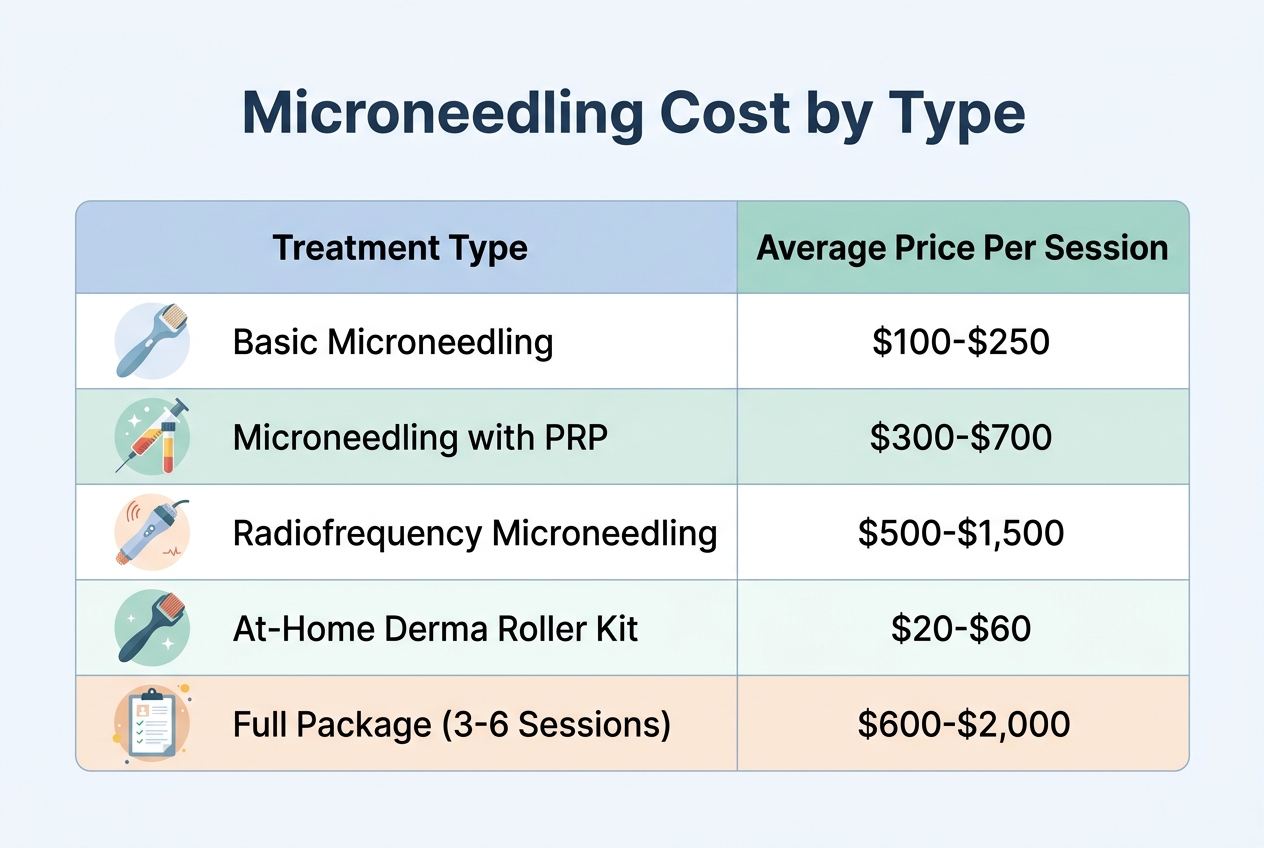
Radiofrequency microneedling combines needling with heat energy. It targets deeper skin layers. This method usually costs more than traditional needling due to specialized equipment. Results often include tighter skin and reduced scarring. The table below compares common options side by side.
| Type | Typical Price Range | Sessions Needed | Best For |
|---|---|---|---|
| Traditional Microneedling | $200–$450 | 3–6 | Texture, mild scarring |
| Radiofrequency Microneedling | $500–$1,200 | 3–4 | Firmness, deeper scars |
| PRP Add-On | +$150–$350 | Per session | Faster healing, glow |
| At-Home Roller | $15–$60 | Ongoing | Light maintenance only |
At-Home Devices vs. Professional Treatments
At-home rollers are affordable but limited. Needle depth is shallow for safety reasons, so results stay minimal. Many people wonder can you do microneedling at home safely, and the answer depends on needle length and hygiene. Professional-grade devices reach deeper layers under trained supervision, producing stronger, longer-lasting results. For a broader breakdown of national averages, this Microneedling Cost and Procedure Guide offers helpful context.
Paying for Microneedling: Insurance, Financing, and Savings Tips
Does Insurance Cover It?
Most insurance plans will not pay for microneedling. Insurers classify it as a cosmetic treatment, not a medical necessity. This holds true even when it helps with acne scars or texture concerns. The only exception is rare: if a dermatologist orders it to treat a documented medical skin condition, some plans may review a claim. Don’t count on this. Budget for the full cost out of pocket.
Financing Plans and Payment Options
Many providers offer financing to make treatment plans more manageable. CareCredit is one of the most common options in skincare clinics. It works like a medical credit card, often with promotional no-interest periods. Some providers also offer in-house payment plans, splitting a series of sessions into smaller monthly charges. Before signing up, always ask about interest rates, late fees, and the full repayment timeline.
Seasonal Promotions and Package Savings
Smart timing can lower your total spend significantly. Many local businesses run discounts tied to seasons or slower booking months. Watch for these common savings opportunities:
- Package deals that bundle three to six sessions at a reduced per-treatment rate.
- Membership programs offering monthly credits toward microneedling or add-on services like microcurrent or oxygen spray.
- Seasonal promotions tied to spring or summer skin prep, often paired with our summer skincare tips.
- Referral discounts for bringing in a new client.
- Holiday gift-card specials that include bonus treatment credits.
For a broader comparison of regional pricing, this How Much Does Microneedling Cost? Full Pricing Guide offers useful context.
Is Microneedling Right for You?
Ideal Candidates
Microneedling works best for people dealing with acne scars, fine lines, enlarged pores, or uneven texture. It suits most skin tones and types, including sensitive skin, since it doesn’t rely on heat like some laser treatments. Good candidates are generally in overall good health, without active breakouts or open wounds on the treatment area.
People who already follow a solid skincare routine often see faster, more noticeable results. If you understand how often should you exfoliate your skin, you likely already grasp why gentle, consistent skin care matters before and after a session. Those combining microneedling with facials or microcurrent treatments tend to report smoother, more even-toned skin over time.
Who Should Avoid Microneedling
Pregnant women, people with active acne, cold sores, or eczema flare-ups should hold off on treatment. Those on blood-thinning medication, or with a history of keloid scarring, also face higher risk. Skin infections or open lesions must heal fully before scheduling a session.
Anyone using strong retinoids or who recently had chemical peels should wait, since the skin barrier needs time to recover. A provider can advise a safer timeline in these cases.
Why a Consultation Matters
A consultation lets a trained professional assess your skin, medical history, and goals before recommending a plan. This step also affects pricing, since needle depth, add-ons, and session count vary by concern. For a detailed pricing breakdown, resources like How Much Does Microneedling Cost? | Tucson … show how costs shift based on these factors. Skipping this step can mean paying for a treatment plan that doesn’t match your actual needs.

What Happens During Treatment: A Step-by-Step Overview
Before Your Appointment
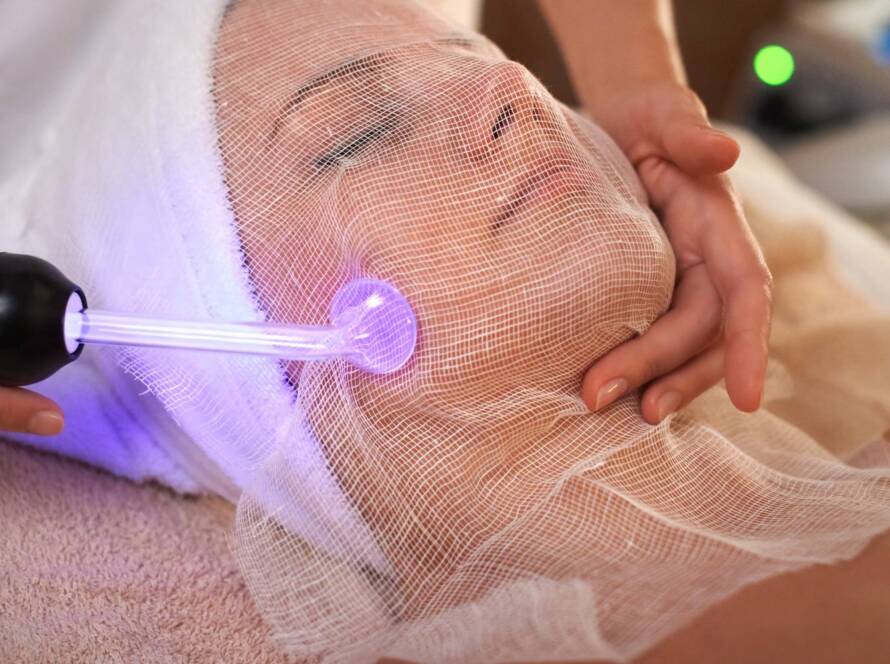
A little prep goes a long way toward a smooth session. Most providers ask clients to avoid sun exposure and retinol products for several days before treatment. Skipping blood thinners like aspirin, unless prescribed, can also reduce bruising risk. If you’re curious how complementary tools fit into a plan, learning what does high frequency do for skin can help you understand related skin-tightening options offered alongside microneedling.
During the Procedure
The treatment itself usually takes 30 to 60 minutes. A numbing cream is applied first to limit discomfort. Then a device with fine needles creates tiny, controlled punctures in the skin.
- The technician cleanses the skin thoroughly to remove oil, makeup, and debris before starting.
- A topical anesthetic sits on the skin for 20 to 30 minutes to reduce sensation.
- The device passes over the face in sections, adjusting needle depth based on treatment area.
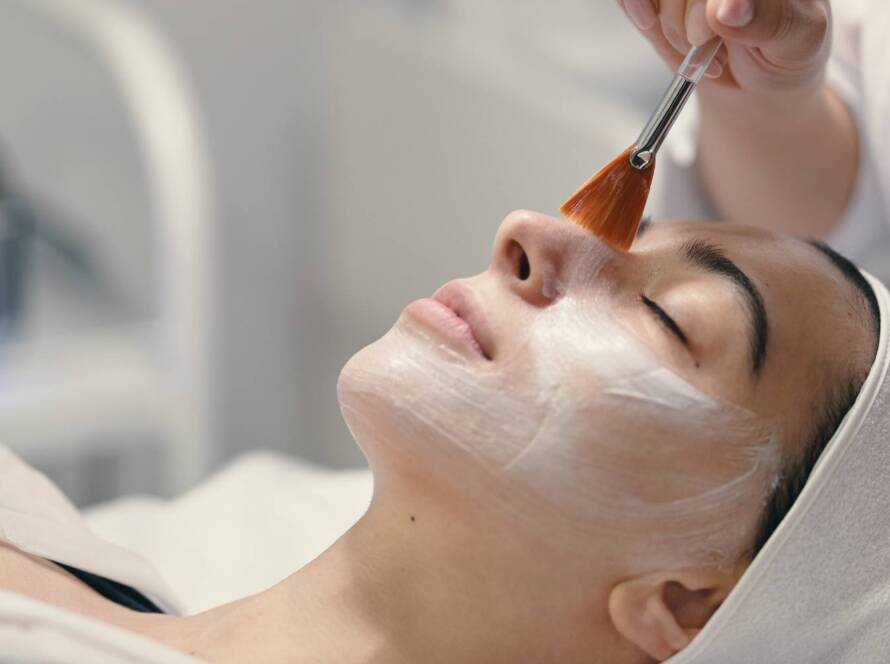
- A serum, often containing hyaluronic acid or growth factors, gets massaged into the skin during or after needling.
- Some providers finish with a calming mask or cooling oxygen spray to reduce redness.
Recovery and Downtime
Expect redness similar to a sunburn for one to three days. Mild swelling and tightness are common but fade quickly. Most people return to normal activities the next day, though makeup should wait 24 hours. For a broader breakdown of typical costs tied to recovery expectations, this How Much Does Microneedling Cost? | Duluth … guide offers useful context.
How Often You Need Treatments and the Long-Term Cost
Recommended Treatment Frequency
Most providers recommend three to six sessions spaced four to six weeks apart for initial results. This spacing allows skin to rebuild collagen between visits. Someone treating acne scars may need six sessions, while someone targeting fine lines might see good results after three or four.
After the initial series, many people shift to quarterly touch-ups. This keeps collagen production steady without overworking the skin. A provider will often adjust frequency based on skin type, age, and specific goals, similar to how a plan for facials or chemical peels gets customized over time.
Budgeting for Ongoing Maintenance
Annual spending depends on how many sessions you commit to each year. A typical maintenance schedule of four sessions, priced between $200 and $700 each, adds up to $800–$2,800 annually. Combining microneedling with microchanneling or microcurrent visits can raise that total, so plan ahead.
Many local businesses offer package pricing that lowers the per-session cost. Reviewing a detailed breakdown, like How Much Does Microneedling Cost in Chesapeake, VA?, can help set realistic expectations before booking a full year of care.
Timeline for Visible Results
Early improvements, like smoother texture, often appear within two to three weeks. Deeper changes, such as reduced scarring, take three to six months as collagen rebuilds. Patience matters here, much like following proper botox aftercare for lasting results.
Side Effects, Safety, and Hidden Costs to Consider
Common Side Effects
Most people notice redness and swelling right after treatment. This looks similar to a mild sunburn and usually fades within 24 to 72 hours. Tiny pinpoint bleeding can happen during the session, especially with deeper needle depths.
Skin may feel tight, dry, or slightly itchy for a few days. Some clients see minor flaking, similar to what happens after Dermaplaning or Microdermabrasion. These reactions are normal signs that collagen production has been triggered and typically resolve without extra treatment.
Rare but Serious Complications
Serious problems are uncommon but worth knowing. Infection can occur if the skin isn’t cleaned properly or aftercare instructions are ignored. Warning signs include worsening redness after day three, pus, fever, or increasing pain instead of improvement.
Scarring and hyperpigmentation are rare, but more likely with unlicensed providers or overly aggressive needle depths. Anyone considering deeper Microchanneling work should review a provider’s training and sterilization practices. Choosing a licensed clinic significantly lowers these risks compared with at-home devices.
Aftercare Products and Their Costs
Aftercare adds to the real total. Gentle cleansers, hydrating serums, and mineral sunscreen often cost $60 to $150 combined. Many providers recommend growth-factor serums, which can add another $80 to $200.
Skip harsh actives like retinol or acids for several days post-treatment. Some clinics bundle these products into packages, similar to how Facials or Chemical Peels are priced. For a fuller pricing comparison, this Microneedling Cost Breakdown: Prices & Treatment Types guide and our blog offer helpful detail.
Is Microneedling Worth the Investment?
Cost vs. Results Over Time
A single session often costs $200 to $700. That price feels steep until you factor in what it delivers. Collagen production builds gradually, smoothing texture and softening scars over months, not days. Results from a full series can last a year or longer with proper maintenance, which stretches the value of every dollar spent.
Compare that to short-lived fixes. A single facial refreshes skin for a week or two. Microneedling works deeper, triggering repair that keeps improving skin months after treatment ends. For many clients, that longevity is what justifies the higher upfront price.
Comparing Value to Other Treatments
Chemical peels and microdermabrasion cost less per session but target surface layers only. Microneedling, sometimes paired with microchanneling techniques, reaches deeper skin structures for more lasting change. Laser treatments can match those results but usually cost more and require longer downtime.
Facials remain a great starting point for maintenance, and many people wonder do facials help with acne before committing to a more intensive plan. Combining occasional facials with periodic microneedling often delivers the best long-term value for acne-prone or aging skin.
Choosing a Provider Worth the Price
Price alone doesn’t guarantee quality. Look for a dedicated provider using medical-grade devices and sterile, single-use needle tips. Ask about technician training and how they customize needle depth for your skin concerns.
A trustworthy provider offers a consultation, sometimes virtual, before treatment. This step helps set realistic expectations and confirms microneedling suits your goals, protecting your investment from the start.
Microneedling pricing makes more sense once you know what you are paying for: the provider’s training, the device and needle depth, add-ons like PRP, and how many sessions your concern realistically needs. Before you commit to a package, ask for the cost of the full series rather than a single-session quote, confirm that needle tips are sterile and single-use, and ask which aftercare products you will be expected to buy. A clear, itemized answer is usually a better sign of value than the lowest price on the menu.