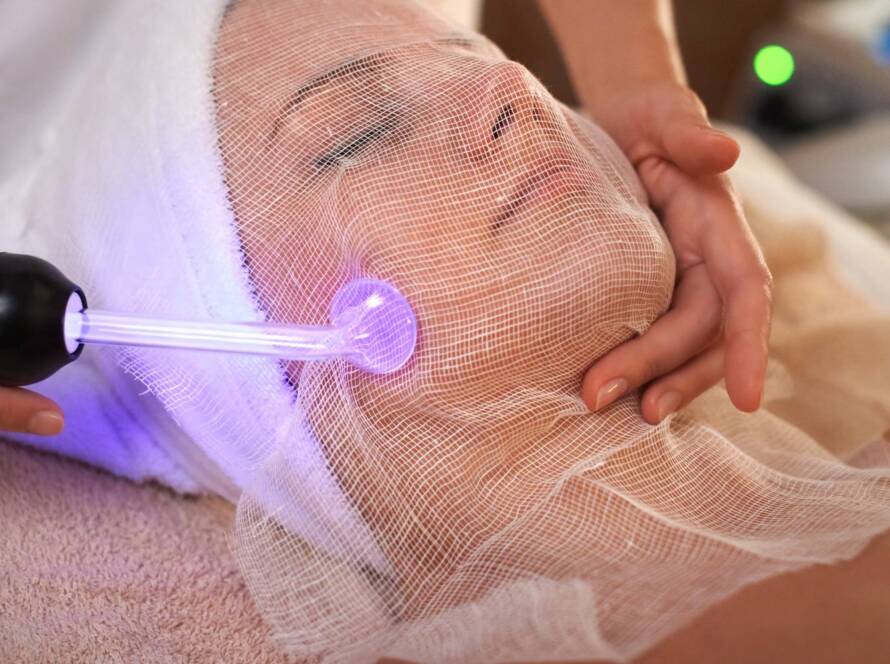
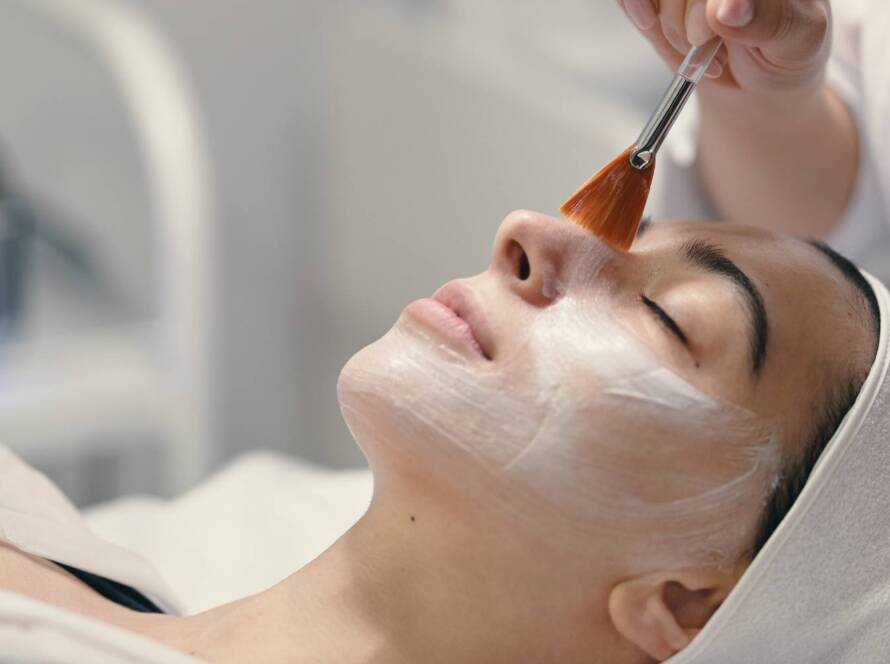
Razor bumps, ingrown hairs, that tight stinging feeling after a fresh wax — it’s annoying, and you want relief fast. Tend Skin has built a loyal following as a go-to liquid for calming irritation after hair removal. But is it right for your skin? And are you using it correctly? Before you reach for that bottle again, there are a few things worth knowing. This breakdown covers what tend skin actually does, where it can fall short, and how your at-home routine fits alongside professional care like waxing treatments and facials.
What Is Tend Skin and How It Fights Ingrown Hairs
How the formula targets trapped hairs
The liquid works on a simple problem: hair curls back under the skin instead of growing out straight. The formula typically pairs a salicylic acid-like exfoliant with an astringent, usually in an alcohol base. The exfoliant loosens the dead skin cells clogging the follicle opening. The astringent calms the redness and swelling that build up around the trapped hair. Together they’re meant to clear a path so the hair can break through on its own.
It’s not magic, and it won’t pull a hair out for you. What it does is reduce the inflammation that makes bumps look angry and feel sore, while thinning the surface layer enough that a curled hair has a fighting chance of escaping. Many people notice calmer skin within a day or two of waxing or shaving. Stubborn hairs may need several applications before anything changes, though.
That’s also why technique matters so much here. A product applied to skin that was waxed against the direction of growth, or shaved with a dull blade, has more damage to undo. If you’re curious whether certain hair removal methods make this problem worse over time, it’s worth looking into does waxing reduce hair growth before deciding which method fits your skin long-term.
Who it was originally designed for
The formula was created decades ago with a narrow goal: helping people deal with razor bumps after shaving, particularly in areas prone to curly, coarse hair like the neck and bikini line. It became popular with men managing beard-area irritation before expanding into a general post-hair-removal staple sold in drugstores and salons alike.
Over time its use broadened to waxing clients, athletes dealing with body hair removal, and anyone managing ingrown hairs on legs, underarms, or the bikini area. But the core audience hasn’t really changed. It’s for people who remove hair regularly and want a simple step to reduce the aftermath. That’s a maintenance role, not a treatment plan.
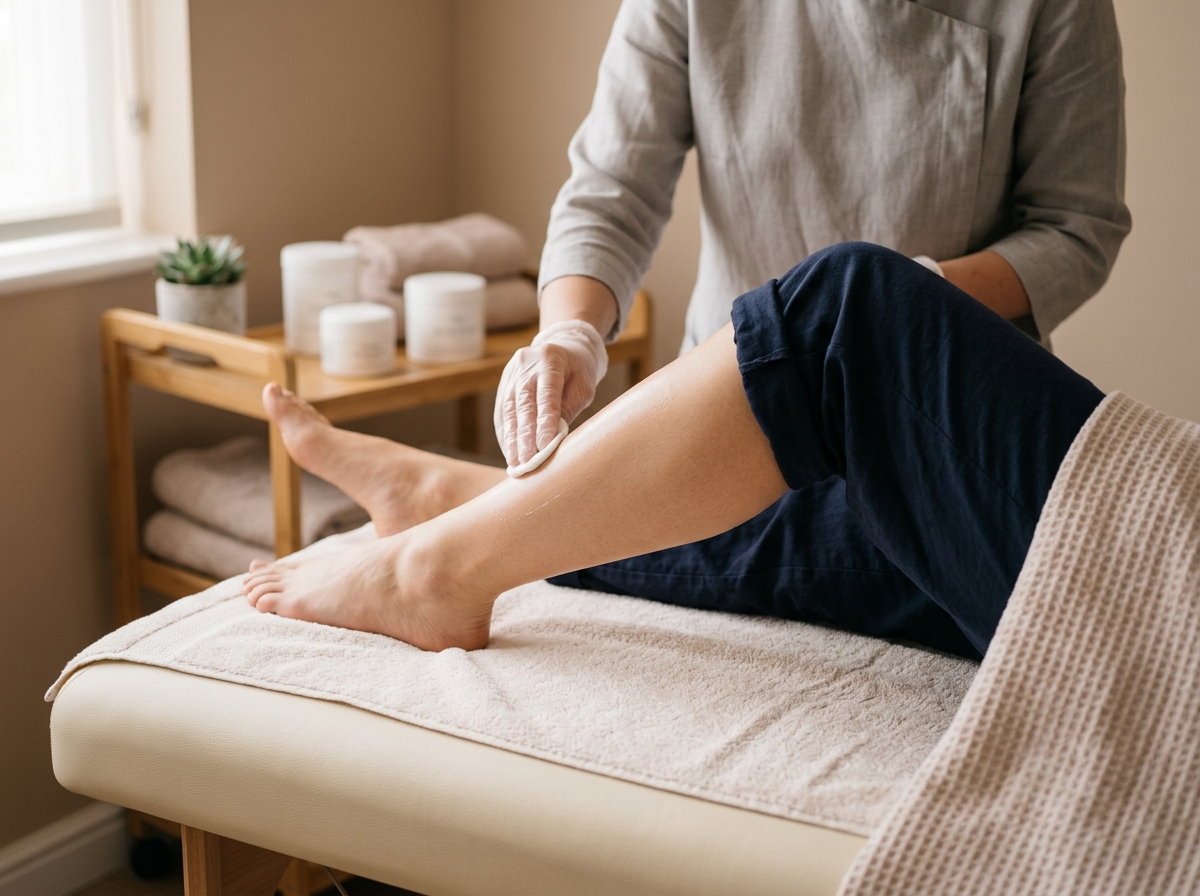
This is exactly why searchers start comparing it to professional options once at-home fixes stop being enough. A topical solution calms what’s already there; it doesn’t change how the hair grows or how deep it sits. For longer-lasting smoothness, many people start weighing waxing treatments performed by a trained esthetician against home routines, since professional technique can reduce how often ingrown hairs form in the first place. It’s a reasonable comparison to make, honestly. One addresses symptoms. The other addresses the habit creating them.
tend skin
When it helps most
Tend Skin is a topical liquid built around salicylic acid and alcohol, and its real job is keeping freshly cleared follicles from getting inflamed and infected right after hair removal. It’s not magic. It’s an astringent exfoliant that calms skin and discourages the bacteria that turn a mild bump into a sore red one. If you’re picturing an overnight ingrown-hair cure, reset those expectations now.
Where it actually earns its keep is the window right after a shave, a wax, or a laser hair removal appointment. Skin is at its most vulnerable in those first few hours, with open follicles and micro-irritation that can easily spiral into razor burn or trapped hairs. Applying it then helps settle redness fast, often within a day, and keeps pores clear while they heal. Plenty of people keep a small bottle in their gym bag just for this reason.
Used this way, consistently, over several hair removal cycles, it does real preventive work. It won’t fix a bad shaving technique, but it buys you a cleaner recovery window every time. Some find it holds up better than witch hazel pads or aloe-based sprays for this specific job, since the salicylic acid keeps pores clear rather than just soothing the surface.
When it falls short
Here’s the catch: tend skin treats symptoms, not causes. If your ingrown hairs come from genuinely curly hair that curves back into the follicle, or from skin texture that traps hairs no matter how carefully you shave, a bottle of astringent isn’t going to retrain your hair growth pattern. You’ll get calmer skin after each shave, sure. But the bumps will likely return with the next one.
That’s especially true for chronic, recurring cases rather than the occasional post-wax breakout. Thick body hair, sensitive skin that reacts to almost anything, or years of repeated irritation in the same spot all point to a deeper issue that a topical fix can manage but never solve. Some people also find the alcohol content too drying or stinging for regular use, particularly on already compromised skin, which is worth factoring in before making it a daily habit.
This is usually the point where people start asking what else is out there, from gentler at-home alternatives to in-clinic routes; incidentally, dermatology circles increasingly flag water quality as part of that picture, and some clinicians reference an under sink water filter system for skin alongside topical care recommendations. It’s one more variable, not a fix on its own. The rest of this guide walks through where tend skin fits against those other options, and where it simply doesn’t.
Tend Skin vs. Other Bump and Ingrown Hair Solutions
Liquid exfoliants aren’t the only way to tame bumps and ingrowns, and they’re not always the right one. Witch hazel toners calm surface irritation but do little for trapped hairs. Glycolic pads work slower but build real exfoliation over weeks. Professional exfoliation goes deeper than any bottle can, though it costs more and takes planning. Here’s how they stack up side by side.
| Option | Cost | Speed of Results | Downtime | Best Use Case |
|---|---|---|---|---|
| Liquid exfoliant (acid-based) | $14–$20 per bottle | 1–2 days for redness | None | Quick post-shave touch-up |
| Witch hazel toner | $8–$15 | Hours, mild effect | None | Sensitive skin, daily calming |
| Glycolic acid pads | $18–$30 per pack | 2–4 weeks, consistent use | Minor flaking possible | Ongoing texture and ingrown prevention |
| Professional exfoliation (facial, peel, or microdermabrasion session) | $75–$200 per session | Visible after one visit, best in a series | Light redness, 0–2 days | Stubborn, recurring ingrowns or sensitive skin that reacts to acids |
Notice the pattern. Cheaper, at-home options demand patience and repetition. Clinic-based exfoliation costs more upfront but works faster and gets supervised by someone trained to adjust strength for your skin. If you’re dealing with blackheads alongside the bumps, it helps to first learn what are blackheads and how to treat them, since the two issues often get confused and treated the wrong way. For most people, a liquid treatment handles mild, occasional bumps just fine. Severe or recurring cases usually need more than a bottle.
Steps to Apply Tend Skin Correctly After Hair Removal
Patch testing first.
Before you swipe this on your whole bikini line or neck, test it. Put a small amount on a patch of skin that just went through hair removal and wait 15 to 20 minutes. If you see stinging that won’t quit, redness that spreads, or hives, stop there. Everyone’s skin reacts differently to the acid base in these formulas, and a small test spot saves you from a bad surprise across a bigger area.
Once you know your skin tolerates it, the actual application matters just as much as the product itself. Skip any of these steps and you risk irritation instead of relief.
- Cleanse the area with a gentle, fragrance-free wash and pat it fully dry — damp skin dilutes the formula and weakens how well it works.
- Apply a thin layer using a cotton pad, working in one direction rather than rubbing it in aggressively.
- Avoid any broken, nicked, or freshly waxed raw skin, since the acid will sting sharply and can slow healing.
- Let it air dry completely, usually a minute or two, before getting dressed or layering on lotion or sunscreen.
- Hold off on retinoids, glycolic acid, or other strong exfoliants that same day — stacking actives is a fast track to redness and peeling.
- Reapply once daily for two to three days after treatment, not longer, and not as a daily habit baked into your regular skincare.
That last point trips people up. This isn’t a toner. It’s a short-term fix for a short-term problem, and overusing it just trades ingrown hairs for dry, irritated skin instead.
Why Ingrown Hairs Keep Coming Back Despite At-Home Products
Surface buildup vs. follicle-level congestion
Curly or coarse hair doesn’t grow straight out of the skin. It curves back in, especially after waxing or shaving, and that curve is the root of most ingrown hair problems. Add dead skin cells that pile up around the follicle opening and tight clothing that rubs against freshly treated skin, and you’ve got a recipe that repeats itself every few weeks no matter how careful you are.
Here’s the thing about liquid treatments you dab on at home: they work on the surface. They calm redness, dry out existing bumps, and fight bacteria sitting on top of the skin. What they don’t do is clear out the buildup inside the follicle, the stuff that’s already trapping the hair below the skin’s surface. That’s a structural problem, not a surface one.
So you keep applying, and the bumps keep coming back. It’s not that the product failed. It’s that it was never built to reach that deep in the first place. Some people even layer salicylic or glycolic toners on top, hoping for more, only to get the same ceiling on results.
Clinic-based exfoliation reaches what topicals can’t
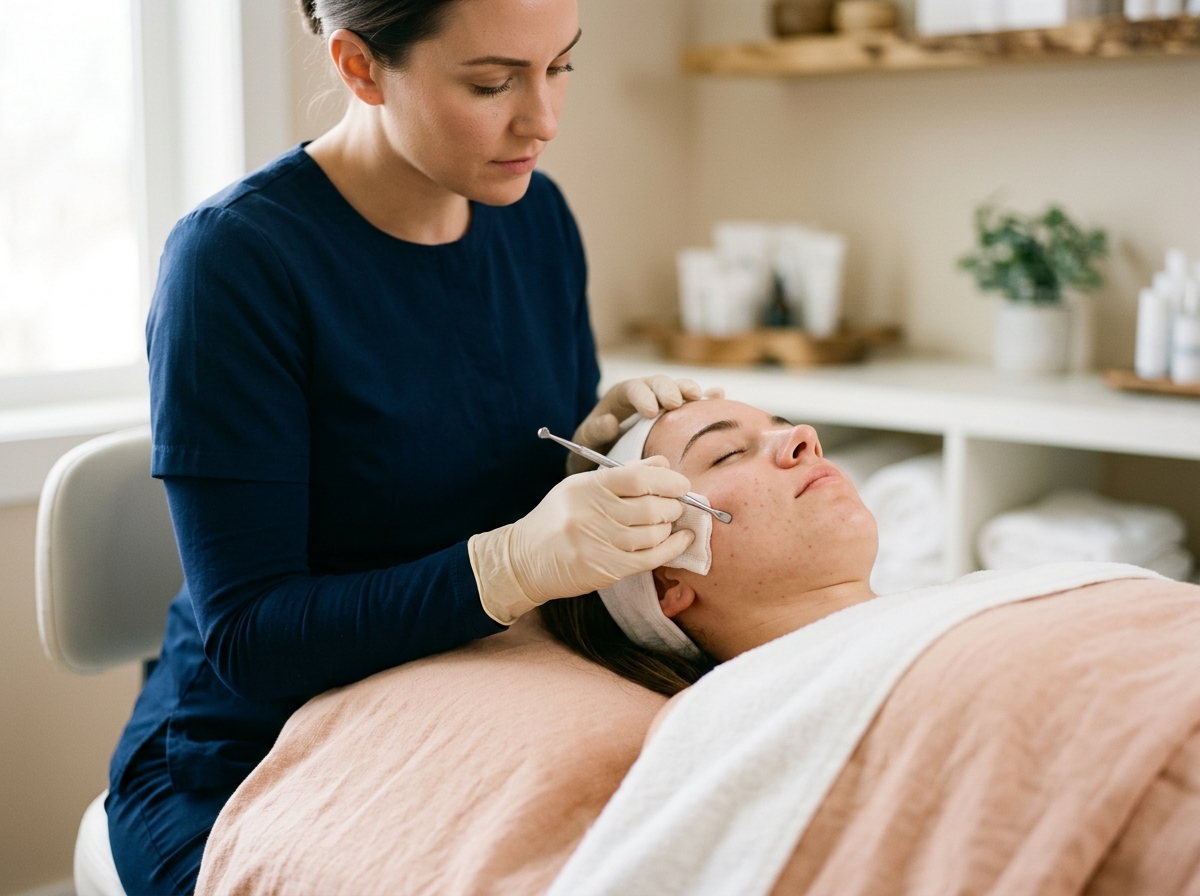
This is where professional exfoliation and extractions earn their keep. A chemical peel uses a calibrated acid concentration to dissolve the bonds holding dead skin cells together, something a store-bought toner can’t match in strength or precision. Microdermabrasion physically polishes away that same buildup using a controlled abrasive tip. Facial extractions go a step further, manually clearing debris directly from congested follicles during a session rather than hoping a liquid eventually works its way in.
Regular facials play a supporting role here too, keeping pores generally clear between more intensive treatments. For men especially, a mens facial built around beard-area congestion can catch the same follicle buildup that drives ingrown hairs along the jawline and neck. Think of it as maintenance, not a one-time fix.
None of this means skip the at-home step entirely. It means understanding its limits. Pair surface care with periodic professional exfoliation, and you’re addressing both layers of the problem instead of just one.
Technique and aftercare still matter
Waxing gets blamed for ingrown hairs a lot, but technique is usually the real culprit. Pulled in the wrong direction, done too frequently, or followed by zero aftercare, waxing can absolutely trigger more bumps. Done properly, with hair at the right length and the strip removed against growth direction in one clean motion, it actually reduces ingrown hairs over time compared to shaving.
Why? Because waxing removes hair from the root, which tends to grow back finer and less prone to curving back into the follicle. Shaving, by contrast, leaves a blunt edge that catches on its way out. That difference compounds session after session. Give it three or four cycles and most people notice fewer bumps, not more.
Aftercare seals the deal. Avoiding tight clothing for a day, skipping hot showers right after, and keeping the area exfoliated between sessions all matter. Skip those steps and even flawless technique won’t save you.
Smarter Ways to Prevent Razor Bumps Long-Term
Tend Skin can calm a bump after the fact, but the smarter move is heading bumps off before they start. That comes down to timing, tools, and a little patience between sessions.
Pre-treatment exfoliation routine
Most razor bumps trace back to dead skin trapping a hair as it tries to grow back out. Exfoliating at the right moment, with the right tools, changes that outcome more than any product applied afterward. Here’s what actually makes a difference:
- Exfoliate 24 to 48 hours before shaving or waxing, giving skin time to settle instead of scrubbing the same day when it’s already warm and reactive.
- Never exfoliate skin that’s currently red, bumpy, or irritated — you’ll just grind down a surface that needs to heal, not more friction.
- Use a sharp, clean razor every time and rinse the blade between strokes, since a dull or clogged edge tugs at hair instead of cutting it cleanly.
- Consider swapping frequent shaving for professional wax sessions, which pull hair from the root and tend to produce fewer regrowth-related bumps over time.
- Space out hair removal sessions by at least a few days, letting the skin barrier fully calm rather than stacking irritation on irritation.
- Follow up any irritated patches with a light, non-comedogenic moisturizer or gel, since heavy, pore-clogging creams can turn a mild bump into a trapped one.
None of this is complicated. It’s just consistency. Skip the routine and you’re back to square one, bump after bump, no matter what you apply afterward. A dedicated provider will usually tell you exfoliation habits matter more than any single product on the shelf — because when regrowth and ingrown hair keep showing up despite careful shaving, the fix often sits upstream of the aftercare step entirely.
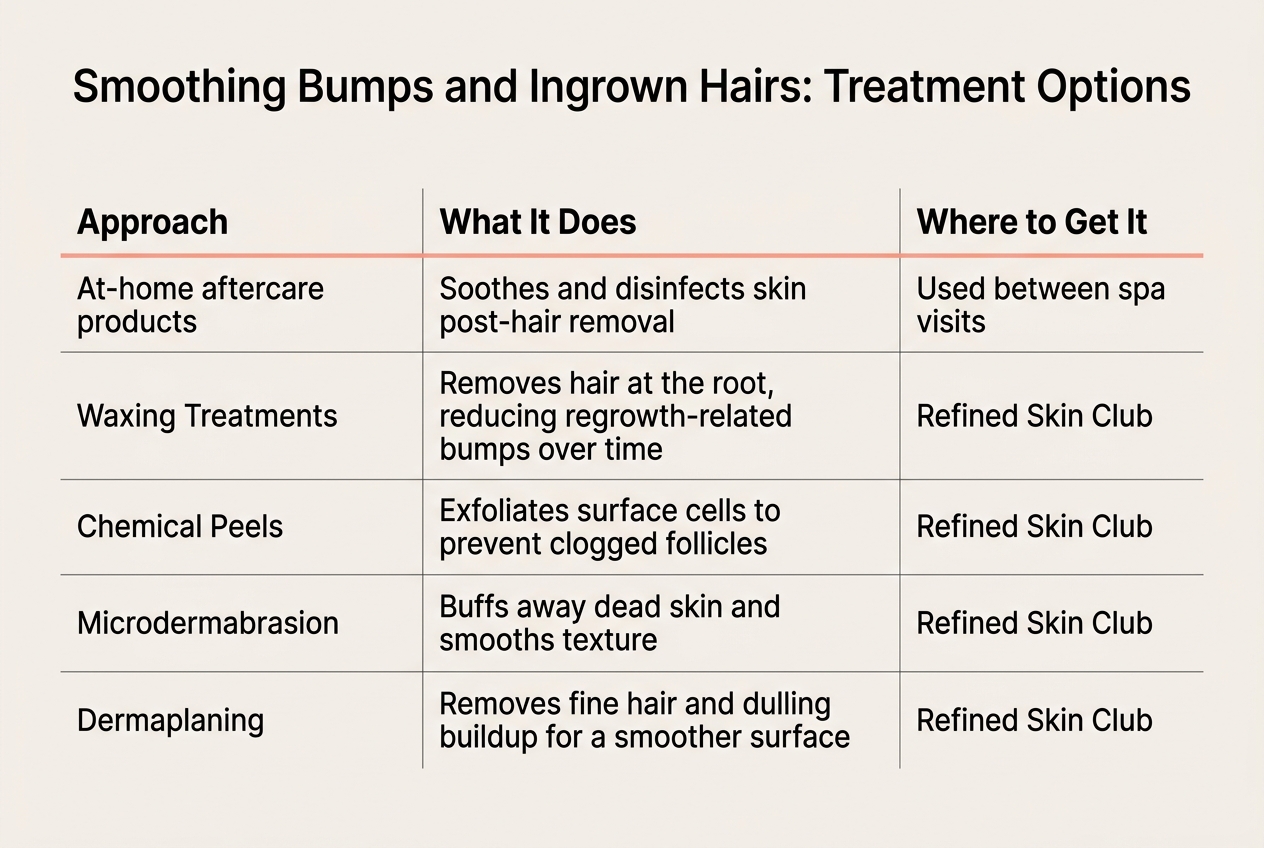
At-Home Products vs. In-Clinic Options for Bump-Free Skin
Most people start with what’s on the drugstore shelf: an acid toner, exfoliating pads, maybe a bottle of astringent kept in the medicine cabinet for emergencies. That works fine for mild, occasional bumps. But once ingrown hairs become a monthly pattern, the math changes. Here’s how the two approaches actually stack up when you weigh them side by side.
| Approach | Results Consistency | Skill Required | Irritation Risk | Cost Over Time |
|---|---|---|---|---|
| Topical bump solution | Varies by skin type | Low — wipe and go | Moderate if overused | $10-15 per bottle, repeat monthly |
| Exfoliating pads/toners | Inconsistent, slow buildup | Low | Moderate to high with daily use | $15-25 per month |
| At-home waxing kits | Unpredictable, technique-dependent | High, easy to misjudge wax temp or angle | High — burns, lifted skin, missed hairs | $20-30 per kit, frequent replacement |
| Professional waxing session | Reliable, even removal | None required from you | Low, handled by a trained esthetician | $40-70 per visit, fewer touch-ups needed |
Notice the pattern? DIY tools demand more effort from you and still deliver shakier results. A trained esthetician controls angle, tension, and timing — variables you’re guessing at home. If you want a deeper dive into ingredient comparisons and technique breakdowns, the blog covers that ground in more detail. Honestly, if bumps keep showing up no matter what you try, that’s not a willpower problem. It’s a sign your routine needs a professional reset, not another bottle.
When Irritation Signals You Need More Than a Topical Fix
Signs to stop self-treating and get a professional opinion
Some reactions just aren’t meant to be managed with a cotton pad and patience. Persistent redness that lingers for days, cystic-looking bumps that feel hard under the skin, or anything resembling pus, warmth, or spreading inflammation — these are your cue to stop. Infection-like symptoms don’t improve with more product. They tend to get worse, and repeated applications of an astringent solution can actually aggravate already-compromised skin.
Sensitive skin types are especially prone to trouble here. Alcohol-based liquids work by drying out the area and disinfecting it, but that same mechanism can leave reactive skin stinging, flaking, or tighter than normal. If you’ve noticed your skin reacting poorly to toners, fragranced products, or retinoids in the past, assume a similar response is possible with these solutions too. That’s not a reason to avoid treating bumps — it’s a reason to go in with lower expectations and a backup plan.
A knowledgeable esthetician brings something a bottle can’t: a trained eye. They can usually tell within minutes whether you’re dealing with simple ingrown hairs, early folliculitis, or an acne-like breakout that happens to show up after shaving. That distinction matters, because the fix is different for each one. From there, a plan gets built around your skin type, how much downtime you can tolerate, and what fits your budget — not a generic routine applied to everyone who walks in with irritation.
Still, there’s a line estheticians won’t cross, and shouldn’t. Severe or cystic acne-like reactions, especially ones that keep recurring or scarring, usually call for a dermatologist rather than another round of spot treatments. That’s not a failure of skincare — it’s just outside the scope of what topical fixes, professional or otherwise, are built to handle. And if persistent acne is part of the picture, know that lasting results usually come from esthetician-led protocols — facials, extractions, peels — built up over a series, not a single product swap. Severe or cystic cases may still call for a dermatologist’s input alongside that. If you’re also managing breakouts beyond the hair-removal area, understanding med spa treatments that can get rid of a double chin and other contour concerns can wait until the active irritation calms down.
Worth noting too: professional waxing done correctly interrupts the whole irritation cycle before it starts. Many local businesses see clients who’ve been stuck in a loop of shave, irritate, treat, repeat — and switching to properly performed waxing treatments, with pre- and post-care handled by someone trained in it, often means the spot-treatment liquid becomes a rare backup rather than a weekly necessity.
Tending to your skin is less about chasing one fix and more about staying consistent with the small habits and treatments that keep it calm, clear, and cared for over time. A good starting point is simply paying attention to how your skin feels week to week and leaning into the services that support it, whether that’s a gentle facial, regular extractions, or a dermaplaning session to keep things smooth. If waxing is part of that routine, Refined Skin Club’s Waxing Treatments fit naturally alongside the rest of the self-care you’re already building.