You’ve probably noticed the term “facial sculptures” trending everywhere, promising a lifted, chiseled look without surgery or needles. But separating real skin science from social media hype isn’t easy. This piece breaks down which non-invasive treatments actually sculpt, lift, and rejuvenate your skin in 2026. No scalpels. No guesswork — just results you can trust.
What People Mean by Facial Sculptures Today
Sculpting vs. Injecting: Two Different Philosophies
Ask ten people what the term means, and you’ll get ten slightly different answers. Broadly, it covers a wide range of non-surgical treatments aimed at improving facial contour, texture, and tone — no scalpel, no operating room. That umbrella includes collagen-stimulating treatments that work below the surface, exfoliation-based treatments that polish what’s on top, and muscle-toning treatments that engage the underlying tissue directly. None of it replaces a procedure. All of it works with your skin’s own biology, which is both the appeal and the catch.
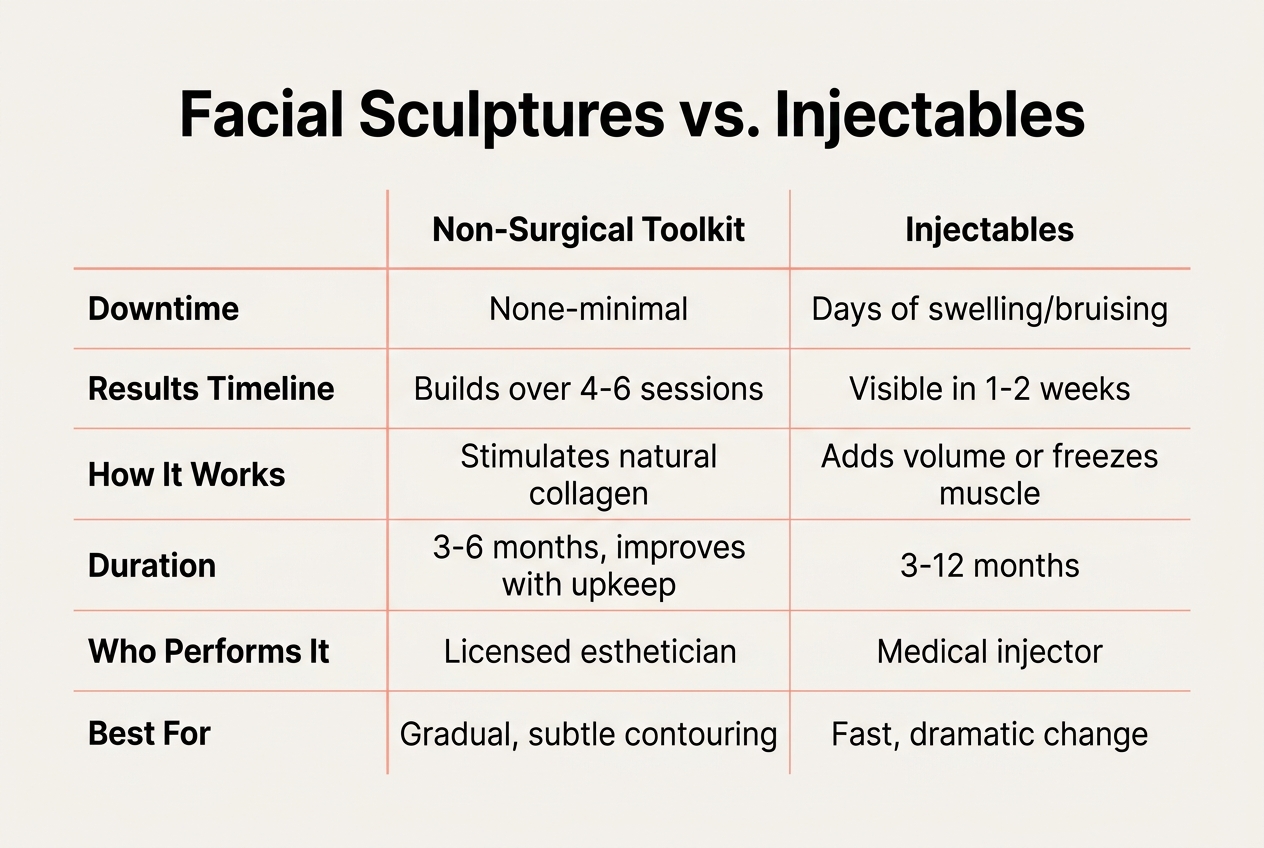
Here’s the real divide, though: sculpting results build slowly, while injectable or surgical results show up overnight. A filler adds volume the moment it’s placed. A toxin relaxes a muscle within days. Sculpting doesn’t work that way — it nudges your body to rebuild collagen, tighten tissue, and refine texture over weeks and sessions. The payoff is gradual and cumulative, not instant. That trade-off is the whole point. You’re choosing a slower process in exchange for something that looks and feels like your own skin, not an added-on volume. For a broader comparison of what falls into this non-invasive category, it’s worth reading through treatments that dont require a knife before deciding which path fits your goals.
One more thing worth setting straight before you read further: this article sticks to esthetician-administered, non-medical approaches. No needles, no prescriptions, no operating tables. That’s a deliberate scope, not an oversight — and if your goals involve injectables or surgery, you’ll want a medical provider for that conversation. If you’re curious about ongoing skin topics beyond this piece, the blog covers related treatments in more depth.
The Non-Surgical Toolkit Behind Modern Facial Sculptures
How Collagen-Building Treatments Differ From Muscle-Toning Treatments
Not every treatment in this space works the same way, and knowing the difference helps you pick the right one. Some tools build collagen from the inside out. Others work the muscle directly, more like exercise than repair. A good treatment plan usually uses both, timed in a sequence rather than thrown at your skin all at once.
- Microchanneling and microneedling use fine needles to create controlled micro-injuries in the skin, which trigger your body’s own wound-healing response and ramp up collagen and elastin production over the following weeks.
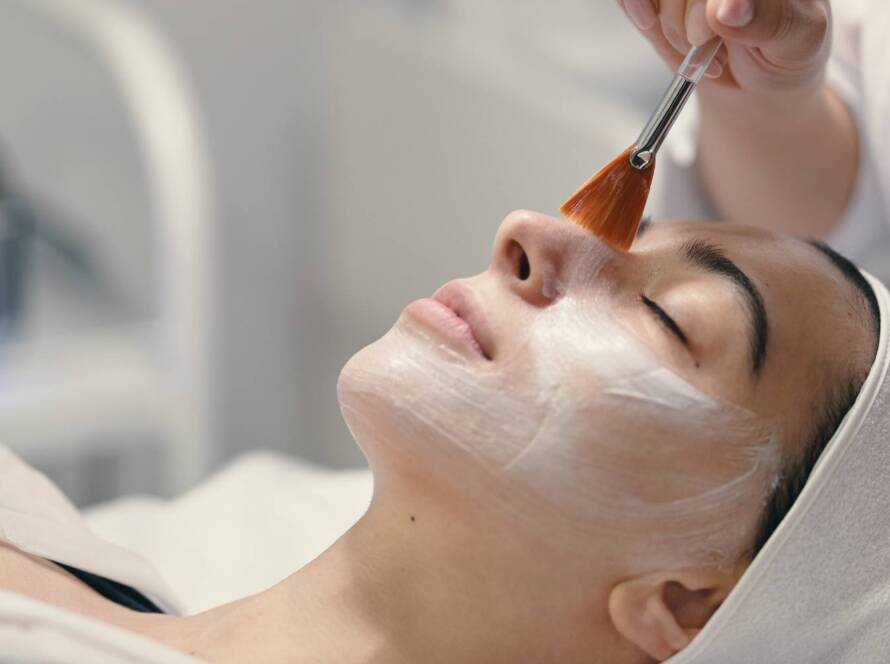
- Chemical peels use acids like glycolic, lactic, or salicylic to resurface the outer layers, improving tone and texture gradually across a series of sessions rather than in one visit.
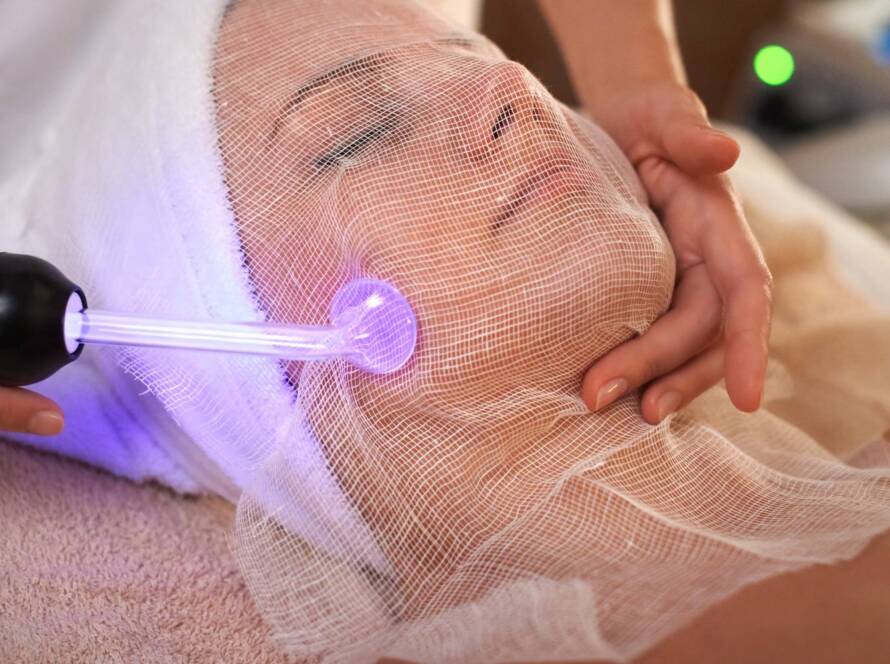
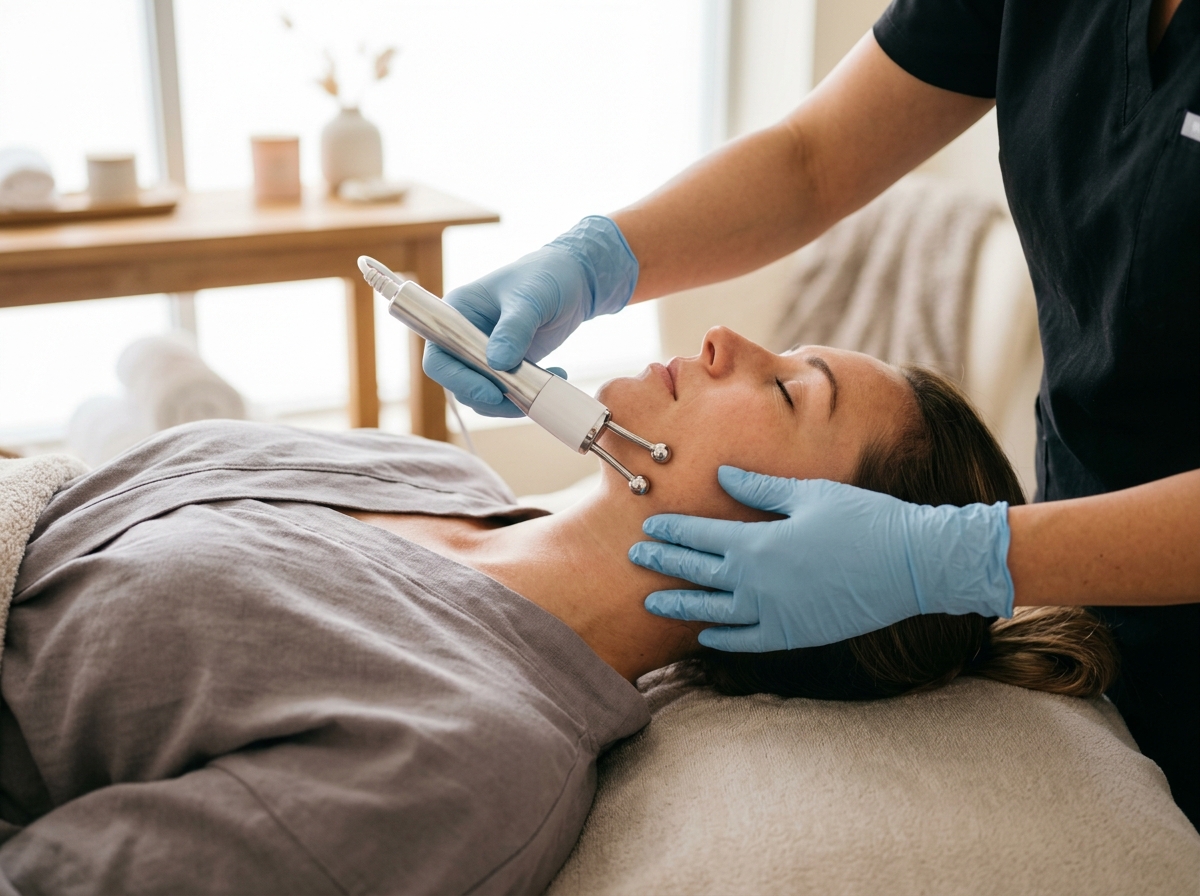
- Microcurrent applies a low-level electrical current to the facial muscles, prompting them to contract and tone, an effect many estheticians nickname a natural facelift because of the immediate lift it gives.
- Dermaplaning and microdermabrasion physically remove dead skin and fine vellus hair, clearing the way for serums and other treatments to absorb deeper and perform better.
- Facial extractions manually clear congested pores of blackheads and built-up debris, a step that’s often folded into a full facial protocol rather than done on its own.
Here’s the honest version: none of these replace a scalpel, and nobody should expect them to. They’re slower, gentler, and cumulative. If your goal is softer lines without freezing muscle movement, pairing microneedling with periodic peels tends to build visible change over a few months. Planning an event where your skin needs to look its best? It’s worth reading up on proven summer skincare tips since sun exposure, sweat, and heat all affect how your skin handles active treatments. And if you’re also eyeing jawline definition, many people research med spa treatments that can get rid of a double chin alongside collagen-focused facial work, since the two goals often overlap. Devices like at-home LED masks or drugstore microcurrent wands exist too, but professional-grade tools deliver stronger, more consistent current and needle depth than what you’ll find off the shelf.

Facial Sculptures vs. Injectables: A Side-by-Side Look
Here’s the real question most people are actually asking: do I want a needle, or do I want patience? Both routes can improve how your face looks. They just get there differently, on different clocks, and with different people holding the tools. Botox works by relaxing the muscle underneath a wrinkle, which is why it softens expression lines so fast — and also why results fade once muscle activity returns. Fillers add volume on the spot, like a handbag of plumpness dropped exactly where you need it. Microcurrent and microchanneling take the slow road, nudging tissue to respond over repeated visits instead of forcing an immediate change.
| Approach | Mechanism | Typical Downtime | Sessions Needed | Who Performs It |
|---|---|---|---|---|
| Botox | Relaxes targeted muscle movement | None to minimal | 1, repeated every 3-4 months | Licensed medical injector |
| Dermal fillers | Adds volume instantly | Mild swelling, 1-3 days | 1, touch-ups every 6-18 months | Licensed medical injector |
| Microchanneling | Stimulates collagen gradually | Redness, 1-2 days | Series of 4-6 | Trained esthetician |
| Microcurrent | Trains facial muscle tone over time | None | Ongoing, weekly to monthly | Trained esthetician |
| Chemical peels | Resurfaces skin, builds collagen over weeks | Flaking, 2-5 days depending on depth | Series of 3-6 | Trained esthetician |
Notice the pattern. Injectables are quick, dramatic, and require a medical injector — that’s simply outside an esthetician’s scope, full stop. Esthetician-led options ask for more sessions and more patience, but they come with less downtime and no needles involved. If you’re deciding between the two, think about your event calendar, your comfort level, and whether you’d rather see change in a week or over two months. Readers curious about injectable side effects, like asymmetry, often start by researching botox for uneven eyes before weighing a non-injectable path instead.
Building a Treatment Plan for Your Skin Goals
Matching Treatments to Skin Concerns
There’s no one-size-fits-all routine here. A good plan weighs your age, your skin type, how much downtime you can afford, and what your budget looks like month to month. Someone in their late twenties with mild congestion needs a very different roadmap than someone in their fifties noticing early sagging. The goal, the skin, and the timeline all shape the plan — that’s the whole point of personalizing it instead of running everyone through the same session.
If uneven texture or old acne scarring is the main issue, chemical peels, microchanneling, and dermaplaning tend to work best as a series rather than a one-off visit. Most people see gradual smoothing over several sessions spaced a few weeks apart, not overnight change. For fine lines and early sagging, pairing microcurrent with microchanneling gives a gentler, more gradual firming effect than people expect — think slow improvement, not a dramatic overnight lift.
Dull, congested skin usually calls for something different: a facial with extractions, followed by microdermabrasion, to reset the surface and clear out buildup. It’s a reasonable starting point if you’re not sure where else to begin. Skip the fix-everything-at-once mindset — layering five treatments in one week does more harm than good.
Why a Consultation Comes Before the Treatment Plan
Skipping the consultation step is the single most common mistake people make when starting a new routine. Skin changes with the seasons, with stress, with hormones — what worked last year might not fit now. A trained eye can catch things you’d miss on your own, which is part of why working with a knowledgeable esthetician matters so much more than following a generic routine pulled from social media.
Outside factors matter too. If you’re noticing dryness or breakouts that don’t match your usual pattern, it’s worth ruling out everyday culprits; resources that explain the signs your tap water might be contaminated are a useful cross-check alongside a professional skin assessment. A consultation also sets realistic expectations around downtime — some treatments mean a day of redness, others none at all — so there are no surprises mid-series.
This is where a virtual skin consultation earns its keep. You can map out which combination of treatments makes sense, ask about budget and timeline, and walk into your first in-person visit already knowing the plan. It’s also a smart way to flag concerns early, including changes around the eyes; anyone noticing droopy eyes developing over time should mention it upfront, since it can shift which treatments get prioritized first.
What a Sculpting-Focused Facial Session Actually Involves
Walk into a sculpting session expecting a single step, and you’ll be surprised. It’s really a sequence, with each stage setting up the next. Skip one, and the results suffer. Here’s the general order most estheticians follow, though the middle step changes based on your skin and goals.
| Step | What Happens | Typical Duration |
|---|---|---|
| 1. Analysis & cleansing | Skin is checked for congestion, texture, and sensitivity under good lighting | 5–10 minutes |
| 2. Exfoliation | Dermaplaning or microdermabrasion clears dead cells so products absorb better | 10–15 minutes |
| 3. Core treatment | Chemical peel, microchanneling, or microcurrent pass, chosen to match the plan | 20–30 minutes |
| 4. Calming finish | Protective serums and sometimes oxygen spray to hydrate and soothe | 5–10 minutes |
| 5. Aftercare guidance | Spacing recommendations and home-care instructions for the next visit | 5 minutes |
Step three is where plans diverge most. A peel targets tone and texture with acid strength tailored to your skin; microchanneling creates controlled micro-injuries to spark collagen; microcurrent uses low-level electrical pulses to tone facial muscles, no needles involved. None of these hurt the way they sound. Expect mild tingling, maybe some redness after.
Don’t skip the last step. Reading up on proper facial aftercare habits, like avoiding sun exposure and harsh actives for a few days, makes a real difference in how long results hold. Most sessions run 60 to 75 minutes total, and spacing between visits usually falls somewhere between three and six weeks, depending on intensity.
Beyond the Face: Rounding Out a Full-Body Sculpting Routine
Why Clients Pair Headspa With Facial Treatments
Facial work rarely happens in isolation. Most people who book a sculpting-focused session end up adding something else to the visit, and the pattern is pretty consistent. Skin gets the attention first, then the rest of the self-care list follows. It’s worth knowing what pairs well and why, especially if you’re trying to build a routine that feels complete rather than piecemeal.
Body contouring deserves a quick clarification here, because people often assume it’s a weight-loss shortcut. It isn’t. The goal is shape and contour in specific areas — think smoothing or tightening a targeted spot — not dropping pounds. That’s a different conversation entirely, and one best had with a physician if weight loss is the actual goal. Think of contouring as a finishing tool for areas that already respond to lifestyle habits, not a replacement for them.
Cryotherapy shows up a lot as a pairing, too. Cold exposure after a facial or body session gives circulation a jolt and leaves skin looking brighter almost immediately. It’s less about long-term change and more about that walk-out-the-door glow. Headspa treatment gets mentioned constantly by clients, and for good reason — scalp and neck relaxation during a skin appointment is the kind of detail people remember and bring up to friends.
Here’s how a fuller routine tends to come together in practice:
- Headspa work added onto a facial for scalp massage and neck relief, which clients frequently single out as the most memorable part of the visit.
- Cryotherapy tacked on at the end of a session for a quick circulation boost and a tighter, more awake look right away.
- PRP therapy and hair restoration treatments addressing thinning hair non-surgically, working alongside existing follicles rather than replacing them.
- Waxing scheduled in the same appointment window to handle body hair while skin treatments are already underway.
- Lash and brow services layered in for a finishing touch, since many clients say lashes are the detail that makes the whole visit feel worth it.
None of these pieces depend on each other, but together they turn a single treatment into an actual routine. If you want a broader sense of how facial anatomy informs sculpting work generally, research on facial reconstruction – anatomical art or artistic anatomy offers useful background. And if lashes are the detail you keep coming back to, it’s worth understanding what extensions actually involve before adding them to your next visit. Combine a few of these services thoughtfully, and the whole visit starts to feel less like a to-do list and more like actual downtime.
Setting Realistic Expectations and Avoiding Common Mistakes
Nobody walks out of one session looking ten years younger. That’s the first myth to drop. Real sculpting progress happens over a series of visits, typically weeks apart, as collagen rebuilds and skin turnover resets. Patience matters more than intensity. Pushing harder or more often doesn’t speed things up — it just stresses skin that’s trying to heal. A provider who promises dramatic overnight change is selling a fantasy, not a treatment plan.
Spacing is part of the protocol, not an inconvenience. Stacking chemical peels or microchanneling sessions too close together can leave skin raw, inflamed, and more sensitive to sun and breakouts. A good esthetician builds in recovery windows deliberately, adjusting strength and frequency based on how your skin responds, not a fixed calendar. Overdoing it is one of the most common mistakes people make once they start seeing results and want more, faster.
Severe or cystic acne is a separate category. Esthetician-led facials and extractions help a lot of skin, but deep, painful, or scarring acne often needs a dermatologist’s involvement alongside spa-based care. A responsible provider says so rather than promising what non-prescription protocols can’t deliver. This is also where honest removal matters: skin tags and suspicious moles are not the same thing, and skin tag removal only applies to benign tags — anything that looks irregular belongs with a medical provider, full stop.
Red Flags That Mean You Need a Medical Provider
Certain signs should send you straight past the spa menu. A mole that’s changed shape, color, or size, any lesion that bleeds or won’t heal, or sudden widespread cystic breakouts are all reasons to see a dermatologist first. Estheticians are trained to recognize what’s outside their scope — and a knowledgeable one will tell you plainly instead of attempting it anyway.
That honesty is actually the differentiator worth paying attention to. Templated treatment plans, the same peel strength or microneedling depth for every client, tend to under-treat some and over-treat others. Someone who asks about your skin history, your medications, and your goals before recommending anything is doing the job right. It’s a small thing that makes a measurable difference over months of visits.
Thinking of facial sculptures as something you carve once and forget rarely matches how skin actually behaves over time, which is why so many people shift toward ongoing care instead of a single fix. Treatments like microchanneling and microcurrent work with your skin’s own rhythm, encouraging gradual lift and tone rather than a static, sculpted look. If you’re curious where to start, a knowledgeable esthetician can walk you through what your skin responds to best — and places like Refined Skin Club, known for Facials, are a natural fit for that kind of ongoing, personalized attention.