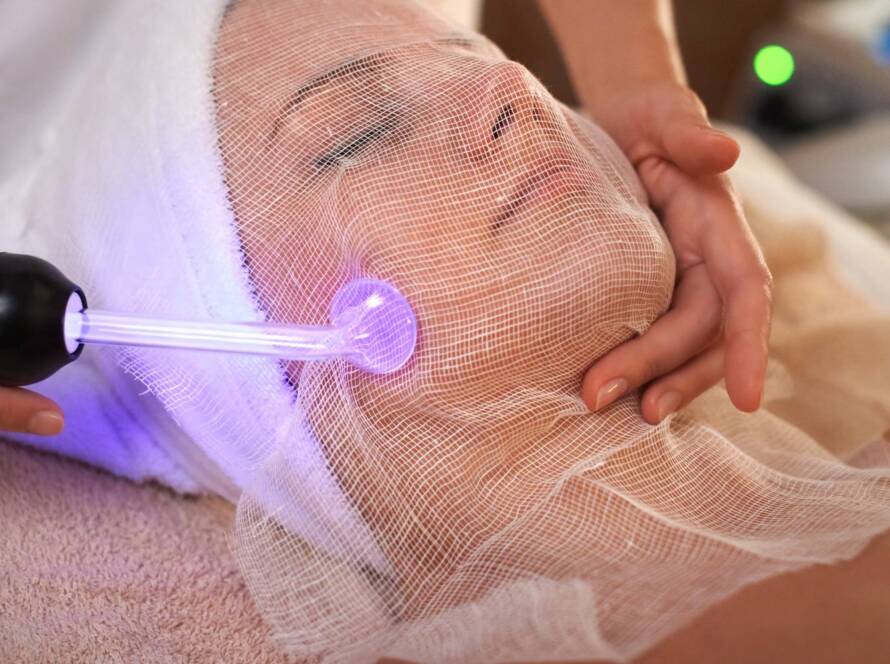
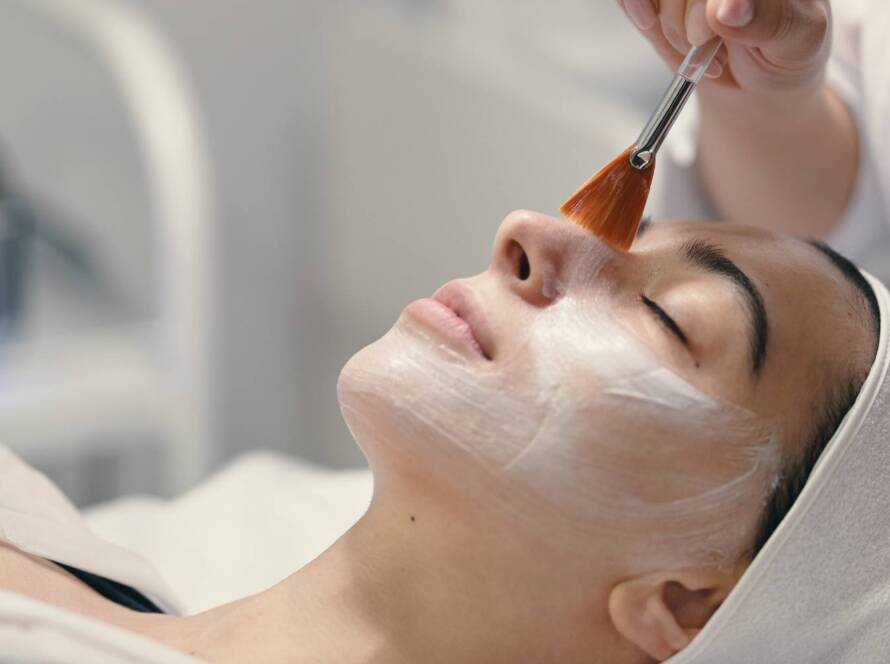
You want firmer, brighter, more even-toned skin. But the thought of surgery, scalpels, and weeks of downtime stops you before you even book a consultation. Here’s the good news: modern aesthetic medicine has closed the gap between doing nothing and going under the knife. Today’s non-surgical skin treatments deliver measurable, lasting results in facial texture, tone, and firmness without a single incision. At Refined Skin Club, we built this 2026 guide to help you figure out which non-surgical skin treatments actually fit your skin, your goals, and your lifestyle—so you can make an informed choice and finally see the change you’ve been waiting for.
Understanding Non-Surgical Skin Treatments
What Counts as a Non-Surgical Treatment
Minimally invasive procedures cover a wide range of services that improve skin without cutting, stitching, or general anesthesia. Think facials, chemical peels, microneedling, laser resurfacing, injectables, and body contouring. Some work on the surface, like microdermabrasion and dermaplaning. Others go deeper, like radiofrequency skin tightening or collagen-inducing therapies.
Extractions, oxygen spray, and microcurrent sessions also fall under this umbrella. They support skin health without any downtime. Even cryotherapy and skin tag removal count, since they rely on targeted energy or precision tools instead of surgical cuts.
The common thread is recovery time. Most clients return to normal activities within hours, not weeks. A single session might take 30 to 60 minutes. Many plans call for a series of treatments spaced weeks apart, building gradual, cumulative improvement.
How These Treatments Differ from Surgical Procedures
Surgical facelifts require incisions, anesthesia, and weeks of healing. Non-surgical options skip all three. That’s a big reason demand has grown so fast.
Cost, convenience, and lower risk drive interest too. A chemical peel or microneedling session costs a fraction of surgery, with far less risk of complications. Many people now explore med spa treatments that can get rid of a double chin instead of considering liposuction or surgical contouring.
Results build gradually rather than appearing overnight. Surgery changes structure immediately. Non-surgical care improves tone, texture, and firmness over weeks or months, and it often needs maintenance visits to keep the progress going.
Who Is a Good Candidate
Good candidates usually have mild to moderate concerns—fine lines, uneven tone, mild sagging, or acne scarring. Someone dealing with breakouts might wonder whether do facials help with acne, and for many mild cases, regular facials paired with extractions can calm skin noticeably.
People with significant excess skin or deep structural sagging usually need surgical solutions instead. A provider can walk you through realistic outcomes during a consultation—sometimes even a virtual skin consultation—before any session begins.
Overall health matters too. Candidates should be free of active infections, certain skin conditions, or specific medications that affect healing. Honest expectations matter most here: these treatments refresh and refine, but they don’t replace the dramatic, lasting change surgery provides.
Injectable Treatments for Wrinkles and Volume Loss
Relaxing Injectables (Neuromodulators)
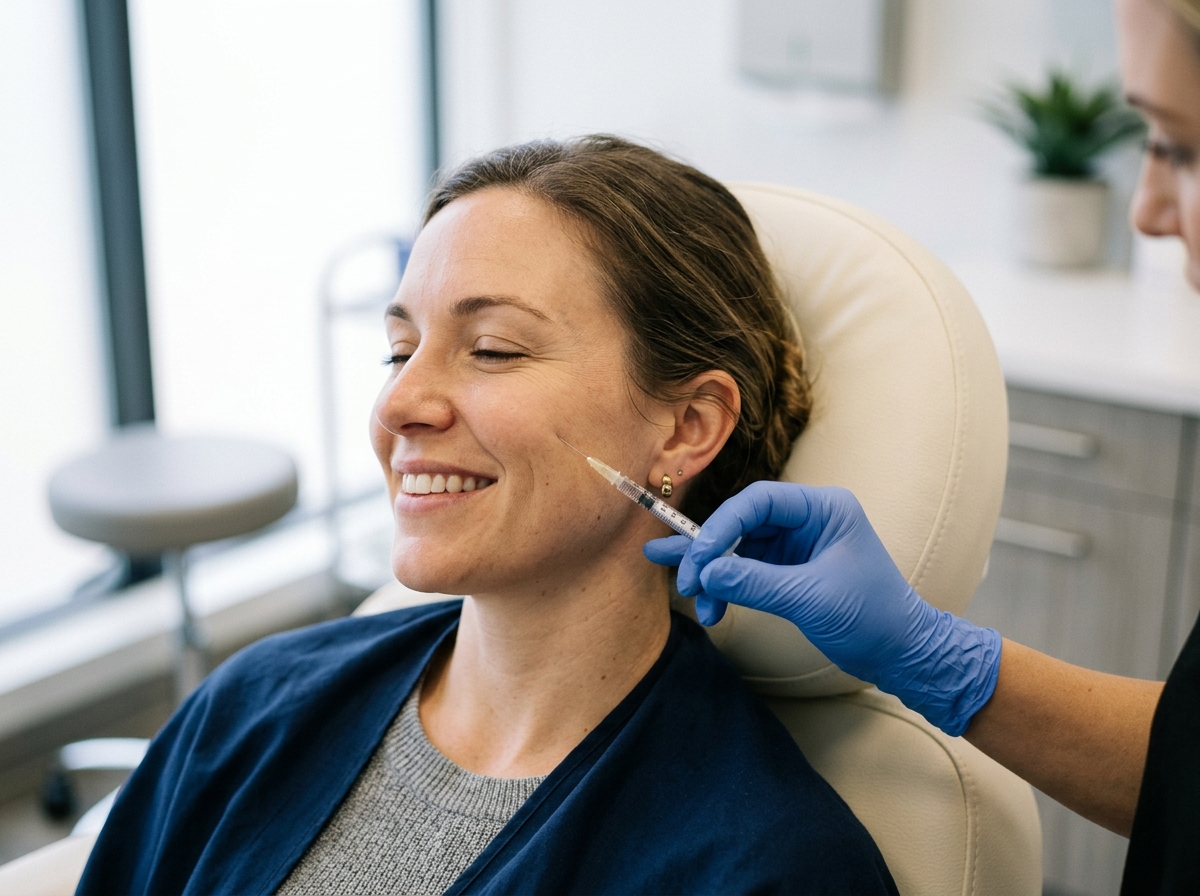
Neuromodulators temporarily relax the muscles behind expression lines. Botox, Dysport, and Jeuveau all work by blocking nerve signals to targeted muscles. This softens lines on the forehead, between the brows, and around the eyes. Results usually show up within three to seven days and last three to four months.
Each brand differs slightly in onset time and how it spreads within tissue. Dysport often kicks in a bit faster, while Jeuveau was built specifically for cosmetic use. A provider will study your facial movement patterns before choosing the right formula and dose. Many clients start with treating botox for forehead wrinkles, since that area shows early aging signs first.
These injections fall under a broader category of Non-Surgical Procedures that need no downtime. Most people return to normal life right after the session. Mild swelling or small bruises can show up but usually fade within a day or two.
Soft Tissue Dermal Fillers
Dermal fillers restore lost volume instead of relaxing muscles. Most contain hyaluronic acid, a substance that naturally holds water in skin. Injected into cheeks, lips, or under-eye hollows, fillers plump tissue and smooth deep folds like nasolabial lines.
Results show up immediately and can last six months to two years, depending on the product and injection site. Thicker gels work well for cheekbone contouring, while softer formulas suit delicate lip or tear-trough areas. A skilled injector layers filler gradually, checking symmetry the whole way through.
Filler treatments pair well with other services, like microneedling or facials, to support overall skin texture. Combining approaches often produces more balanced, natural-looking results than volume correction alone.
Collagen Biostimulators
Collagen biostimulators like Sculptra take a different approach. Instead of adding volume directly, they trigger the body to produce new collagen over time. Made from poly-L-lactic acid, Sculptra gradually thickens skin and improves firmness across several months.
Results build slowly, often requiring two to three sessions spaced six weeks apart. Many patients see full improvement by month three, with effects lasting up to two years. That makes biostimulators a strong option for anyone seeking gradual, long-term rejuvenation instead of instant change.
Comparing Popular Injectable Options
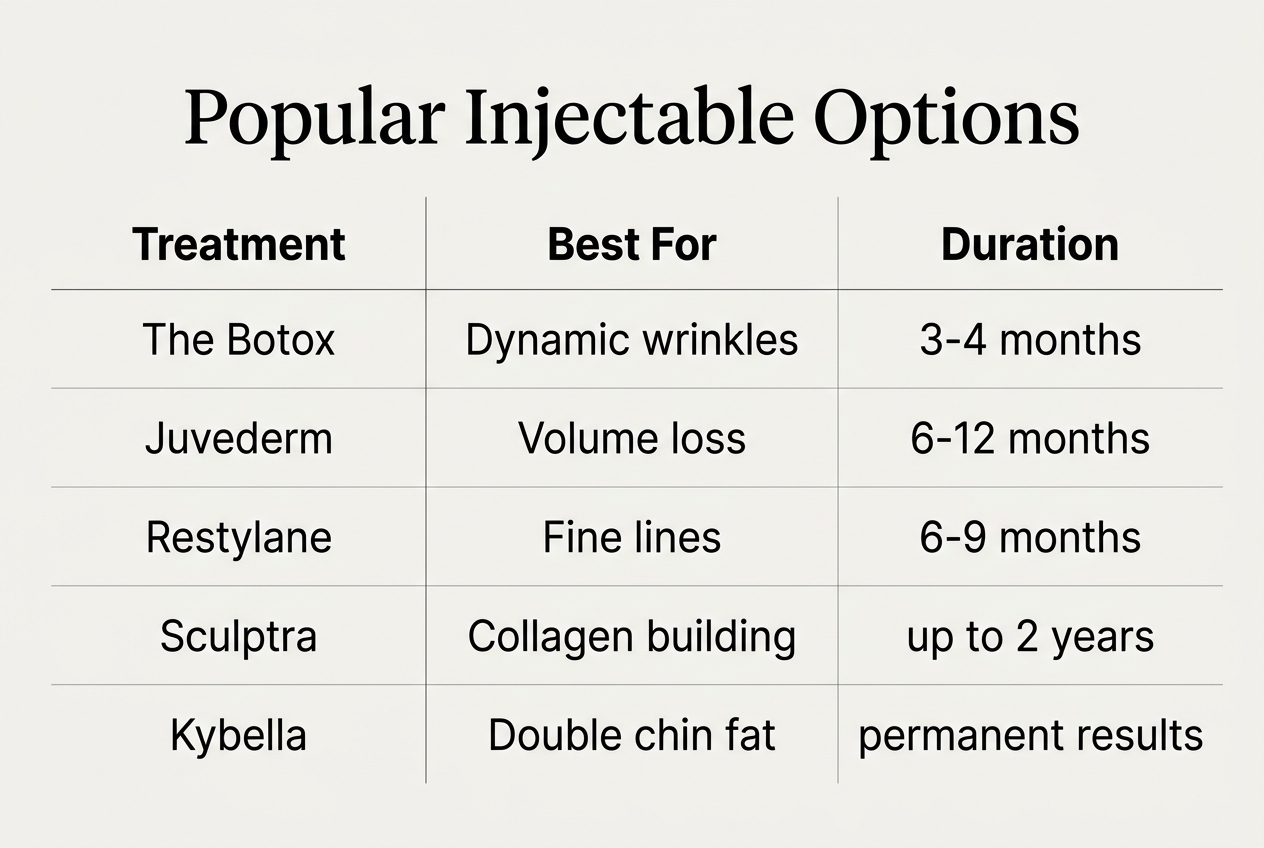
Injectables work in different ways. Some relax muscles; others add volume beneath the skin. This table compares four common choices side by side, so you can see how duration, comfort, and cost differ before your consultation.
| Injectable Type | Primary Target | Average Duration | Typical Cost Range |
|---|---|---|---|
| Neuromodulator (Botox-type) | Fine lines, forehead, crow’s feet | 3-4 months | $300-$600 per session |
| Hyaluronic acid filler | Cheeks, lips, nasolabial folds | 6-18 months | $500-$1,200 per syringe |
| Biostimulatory filler | Deep volume loss, jawline | Up to 2 years | $800-$1,500 per session |
| Skin-boosting injectable | Hydration, overall texture | 3-6 months | $350-$700 per session |
Duration and Longevity
Neuromodulators fade fastest. Biostimulatory fillers, on the other hand, build collagen gradually for longer-lasting structure.
Downtime and Discomfort Level
Most injectables cause mild swelling or bruising. Discomfort is brief, and many clients get back to normal activity the same day. Learn more about Non-Invasive Cosmetic Procedures NYC for extra safety context.
Typical Investment Range
Costs vary by product, treated area, and provider experience. Pairing injectables with proper aftercare, including guidance on how often should you exfoliate your skin, helps stretch results further.
Laser and Light-Based Skin Resurfacing
Lasers and light devices deliver focused energy into the skin. That energy heats deeper tissue layers, pushing the body to produce new collagen and elastin. Some devices also target pigment cells, breaking up sun spots and redness. The payoff: smoother texture, more even tone, and firmer skin over time. Many providers combine these tools with chemical peels or facials for layered results.
BroadBand Light (BBL) Therapy
BBL therapy uses broad wavelengths of light to target sun damage, redness, and uneven pigment. It’s a non-ablative treatment, meaning the surface layer of skin stays intact while heat works underneath. Most sessions take 20 to 30 minutes with little to no downtime.
Patients often notice brown spots darkening and flaking off within one to two weeks. Redness and visible blood vessels fade gradually too. A typical plan includes three to four sessions spaced four weeks apart, with maintenance visits once or twice a year to keep tone and clarity intact.
Moxi Laser for Prevention and Tone
Moxi is a non-ablative fractional laser built for prevention rather than correction. It creates tiny, controlled zones of thermal injury across the skin, sparking fresh cell turnover without disrupting the outer barrier.
This gentler approach suits younger patients or anyone wanting to maintain results between more intensive treatments. Downtime is minimal—usually just mild pinkness for a day or two. Combined with tools that explain what does high frequency do for skin, Moxi fits well into a broader tone-refining routine.
Halo Hybrid Fractional Resurfacing
Halo combines ablative and non-ablative wavelengths in one device, treating surface texture and deeper pigment concerns at once. This hybrid design allows customizable intensity based on skin type and how much downtime you can tolerate.
Ablative energy removes thin layers of damaged skin, while non-ablative energy heats tissue beneath without breaking it. Recovery typically lasts three to five days, with peeling and warmth similar to sunburn. For readers researching alternatives, resources on Nonsurgical Facelift: What It Is, Options & Benefits offer helpful context on how resurfacing compares to lifting procedures.
Skin Tightening and Lifting Technologies
Radiofrequency and Ultrasound Lifting
Radiofrequency and ultrasound devices use focused energy to heat deep skin layers. That heat triggers new collagen and elastin production. Over several weeks, skin gradually firms and lifts, especially along the jawline, neck, and brow.
These are some of the treatments that dont require a knife, yet they still reach the deeper tissue layers a facial or peel can’t touch. A single session may take 30 to 60 minutes, with little to no downtime afterward.
Results build gradually rather than appearing overnight. Most people notice firmer skin within two to three months, with results lasting up to a year. Many providers pair this with microcurrent sessions to boost overall tone.
EMFace Muscle and Skin Toning
EMFace combines radiofrequency with electromagnetic muscle stimulation. It heats the skin while contracting facial muscles at the same time. This dual action lifts tissue and tones underlying muscle simultaneously—something surface-only treatments can’t do.
Sessions typically run about 20 minutes, with no needles or incisions involved. Many clients complete four sessions spaced a week apart. The muscle contractions feel like a light workout, not painful stimulation.
Because it strengthens muscle rather than just heating skin, results can look more sculpted than surface-only devices. It works well alongside oxygen spray facials, which calm and hydrate skin after treatment.
Who Benefits Most from Lifting Devices
These technologies suit people with mild to moderate sagging who want gradual, natural-looking improvement. They won’t replace surgery for significant excess skin, but they’re strong alternatives for early aging concerns.
Reviewing The Best Non-Surgical Options for Skin Rejuvenation can help clarify which device fits your goals. A consultation, virtual or in-person, helps set realistic expectations before you book anything.
Busy adults often pick these methods for the minimal downtime. You can go back to work immediately, which makes lifting devices a practical way to maintain a refreshed look without surgical recovery.
Microneedling and Collagen Induction Therapies
SkinPen Microneedling Basics
SkinPen microneedling uses fine, sterile needles to create tiny micro-injuries in the skin. Microchanneling is a related but distinct technique. Those small channels signal the body to produce fresh collagen and elastin. The result: firmer, smoother skin over time.
A typical session takes about 30 to 45 minutes. Numbing cream goes on first to keep discomfort low. Most clients describe the feeling as light vibration or mild scratching, not sharp pain. Redness similar to a sunburn usually fades within one to three days.
Many providers now favor hydration-focused microneedling. This pairs the needling process with hyaluronic acid serums. The tiny channels allow deeper serum absorption than a topical product alone could manage. Clients often notice a plumper, dewier look within a week, alongside longer-term texture gains that build with each session.
Boosting Results with PRP/PRF
PRP, or platelet-rich plasma, comes from a small blood draw. The sample is spun in a centrifuge to concentrate growth factors. PRF, platelet-rich fibrin, is a newer version made without additives. Both get applied to the skin right after microneedling.
These growth factors speed healing and boost collagen production further. Many clients see reduced downtime, often just one day of redness. Results build gradually, with visible improvement around week three and continued change over two to three months.
A typical plan includes three sessions, spaced four to six weeks apart. This combination is popular among clients already exploring options outlined in Top Non-Invasive Anti-Aging Facial Treatments, since it pairs well with facials and light chemical peels for layered results.
Microneedling for Acne Scars and Texture
Acne scars form when skin’s healing process leaves uneven collagen behind. Microneedling breaks down old scar tissue and encourages new, organized collagen fibers. This gradually softens pitted or box-car scars often seen on the cheeks and jawline.
Texture concerns like enlarged pores, rough patches, or fine lines respond well too. A series of four to six sessions, spaced monthly, is common for moderate scarring. Improvement keeps going for up to six months after the final treatment, since collagen remodeling is a slow biological process.
Providers often combine microneedling with body treatments during a single visit, since many spas offering skin services also provide body contouring for clients pursuing broader rejuvenation goals. Consistency matters most here—scattered single sessions rarely produce lasting scar improvement.
Fat Reduction and Body Contouring Options
Kybella for Double Chin Reduction
Kybella targets submental fat, the stubborn pocket under the chin. It uses injectable deoxycholic acid, a substance that breaks down fat cells naturally. Once destroyed, those cells can’t store fat again.
Most plans involve two to four sessions, spaced about a month apart. Each treatment takes fifteen to twenty minutes, with mild swelling afterward lasting a few days. Results build gradually over several weeks as the body clears the fat.
Kybella works well for patients bothered by a fuller chin profile who want to avoid surgery. It pairs naturally with facial rejuvenation goals, since a defined jawline sharpens the whole lower face.
Non-Invasive Body Contouring Basics
Non-invasive body contouring uses cooling, heat, or energy devices to reduce fat in areas like the abdomen, flanks, and thighs. Many providers explain the benefits of coolsculpting, a popular fat-freezing method with no downtime and no incisions.
Sessions typically run thirty-five to sixty minutes per area. Visible changes appear within three weeks, with full results around two months. Cryotherapy sessions sometimes get added in for recovery and circulation support.
Combining Face and Body Treatments
Pairing facial and body treatments builds a fuller rejuvenation plan. A patient might combine Kybella with microneedling or a chemical peel to refresh skin texture while refining contour lines at the same time.
According to The 5 Most Effective Non-Surgical Facial Procedures …, combination approaches often produce more balanced, natural-looking outcomes. Many local businesses now build customized packages blending face and body sessions for steady, lasting improvement.
Choosing the Right Treatment: Pros, Cons, and Considerations
Key Benefits of Non-Invasive Options
Non-invasive treatments appeal to busy people. Most involve minimal downtime, so patients return to normal routines within a day or two. Chemical peels, microneedling, and light-based therapies also cost less than surgery and carry lower risk of complications. Results build gradually, which allows for natural-looking change instead of a sudden transformation.
Possible Risks and Side Effects
Every treatment carries some tradeoff. Setting realistic expectations starts with understanding common side effects before booking a session.
- Bruising or swelling can appear after injectables or microneedling and usually fades within a week.
- Redness or peeling often follows chemical peels and laser resurfacing for several days.
- Results are frequently temporary, requiring repeat sessions every few months to maintain effects.
- Rare allergic reactions or infections can occur if aftercare instructions are ignored.
- Uneven results may happen if a provider lacks experience with a specific device or technique.
Following proper botox aftercare guidance can cut down on many of these risks significantly.
Questions to Ask Your Provider
Before committing, ask about credentials, expected downtime, and total treatment costs. Request before-and-after photos from real clients. Ask how many sessions are typically needed and what maintenance looks like long-term. For a broader breakdown of pricing and procedure details, the Non-Surgical Skin Tightening Cost and Procedure Guide offers helpful context.
What to Expect: Steps from Consultation to Results
Initial Consultation and Skin Assessment
Every treatment journey starts with a skin assessment. A provider reviews medical history, skin type, and goals. Many offices also offer a virtual skin consultation for anyone who wants guidance before booking. This step helps match the right therapy, whether that’s a chemical peel, microchanneling, or a laser session.
During the Treatment Session
Session length and sensation vary by treatment type. Below is a general comparison of what patients typically experience.
| Treatment | Average Session Time | Sensation Level |
|---|---|---|
| Chemical Peel | 30-45 minutes | Mild tingling |
| Microneedling | 45-60 minutes | Moderate pressure |
| Laser Resurfacing | 20-40 minutes | Warm, snapping feel |
| Microcurrent Facial | 45-60 minutes | Minimal, relaxing |
Aftercare and Recovery Timeline
Recovery depends on treatment intensity. Redness often fades within 24-48 hours, while deeper peels may need a week. Following summer skincare tips helps protect healing skin from sun exposure. Most clients notice visible improvement between two and six weeks, with full collagen benefits building over three months.
Maintaining Results and Supporting Skin Health Long-Term
Recommended Touch-Up Schedules
Results fade on different timelines depending on the treatment. Consistent scheduling keeps skin looking its best without dramatic dips between sessions.
- Neuromodulator injections typically need a refresh every three to four months as muscle activity gradually returns.
- Dermal fillers can last six months to two years, depending on the product and injection area.
- Laser resurfacing plans often call for a series of three to six sessions, spaced several weeks apart, followed by annual maintenance visits.
- Chemical peels for tone and texture usually work best on a four to six week cycle during active treatment phases.
- Skin tightening technologies may require touch-ups every nine to twelve months to sustain collagen remodeling.
Following aftercare guidance matters just as much as timing; for example, reviewing what not to do after botox helps injections settle properly and last longer.
Daily Skincare to Extend Results
A simple daily routine protects treatment results. Sun protection is the single biggest factor in preserving collagen gains. Daily broad-spectrum SPF, a gentle cleanser, and a hydrating moisturizer support skin between visits. Antioxidant serums, like vitamin C, help defend against environmental damage that speeds up aging.
HydraFacial and Recovery-Boosting Add-Ons
Recovery-support therapies bridge the gap between major treatments. A HydraFacial cleanses, exfoliates, and hydrates in one session, making it a popular monthly maintenance option. Oxygen spray and microcurrent add-ons can calm redness and boost circulation after more intensive procedures, helping skin bounce back faster and stay glowing longer.
When to See a Skin Care Professional
Signs You Should Consult a Specialist
Persistent breakouts that resist store-bought products often signal a deeper issue. A professional evaluation can catch hormonal acne, rosacea, or early signs of aging that need targeted care. If your skin reacts badly to new products, or you notice sudden texture changes, it’s time to book a consultation rather than guess.
New moles, growths, or skin tags that change shape or color deserve prompt attention. A specialist can determine if skin tag removal is appropriate or if further testing is needed. Chronic dryness, unexplained redness, or dullness that lingers for weeks also warrants a closer look, especially before starting chemical peels or microneedling.
Warning Signs After a Procedure
Mild redness and swelling after a facial or peel usually fade within 24 to 48 hours. But intense pain, blistering, or a spreading rash beyond the treated area is a red flag. Contact your provider right away instead of waiting it out.
Fever, pus, or worsening swelling three days after microneedling or laser work suggests infection. Uneven pigmentation appearing weeks later also needs review. Reading a provider’s blog beforehand helps you tell normal healing apart from something that needs urgent care.
Building a Long-Term Skin Care Plan
One treatment rarely solves everything. A personalized plan combines facials, dermaplaning, and periodic microcurrent sessions based on your skin’s changing needs. Seasonal shifts, stress, and aging all affect results over time.
Regular check-ins, roughly every three to six months, let a specialist adjust your routine. This proactive approach catches issues early and keeps results consistent for years, not just weeks.
Before you commit to anything, it helps to get clear on what you’re actually asking your skin to do: is the goal softening the look of fine lines over time, evening out tone, or something structural that only a medical injector or physician can address? Those are different paths, and the honest answer often involves more than one provider — a dermatologist for anything medical, and an esthetician for the gradual, collagen-building work of peels, microchanneling, microcurrent, and consistent facials. Ask how many sessions a realistic result takes, what the maintenance looks like a year from now, and whether the person in front of you is willing to tell you when something falls outside their scope.