You’re tired of razor burn, but the sugaring vs waxing debate has you stuck before you even book an appointment. Both promise smooth, hair-free skin. But only one is likely right for your skin type, pain tolerance, and lifestyle in 2026. We’re breaking down exactly what separates them, so you can walk into any appointment knowing precisely what to ask for.
Sugaring vs waxing: how each method actually works
How waxing is applied and removed
Waxing relies on a resin-based formula, usually a blend of pine resin and beeswax, heated before it goes on your skin. Soft wax gets spread warm with a spatula, then pulled off fast with a cloth or paper strip. Hard wax works differently. It’s applied thicker, left to cool and set, then snapped off in one piece without any strip at all. Both versions grab the hair shaft and pull it out from the root. That’s why results last longer than shaving.
The technique matters more than people think. A rushed application, or wax applied at the wrong temperature, can leave hair broken instead of removed, or cause redness that lingers. Most estheticians work in small sections, pulling the strip back against the direction of hair growth in one quick motion. That’s the standard approach you’ll find during waxing treatments at most spas. It’s also worth knowing that repeated sessions can affect regrowth over time — in fact, learning whether does waxing reduce hair growth is a common question for anyone weighing long-term hair removal plans.
Hard wax tends to suit sensitive areas like the bikini line or underarms better, since it grips hair without sticking to skin. Soft wax covers larger areas, like legs or arms, more efficiently. Neither is universally “better.” It depends on the zone being treated, the hair density, and how your skin tends to react.
How sugaring paste is made and applied
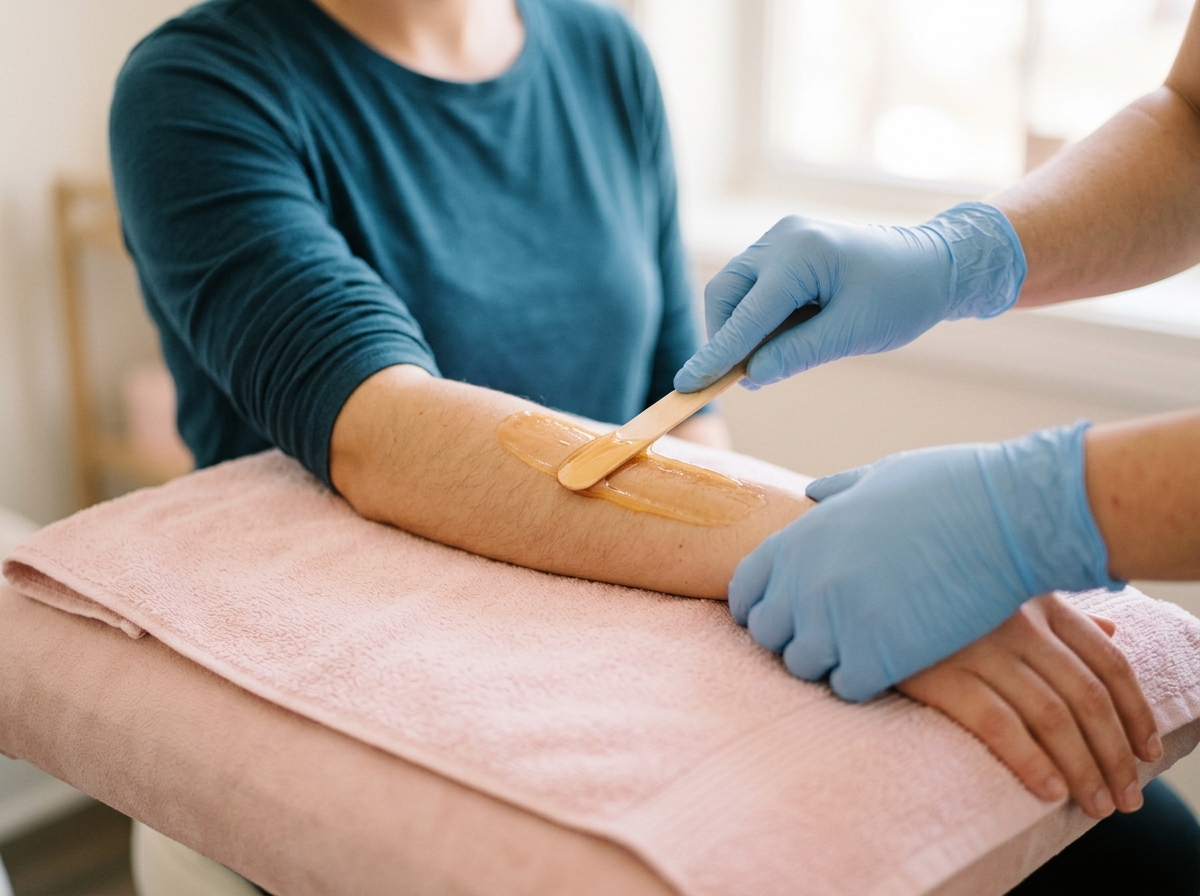
Sugaring paste is made from just three ingredients: sugar, lemon juice, and water, cooked down into a thick, honey-like consistency. There’s no resin, no chemical additives, and no synthetic thickeners. The paste is applied at body temperature, which already sets it apart from wax that needs to be heated. It’s molded onto the skin by hand, usually in the same direction the hair grows, then flicked off in the opposite direction with a quick flip of the wrist.
That flicking motion is the whole trick. Because the paste is worked against the natural angle of hair growth, it tends to lift hair from the follicle with less tugging on surrounding skin. Practitioners often reuse the same ball of paste multiple times over one area, which some find more efficient than constantly applying fresh strips. It’s a slower rhythm than waxing, honestly. But plenty of people say it feels gentler.
Both methods pull hair from the root, so regrowth timelines land in a similar range. The real differences show up in technique, ingredients, and how each interacts with your skin type. Those distinctions set up the criteria worth comparing throughout the rest of this piece: pain, longevity, cost, skin suitability, and hygiene. If you want a broader side-by-side before diving deeper, Sugaring vs. Waxing: Which Is Better? lays out another perspective worth considering, and our own blog covers related skincare prep tips for either treatment.
Pain level, sensitivity, and comfort during treatment
Why direction of hair removal matters for pain
Here’s the thing most people never think about: hair has a grain, just like fabric. Traditional wax application pulls hair against that natural growth direction. That backward pull yanks against the follicle at an angle it wasn’t built for. That’s exactly why waxing can feel so sharp and sudden. It works fast, but your skin pays a small price for that speed.
Sugaring paste, by contrast, gets applied against the grain and then flicked off in the same direction the hair grows. Many estheticians argue this single difference is the whole story: less resistance, less breakage, and a gentler pull on the follicle wall. It doesn’t mean sugaring is painless — nothing that removes hair from the root really is. But the discomfort tends to feel duller and shorter-lived.
Temperature adds another layer to the equation. Hot wax needs to stay warm enough to spread, and that heat can occasionally cause redness or, if applied carelessly, a minor burn on thin-skinned areas. Sugar paste stays at body temperature the whole time. So there’s far less heat-related risk — just the mechanical pull of removal, nothing more.
Where you’re getting hair removed matters just as much as which method you choose. Bikini, underarm, and facial skin are thinner and packed with more nerve endings, so they react more sharply to either method than legs or arms do. If you’re weighing Sugaring vs. Waxing: Which is better for you? for a sensitive zone specifically, that’s worth factoring in before you book. Underarms in particular tend to feel more tender since the skin there is thinner and more prone to irritation from friction and sweat.
A few practical tweaks can soften either experience. Over-the-counter numbing creams applied 30 to 45 minutes beforehand blunt nerve response without affecting how well the hair releases. Timing helps too. Skin is measurably more sensitive right before or during your period, so scheduling around that window, alongside general summer skincare tips for calming irritated skin, can make a noticeable difference. Small planning, real payoff.
Waxing vs sugaring pros and cons
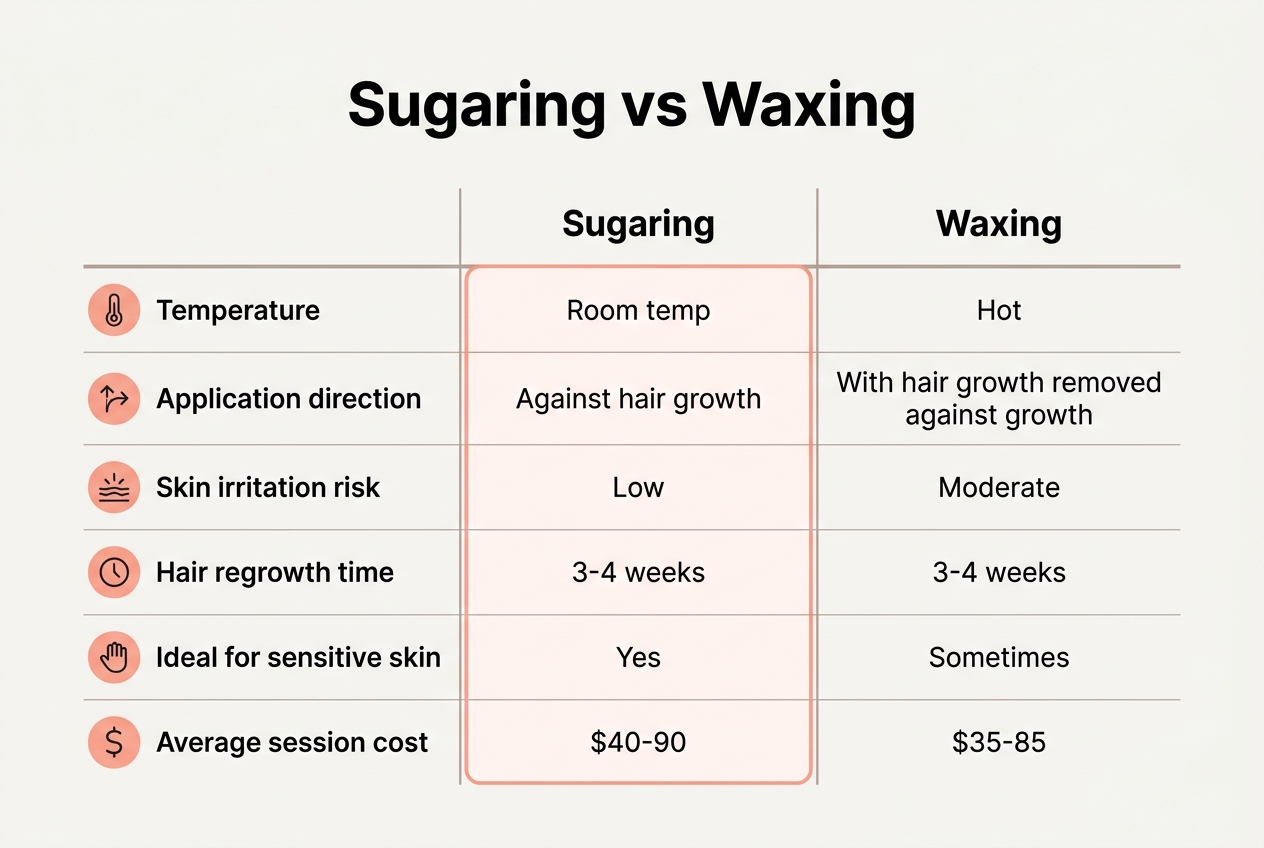
Once you strip away the marketing noise, both methods boil down to a short list of real trade-offs. Some matter more depending on your skin type, your pain tolerance, or how much time you actually have for a session. Here’s the quick-glance version before you book anything.
| Factor | Waxing | Sugaring |
|---|---|---|
| Availability | Offered almost everywhere, from salons to spas | Fewer providers, though growing steadily |
| Best for | Coarse, dense hair; large areas like legs and back | Sensitive skin and finer hair |
| Speed on big areas | Faster, strips cover more ground at once | Slightly slower, more precise application |
| Irritation risk | Higher, especially with repeated passes | Lower, gentler on reactive skin |
| Cleanup | Often needs oil or solvent for residue | Water-soluble, rinses off easily |
Waxing wins on raw speed. If you’ve got a lot of surface area to cover, that matters. But it also demands more from your skin: hair has to reach a certain length, and the pulling motion can leave redness or irritation behind, particularly if you’re already dealing with breakouts or reactive patches. For anyone managing both hair removal and blemishes, it’s worth pairing your routine with regular treatments that dont require a knife to keep skin calm between sessions.
Sugaring trades a bit of speed for comfort. The paste only grips dead skin and hair, not living tissue, so it exfoliates gently as it’s removed. That’s a genuine plus if you bruise or flare easily. Because so much of the appeal comes down to personal skin reaction, learning the full Sugaring vs. Waxing breakdown before your first appointment can save you a disappointing visit. Neither method is universally better. It just depends on what your skin can tolerate, and what you’re willing to trade for it.
Which lasts longer and works best on different hair types
Hair length requirements before your appointment
Let’s clear up the biggest myth first: neither method lasts longer than the other in any dramatic way. Both pull hair out from the root, so you’re typically looking at 3 to 6 weeks of smooth skin before regrowth shows up. Where the two really diverge is how short your hair can be on appointment day. Sugaring paste is soft and pliable, molding around each strand almost like a glove, which means it can grab hair as short as 1/16 inch. That’s a huge advantage if you’ve got somewhere to be next weekend and only stubble to work with.
Waxing plays by stricter rules. Most estheticians want at least 1/4 inch of growth, roughly two weeks past a shave, before the wax has enough surface to grip. Skip that window and you’ll get patchy results or breakage instead of a clean pull. If you’re deciding between the two, reading up on hot wax vs sugar wax differences ahead of time can save you an awkward, half-effective session.
Hair type matters just as much as length. Coarse, thick hair, think underarms or bikini areas, tends to respond well to hot wax’s firm hold, since the wax hardens and locks around dense strands. Fine or sparse hair, common on the face or fine arm hair, often comes out more precisely with sugaring, because the paste bonds only to hair rather than live skin cells, reducing irritation. Stick with either method long enough, often a year or more of consistent sessions, and most people notice regrowth coming in finer and sparser over time regardless of which one they chose.
Skin type, sensitivity, and side effects compared
Your skin’s condition matters more than which method sounds trendier. Sugar paste is made from natural ingredients like sugar, lemon, and water, and it only clings to hair, not live skin cells. That means less risk of tearing or bruising delicate tissue. Wax works differently. It bonds to both hair and the skin’s surface, which can pull at thin or fragile areas, especially around the face, underarms, or bikini line. If you’ve got sensitive skin, that distinction is worth remembering before you book anything.
Here’s the part people don’t expect: both methods actually exfoliate. Pulling hair from the root lifts a layer of dead skin cells along with it, leaving skin looking brighter for a few days. It’s a nice bonus, but it’s not a substitute for a proper exfoliation routine, and it doesn’t mean side effects disappear. Some reaction is normal and expected. Before assuming something’s wrong, know what’s typical:
- Temporary redness that fades within an hour or two, similar to what you’d see after facial extractions.
- Minor bumps or slight swelling around the follicle, usually gone by the next day.
- Occasional ingrown hairs, more common in coarse or curly hair types.
- Mild sensitivity or warmth in the treated area, especially on first-time clients.
Certain conditions call for a conversation first, not a walk-in appointment. Anyone with rosacea, eczema, active acne, or sunburned skin should talk to an esthetician before scheduling either treatment. Anyone taking isotretinoin (Accutane) should avoid waxing during treatment and for at least six months afterward, since the drug’s prescribing information warns it can increase the chance of scarring from waxing. Ask your prescriber before sugaring too. Diabetics, clients using Retin-A, and pregnant clients in certain treatment areas need professional guidance as well, since skin can behave unpredictably. Skip that step, and you’re gambling with skin that’s already compromised. Not worth it.
Cost, speed, and appointment logistics
Time and money matter just as much as comfort when you’re picking a hair removal method. Both treatments follow a similar rhythm: a quick session, some downtime rules, then a repeat visit in a month or so. But the details shift depending on body area, and that’s where planning gets real.
Typical session times by treatment area
Waxing tends to move faster on big surfaces. An esthetician can spread wax over a whole calf or a back panel in one motion, then strip it in seconds. Sugaring paste gets applied and flicked off in smaller sections, so it’s more methodical. For small, detailed areas like the upper lip or underarms, the time gap barely matters. Many people who’ve tried both weigh in on the tradeoff themselves, and a quick scan of a Waxing vs. Sugaring : r/HairRemoval discussion thread shows opinions split pretty evenly on which feels faster in practice.
| Treatment area | Waxing session time | Sugaring session time |
|---|---|---|
| Underarms | 10–15 min | 15–20 min |
| Full legs | 30–45 min | 45–60 min |
| Brazilian/bikini | 15–25 min | 20–30 min |
| Facial areas (lip, chin, brows) | 5–10 min | 5–10 min |
| Full back | 25–35 min | 35–45 min |
Estimated cost ranges by body area
Here’s the honest answer: price differences between the two methods are usually small. Location and body area drive cost far more than the technique itself does. A Brazilian, bikini line, underarm, or facial patch gets billed separately from full-leg or back work, since each requires different time and product volume. Expect roughly $45–$75 for underarms or facial areas, $65–$100 for a Brazilian, and $80–$150 for full legs or a full back, give or take by region. Either way, plan on maintenance every 4 to 6 weeks to keep regrowth even and manageable. That’s also a good window to layer in other skin goals, whether that’s a facial, dermaplaning, or a check-in on hydration habits — some clients even ask their esthetician about how many liquid IV per day supports skin recovery after a longer session. Budget-wise, don’t expect one method to save you dramatically over the other long term.
Sugaring vs waxing: which should you choose?
Getting a personalized recommendation
Here’s the short version. Choose sugaring if your skin flushes easily, reacts to new products, or you’re working on a delicate area like a Brazilian or bikini line. The paste only grips dead skin and hair, not living tissue, so it tends to feel gentler and double as light exfoliation. Choose waxing instead if you’ve got coarser hair and want a quicker session on bigger areas like legs, arms, or the back. Waxing pulls multiple hairs fast, which matters when you’re covering ground and your skin isn’t especially reactive.
Both methods, done right, leave you smooth for three to six weeks. That’s not a marketing claim, it’s just how hair growth cycles work once the follicle’s been cleared. The real variable isn’t the method, it’s the hands doing it. A trained esthetician who reads your skin, adjusts temperature, and works with your hair’s growth direction will outperform either technique done sloppily. For a deeper technical breakdown, the key differences explained can help you understand ingredient composition and application methods before your appointment.
Honestly, most people overthink this decision. Your skin type, your pain tolerance, and your budget usually make the call for you. Before booking, it helps to get eyes on your skin first. A virtual skin consultation lets an esthetician review your history, flag sensitivities, and steer you toward the right method without you guessing. Estheticians across Hoboken, Englewood, and West Caldwell offer waxing, with plans built around your comfort and downtime. Call +1 201-913-7778 or email info@refinedskinclub.com to book a consultation and settle it for good.
Sugaring and waxing both pull hair from the root, so the smooth results last about the same three to six weeks either way. The real differences are in how each one treats your skin: waxing is faster on large areas and coarse hair, while sugaring tends to be gentler on sensitive skin and shorter hair. Ask any practitioner what they use, how they handle sensitive areas, and what aftercare they recommend, and mention medications like isotretinoin or retinoids before your appointment rather than after.