You’ve heard the horror stories — ingrown hairs, awkward positioning, pain nobody warned you about. But you’ve also seen what a good Brazilian wax can do: weeks of genuinely smooth skin, no stubble, no daily shaving. Learning how to brazilian waxing actually works, from prep to aftercare, is what separates a comfortable appointment from one you’d rather forget. Here’s the honest walkthrough. What to do before, what happens during, and how to keep your skin calm afterward — whether you’re booking with a knowledgeable esthetician or just trying to understand the process for the first time.
Before You Start: What a Brazilian Removes and Who Should Skip It
Brazilian vs. Bikini vs. French: Where the Lines Fall
A Brazilian removes essentially all of the hair — the front, the labia, the perineum, and between the buttocks. Most people leave a small strip or triangle on top. Some go completely bare. That choice is yours, and a good esthetician will ask before the first strip of wax goes down instead of guessing.
A bikini wax is far more conservative. It clears only what would show outside underwear or a swimsuit — the edges along the upper thighs and a bit off the top. Nothing internal. Nothing in back. It’s a reasonable starting point if you’re nervous.
The French sits in between. The front comes down to a narrow strip, the labia are usually cleared, but the back is left completely intact. If a full intimate wax feels like a lot for a first visit, French is a sensible middle step you can build from.
Medications, Skin Conditions, and Timing Red Flags
Waxing pulls at the top layer of skin, so anything that thins or irritates that layer is a problem. Skip your appointment if you’re using a retinoid or tretinoin in the area, had a chemical peel in the past two weeks, are sunburned, or have open irritation, cuts, or active breakouts. Pregnancy isn’t a hard no. But sensitivity spikes, so tell your provider.
Accutane is the big one. Wait a full six months after your last dose before any waxing, no exceptions. Blood thinners also raise bruising risk, so check with your prescriber first. Anyone on a dermatologist-prescribed acne treatment should ride out the recommended window; useful clinic guidance on pre-treatment skin prep tends to repeat that advice for good reason.
Now the honest part. Your first Brazilian will hurt. Not unbearably, but it isn’t pleasant, and the hair around the labia and perineum is the worst of it. The upside is real: after two or three cycles, regrowth comes back finer and sparser, and appointments four and five feel dramatically easier than appointment one.
Step 1: Grow Hair to the Right Length and Time Your Appointment
The Quarter-Inch Rule and How to Trim Safely
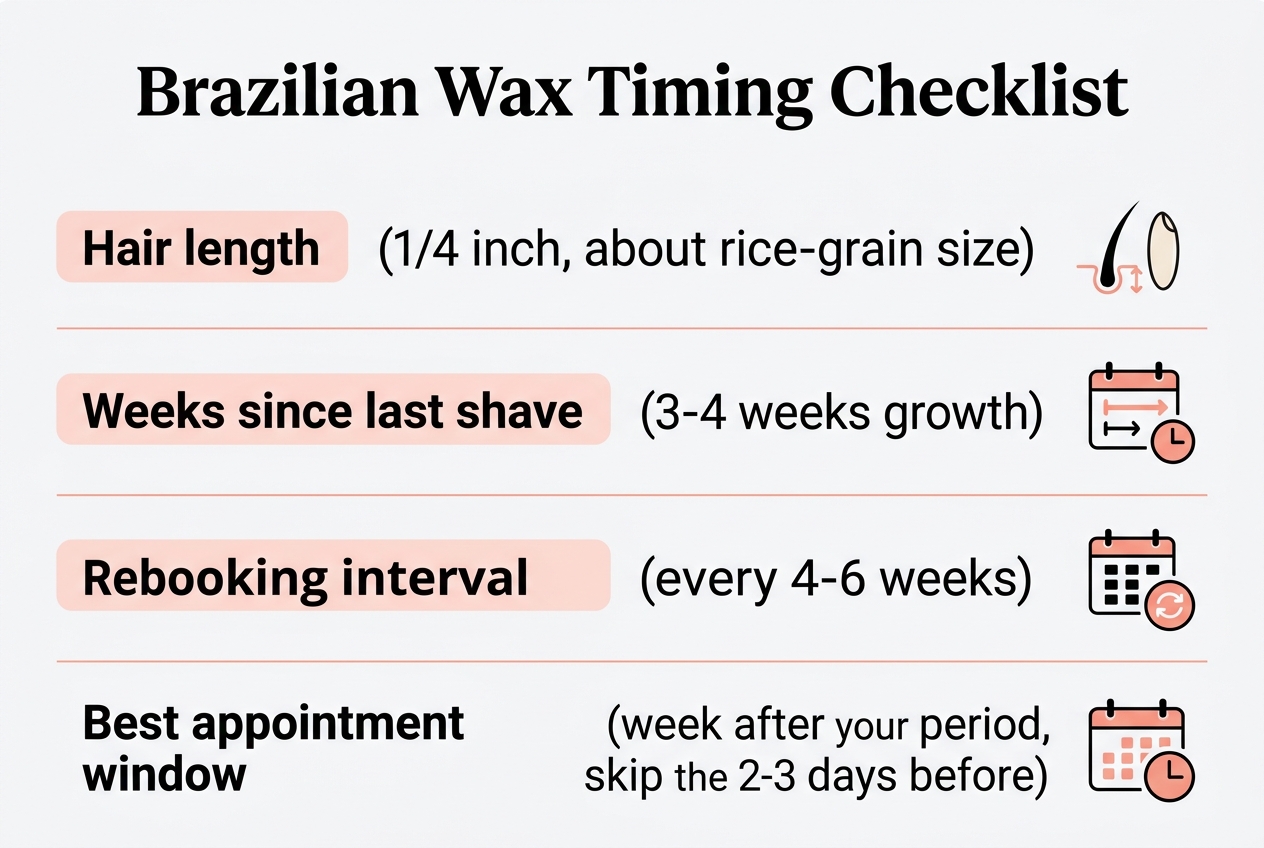
Hair needs to be about a quarter inch long — roughly the length of a grain of rice — before wax can do its job. That’s usually two to three weeks of growth after your last shave. Shorter than that, and the wax has nothing to grab, so you’ll walk out patchy. Longer than half an inch, and every strip tugs harder than it needs to.
Gone past that half-inch mark? Trim before your appointment — with scissors, not a razor. Small grooming scissors or a beard trimmer with a guard work fine. Keep these points in mind:
- Trim to roughly a half inch and let the esthetician fine-tune the rest, since over-trimming at home is the most common reason appointments get cut short.
- Skip the razor between sessions entirely — blunt regrowth from shaving throws off the four-to-six week rhythm that makes waxing get easier over time.
- Shaving on top of a wax cycle means hairs at different stages, and inconsistent growth is a big part of why people ask whether waxing reduces hair growth and get mixed answers.
- Use blunt-tip scissors rather than pointed cuticle scissors for anything near delicate skin.
Cycle Timing and Event Planning
Your pain tolerance isn’t fixed. It shifts with your cycle. Skin runs most sensitive the two to three days before your period and during it, and it’s noticeably calmer the week after. Book accordingly if you can. Also leave 48 hours before a beach day, pool trip, or wedding; redness and small bumps need time to settle, and reading up on summer skincare basics helps here, since chlorine and sun on fresh skin is a bad combination. Waxing the morning of an event is a gamble. Don’t.

Step 2: Prep Your Skin in the 24 Hours Before
What you do the day before matters almost as much as hair length. Gentle exfoliation 24 to 48 hours ahead — never the same day — lifts dead skin and frees hairs trapped just under the surface, so the wax can grab them cleanly. A damp washcloth works. So does a mild chemical exfoliant like a low-strength lactic acid body wash.
Then stop. In the final 24 hours, skin needs to be calm, not busy recovering. The same logic that shapes how people treat congested pores — what are blackheads and how to treat them is a useful comparison — applies to pre-wax skin too.
- Skip retinol, glycolic acid, salicylic acid, and any gritty body scrub in the 24 hours immediately before your appointment.
- Shower and wash the area the morning of with plain soap, then leave it bare — heavy oils, thick lotions, and self-tanner all block wax adhesion.
- Wear loose cotton underwear and a skirt or soft joggers; leggings and shapewear trap heat and friction against freshly waxed skin.
- Take an over-the-counter pain reliever such as ibuprofen or acetaminophen 30 to 45 minutes prior if you’re sensitive.
- Cut caffeine and alcohol that day, since both tighten nerves and raise how sharply you feel each strip.
- Drink water throughout the day — dehydrated skin grips hair more tightly and stings more.
Tension makes everything worse, and research on tension relief for the neck and shoulders shows how much bracing amplifies discomfort, so breathe out on each pull. Unrelated to prep, but people ask: benign tags near the bikini line should be handled through proper skin tag removal first, not waxed over. Wax and raised skin don’t mix. Ever.
Step 3: Understand the Hard Wax Process From Start to Finish
Why Hard Wax Beats Strip Wax Here
Hard wax shrink-wraps the hair and lifts off on its own. No cloth strip. No gripping the top layer of your skin. That matters in the bikini area, where the skin is thin and folds in on itself. Strip wax bonds to skin as much as hair, so a second pass over the same spot can leave you raw. Hard wax can be reapplied to a stubborn patch without stripping the surface twice.
A session starts with a quick cleanse using an antibacterial or witch hazel–based wipe, then a full dry. Moisture is the enemy — wax won’t grab damp hair. Your esthetician dusts the area with pre-wax powder, usually cornstarch-based like Gigi or Satin Smooth, to absorb whatever sweat is left. Then a thin layer of wax goes on in the direction of growth, with a small lip left at one end for the grip.
Setting time runs roughly 10 to 20 seconds. You want tacky and firm, not brittle. Brittle wax snaps into pieces and leaves crumbs behind. Curious how other treatments sequence prep, application, and aftercare? Reading about med spa treatments that can get rid of a double chin shows a similar step-by-step logic at work.
Positioning and Skin Tautness That Cut the Pain
Tautness is everything. One hand anchors the skin, the other pulls the strip fast and low — parallel to the skin, never up toward the ceiling. Pulling upward is what bruises people. Work in small sections, maybe two inches at a time, moving front to back.
You’ll bend one knee outward for the labia and inner crease, then draw knees to chest for the perineum and buttocks. Awkward? Yes. It flattens the skin, which is the whole point. Stray hairs get tweezed, then a soothing oil or post-wax serum lifts residue and calms the area. Discussions of botox for uneven eyes make the same case — precision of technique drives the result more than the product does.
Step 4: Compare Hard Wax, Soft Wax, and Sugar for Intimate Areas
Not every wax belongs in the bikini area. Coarse pubic hair, thin skin, and folds all change what works. Here’s how the three main options stack up on the factors that actually matter during a session.
| Factor | Hard wax | Soft wax (with strips) | Sugar paste |
|---|---|---|---|
| Grip on coarse hair | Strong | Very strong | Moderate |
| Grip on skin | Minimal — shrinks around hair | High — pulls surface cells | Low |
| Typical pain level | Low to moderate | Moderate to high | Low to moderate |
| Working temperature | ~104–110°F, warm not hot | ~125–135°F | Body temp to lukewarm |
| Best area / reuse | Bikini, underarms; safe for repeat passes | Legs, back; never twice on one spot | Sensitive skin; can re-pass gently |
| Cleanup | Oil-based remover | Oil-based remover | Rinses with water |
Adhesion, Temperature, and Skin Safety Side by Side
Hard wax is the standard for a Brazilian because it hardens around the hair and lifts off without cementing itself to your skin. That’s the whole point. Soft wax is faster across big surfaces like calves, but it takes a layer of live skin cells with it, which is why a skilled tech won’t strip the same inch twice. Knowing how often to exfoliate your skin helps here, since over-exfoliated skin lifts far too easily.
When Sugaring Makes Sense for Sensitive Skin
Sugar paste is water-soluble, applied barely warm, and gentle on reactive skin — a reasonable pick if you flush or welt easily. The trade-off is real. It’s less decisive on dense, wiry hair and demands serious hand technique, so results swing wildly by practitioner. Before booking either, reading up on what a Brazilian wax involves sets honest expectations. And skip the at-home kit. Countertop warmers heat unevenly, burns to intimate skin are a recurring ER complaint, and that scar outlasts the hair by years.
Step 5: Handle the First 48 Hours and Prevent Ingrown Hairs
The wax is done. Your aftercare isn’t. Freshly waxed skin has open follicles and a compromised barrier for roughly a day, which is exactly when bacteria, sweat, and friction cause the most trouble. Most post-wax bumps aren’t bad waxing. They’re bad aftercare.
The 24-Hour Avoid List
Heat is the main culprit, because warm, damp conditions keep follicles open and invite bacteria in. For the first full 24 hours, hold off on the following:
- Hot showers, saunas, steam rooms, hot tubs, and swimming pools — lukewarm rinses only, and pat dry rather than rubbing with a towel.
- Direct sun exposure or tanning beds, since freshly waxed skin burns faster and can pigment unevenly in the bikini area.
- The gym, spin class, hot yoga, or long walks in humid weather — sweat plus friction is how folliculitis starts.
- Tight jeans, thongs, shapewear, and synthetic leggings; loose cotton underwear and a soft skirt or sweatpants are your friends for a day.
- Fragranced body washes, deodorant sprays, self-tanner, and any acid exfoliant on the area for a full 48 hours.
Exfoliation and Ingrown Prevention Routine
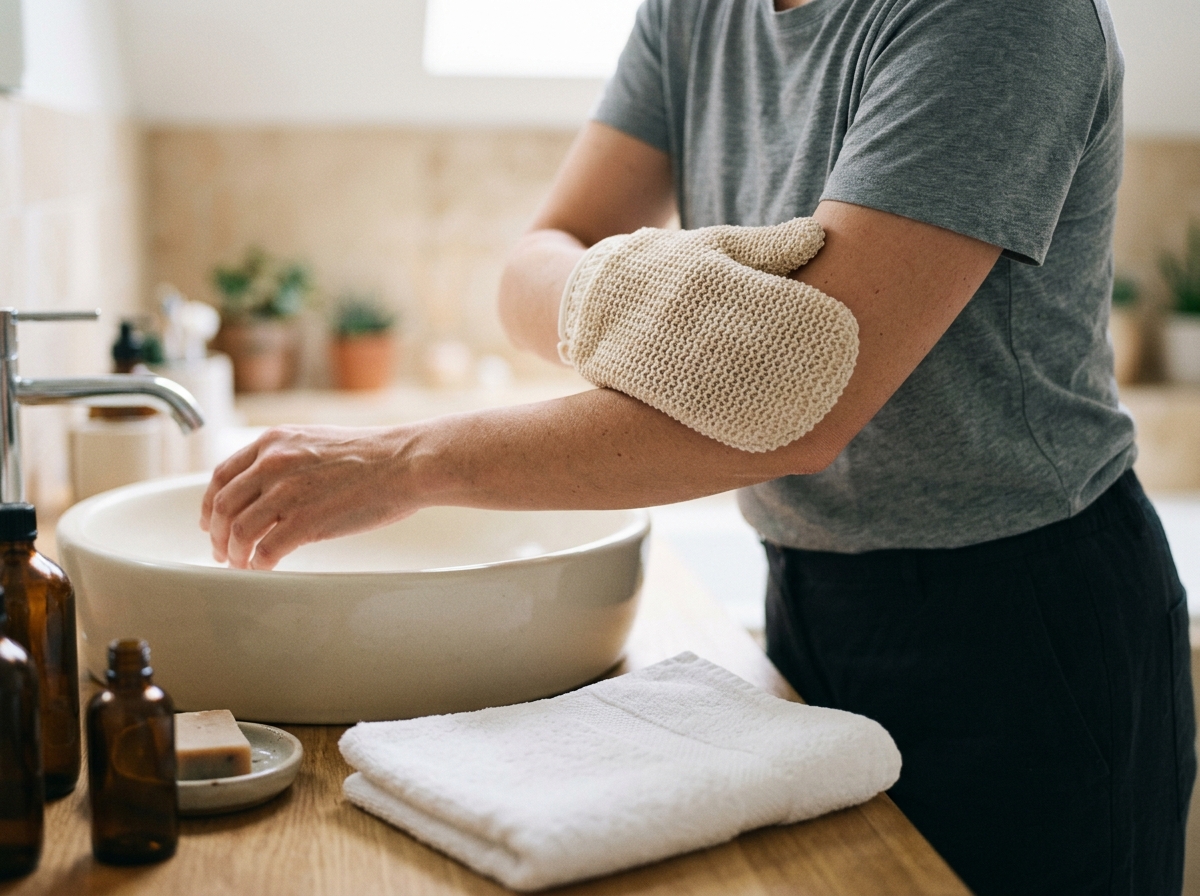
From day three onward, gentle exfoliation two to three times weekly keeps dead skin from trapping new growth. A soft konjac sponge, an exfoliating mitt, or a low-strength glycolic pad all work. Skip gritty scrubs. Apply a lightweight, non-comedogenic moisturizer daily so skin stays supple between sessions.
For small bumps, dab a witch hazel or salicylic acid pad instead of picking — squeezing is how a minor bump becomes a scar. Scattered red dots that fade within a day are just a histamine reaction. Clusters of pus-filled, tender bumps lasting past 72 hours suggest folliculitis and deserve professional attention, and reading about non-invasive skin treatment options helps you understand what a trained esthetician can address before things escalate. When in doubt, ask.
Step 6: Choose Your Style and Build a Maintenance Schedule
Once you know the process, the last decision is shape. Most people pick based on how much regrowth stubble they’re willing to live with, not on how the style looks on day one. Here’s how the common options compare.
| Style | Hair Left | Typical Discomfort | Upkeep Interval |
|---|---|---|---|
| Full Brazilian | Nothing, front to back | Highest | 4–5 weeks |
| Hollywood | Nothing, including all sides | Highest | 4 weeks |
| Landing strip | Thin vertical strip, about 1 inch wide | Moderate | 4–6 weeks |
| Triangle | Small trimmed triangle up top | Moderate | 5–6 weeks |
| Heart | Shaped heart, often trimmed short | Moderate | 5–6 weeks |
Style Options and Upkeep at a Glance
Rebook every 4 to 6 weeks, no matter which shape you choose. That window catches most hairs in the anagen growth phase, the stage where removal actually weakens the follicle over time. Stretch it to eight weeks and you restart from scratch. Skin care choices matter alongside that rhythm, and since bumps in the bikini line get blamed on everything, it’s worth knowing whether saltwater helps with acne before you try ocean swims as a fix.
Why the Third Appointment Is the Turning Point
The 3-cycle rule is real. After roughly three consistently spaced visits, regrowth comes in finer, patchier, and slower, and the session itself stops feeling like an event. Permanent reduction is a different path entirely, handled at medical laser providers, and waxing must stop about four weeks before any light-based treatment. Professional waxing is the reliable middle ground. No burns, single-use sticks, and a knowledgeable esthetician who can adjust technique for sensitive or acne-prone skin. That same trained eye spots things you can’t see down there — benign skin tags in the area can be handled separately with skin tag removal, while any mole or changing lesion goes to a medical provider. Always.
Putting It All Together for Consistently Smooth Skin
Here’s the whole sequence in one breath: grow hair to about a quarter inch, exfoliate gently 48 hours out, then arrive with skin clean and free of oils, lotions, or numbing creams. Hard wax goes on warm, the skin gets pulled taut, and the strip comes off fast, low, and parallel to the body. After that, protect the area for two full days. No heat, no friction, no workouts, no swimming. That’s it — the rest is just repetition every four to six weeks.
The Mistakes That Cause Almost Every Bad Wax
Almost every horror story traces back to two things. Wax that ran too hot, usually from a home warmer with no thermostat. And pulls that went upward instead of back along the skin. Burns, snapped hairs, bruising, and the little infected bumps that show up three days later all start there. Test wax on your inner wrist first. If it stings at all, it’s too hot for the bikini line.
Waxing also slots neatly into a bigger appointment. Many people pair it with a facial, dermaplaning, or brow shaping for one full pampering visit, and book nails separately at a nail salon since that’s a different trade entirely. If sensitivity, a history of ingrowns, or post-wax irritation is on your mind, booking a virtual skin consultation is a low-pressure way to map out your plan before anyone touches your skin.
Appointments are available in Hoboken, Englewood, and West Caldwell. Call +1 201-913-7778 or email info@refinedskinclub.com to get on the schedule.
Getting comfortable with Brazilian waxing is mostly a matter of knowing what to expect, letting the hair reach the right length, and giving your skin a few cycles to settle into the rhythm — the first appointment is rarely the one that tells the whole story. Someone who has waxed for years will read your skin, work efficiently, and talk you through each step, which makes far more difference than any trick you can prepare in advance. Refined Skin Club is among the places where waxing treatments are handled by knowledgeable estheticians, and that kind of steady, unhurried care is what turns a nerve-wracking first wax into a routine part of how you look after yourself.