Stray hairs on your chin, lip, or jawline have a way of catching your attention at the worst moments. The sheer number of removal options out there doesn’t make the decision any easier, either. Some methods last days, others last weeks, and a few can change your skin’s texture entirely. This guide breaks down seven facial hair removal methods so you can weigh the real trade-offs in cost, comfort, and results before committing to one. We’ll also show you where professional waxing and skin care fit into a smarter, skin-first routine.
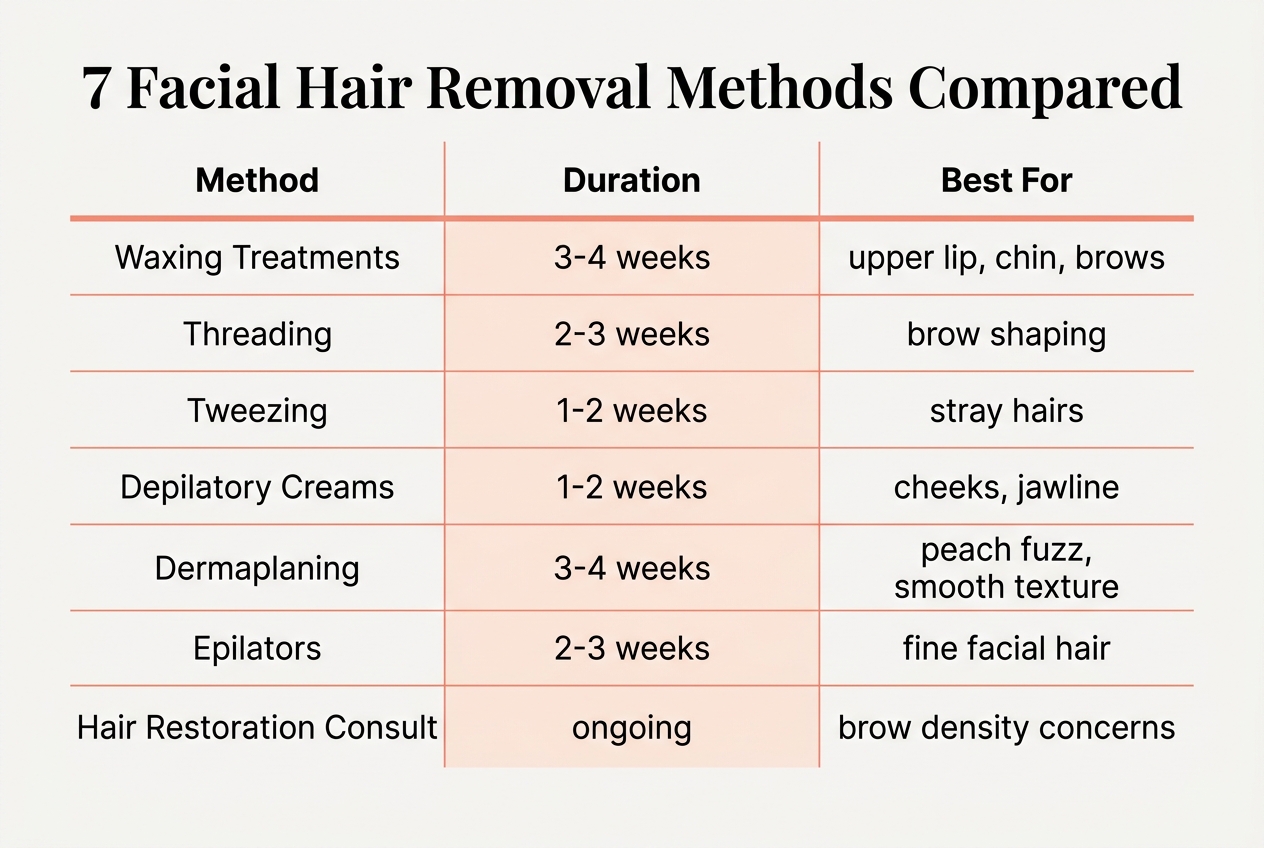
7 Facial Hair Removal Methods Compared
Before you commit to any single approach, it helps to see all seven side by side. People have dealt with unwanted hair for centuries. Methods have gotten more refined, but the basic trade-off hasn’t changed: speed versus permanence. Shaving and depilatory creams win on convenience. Electrolysis and laser win on staying power. Everything else sits somewhere in the middle, which is exactly why picking one often comes down to how much time, discomfort, and money you’re willing to spend.
Temporary vs. long-term methods
Shaving, depilatory creams, threading, and epilators all fall into the temporary bucket. Hair grows back within days to a few weeks because the follicle stays fully intact. Waxing stretches that window slightly longer, often three to six weeks, since it pulls hair from the root. Laser hair removal and electrolysis are the only two methods classified as long-term or permanent, because both target the follicle itself rather than the visible hair. That distinction matters more than price or pain when you’re deciding what’s worth your time.
Pain and downtime at a glance
Here’s a quick side-by-side to frame the rest of this guide. Cost tiers are rough averages for facial-area treatment, not full-body pricing.
| Method | Pain Level | Duration of Results | Cost Tier |
|---|---|---|---|
| Shaving | Minimal | 1–3 days | $ (low) |
| Depilatory cream | Low, mild stinging possible | 3–7 days | $ (low) |
| Threading | Moderate | 2–4 weeks | $$ (moderate) |
| Waxing | Moderate to high | 3–6 weeks | $$ (moderate) |
| Laser / electrolysis | Moderate, brief per session | Months to permanent | $$$ (higher, paid per series) |
Notice the pattern: pain tends to climb alongside how long results last, though not always in a straight line. Epilators — small handheld devices that pluck multiple hairs at once — land close to waxing on both pain and duration. They cost less upfront too, since you’re buying a device rather than paying per session. If you want the fuller backstory on how these techniques evolved, the Smithsonian has a surprisingly thorough overview of Hair Removal practices through history. The sections ahead break down each method’s fit for specific facial zones, plus the prep and aftercare that make any of them work better.
How to Prep Your Skin Before Removing Facial Hair
Cleansing and makeup removal
Start every session with a clean face. Makeup, sunscreen, and the day’s natural oil buildup all sit on top of the hair and skin. They can block wax from gripping properly or throw off how a depilatory cream reacts. A gentle water-based cleanser is usually enough. Skip the heavy, fragranced face wash right before treatment — it’s an unnecessary variable when you’re trying to keep skin calm.
If you’re wearing foundation or a full face of makeup, double cleanse. Use a micellar water or oil-based remover first, then follow with your regular cleanser to strip any residue. This matters more than people think for anyone who’s spent time reading up on what it’s like living with excess facial hair and trying different removal routines. Clean skin is the one step that helps every method work better, no matter which one you land on.
Pat dry rather than rub. Rubbing creates friction that irritated skin doesn’t need right before hair removal.
When to skip exfoliation
Over-exfoliating in the days before treatment is a common misstep. Scrubs, retinol, and acids all thin the skin’s surface, and that leaves it more reactive to wax, tweezing, or a depilatory formula. Give your skin a break from actives for at least two to three days beforehand. Reading up on general summer skincare tips can help you plan around this, especially if sun exposure is already stressing your skin.
Patch test anything new — a cream, a wax type, even a numbing gel — on a small area like the inner forearm 24 to 48 hours ahead. It’s a five-minute step. Skipping it is how people end up with a red, swollen jawline the morning of an event.
A facial or dermaplaning session at Refined Skin Club ahead of a waxing appointment can smooth texture and clear dead skin buildup, without the aggressive scrubbing an at-home exfoliant brings. It’s worth noting these two shouldn’t happen back-to-back on the same day; space them out by a few days so skin has time to settle. Curious readers exploring broader options for hair removal often find that spacing out prep treatments and the main appointment cuts down on redness significantly. Some people also look into vibration therapy near me: what to expect in Fort Lee as a relaxation add-on around appointment days, though it has nothing to do with skin prep itself.
Choosing the Right Method for Each Area of the Face
Not every part of your face needs the same approach. What works beautifully on a chin might irritate a cheek, and what shapes a brow perfectly could be overkill on peach fuzz. Matching the method to the area is really the whole game here.
Best options for brows and lip
Eyebrows and the forehead area respond best to methods that give you control over shape. Waxing clears a section fast, while threading lets a skilled technician remove hair one line at a time for crisp, precise edges. Either works. It comes down to how much precision you want and how much time you have.
The upper lip is a different story. Skin here is thin and sensitive, so gentler methods win out. A few points worth knowing before you pick one:
- Threading avoids chemicals and pulls hair from the follicle with minimal skin contact, which suits reactive or acne-prone skin.
- Gentle waxing formulated for the face removes hair cleanly without the razor-sharp regrowth edge that shaving leaves behind.
- Shaving the lip area is generally discouraged since stubble grows back fast and can look coarser than it did before.
- Many people find threading appointments take only a few minutes, making it easy to fit between other errands.
- Sensitive-skin waxes are usually lower in temperature, reducing the odds of redness right after the session.
Best options for chin and cheeks
Chin hair tends to be coarser, with a stronger, deeper root than upper lip hair. That’s why waxing holds up better here than it does elsewhere, pulling the whole strand out for weeks of smoothness. For anyone tired of repeat sessions, a qualified laser provider can offer longer-term reduction over time, though it takes a series of visits before you see the full effect — a topic worth its own read if you’re weighing options. If you’re curious whether repeated hair removal actually thins hair out long term, understanding how waxing affects future hair growth can help set realistic expectations before committing to a routine.
Cheeks, sideburns, and the fine peach fuzz across the face call for a lighter touch entirely. Waxing or threading here can be excessive — the hair is fine, and the skin is often more visible and delicate. This is where dermaplaning shines instead: a fine blade glides across the surface, lifting away vellus hair and dulling dead skin in one pass, without pulling or irritating follicles. It’s not just about hair removal, either. Smoother cheeks also make it easier to spot other issues brewing underneath, and knowing what are blackheads and how to treat them rounds out a fuller skincare picture beyond hair alone. Skip the razor here if you can. It’s built for bigger jobs, not fuzz.
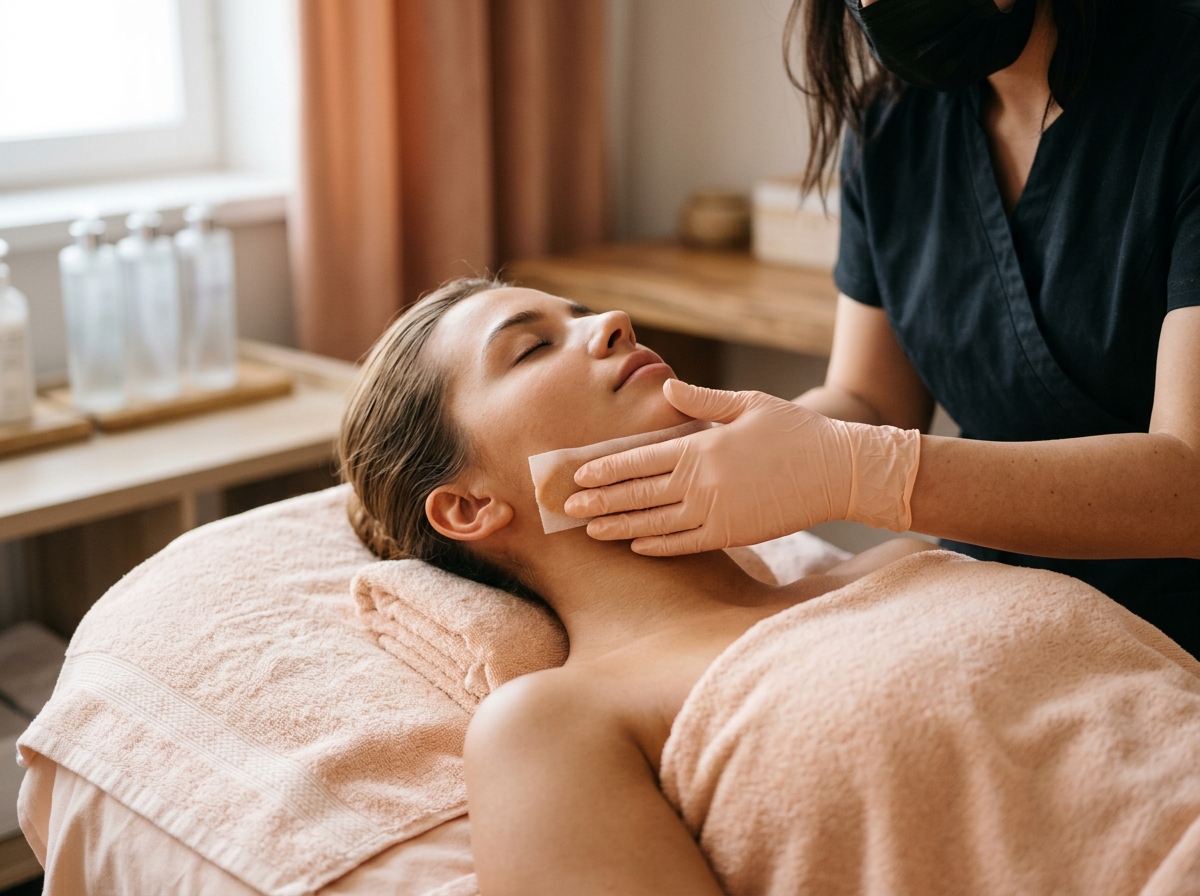
Waxing vs. Threading vs. Depilatory Creams
These three methods get lumped together, but they don’t work the same way at all. One rips hair out, one snaps it off at the surface with twisted thread, and one melts it chemically. That difference in mechanism is exactly why results, pain level, and cost vary so much.
Pros and cons of each method
Waxing pulls hair out from the root, which is why it holds up for 3 to 4 weeks before regrowth shows. The tradeoff is irritation, especially on sensitive cheeks or upper lip skin, and a real risk of ingrown hairs if it’s done carelessly. Threading skips chemicals and heat entirely, using twisted cotton thread to lift hair out. That makes it a favorite for brow shaping and precise upper-lip cleanup. Depilatory creams are the painless option since nothing gets pulled, but they only dissolve hair at the skin’s surface, so regrowth shows up within days, not weeks. Here’s how they stack up side by side:
| Method | How it works | Pain level | Best for |
|---|---|---|---|
| Waxing | Removes hair from the root | Moderate | Larger areas, longer-lasting smoothness |
| Threading | Twisted thread lifts hair out | Mild to moderate | Brows, upper lip, precise shaping |
| Depilatory cream | Chemically dissolves hair at surface | None | Quick, painless touch-ups |
| Tweezing | Manually plucks individual hairs | Mild | Stray hairs, spot correction |
Which lasts longest
Waxing wins on longevity, hands down. Threading comes in second, usually lasting 2 to 3 weeks since it also removes hair below the skin’s surface, just less thoroughly than wax. Creams lose this contest every time. Because facial skin reacts differently than skin on the legs or arms, learning proven techniques for treating stubborn areas around the jawline and chin can help you decide where each method actually belongs on your face. Professional waxing treatments at Refined Skin Club tend to reduce ingrown hairs and irritation compared to at-home kits, mainly because their estheticians control temperature and pull technique with more precision. If you’re prone to breakouts or redness, that difference matters more than the price tag suggests.
Laser Hair Removal and Electrolysis for Long-Term Results
How laser sessions typically progress
Laser hair removal works by targeting the pigment inside each hair follicle, heating it enough to disable future growth. It’s most effective on dark, coarse hair against lighter skin, though modern devices have gotten better at treating a wider range of tones. One pass won’t do much. Hair grows in cycles, so a laser only catches follicles that are active at the time of treatment, which is why most people need six to eight sessions spaced four to six weeks apart.
Expect gradual thinning rather than a dramatic before-and-after moment after session one. Upper lip and chin hair often respond faster than areas with finer growth, but everyone’s timeline shifts a bit based on hormones, hair color, and skin tone. Some regrowth returns lighter and sparser with each round. Realistically, plan on several months of visits before you see the full effect, not weeks.
Because the process involves repeated heat exposure to the skin, choosing a provider matters more than people expect. Laser hair removal isn’t something Refined Skin Club offers, so readers seeking this route should book with a licensed medical provider offering that specific laser technology, since machines vary widely in strength and safety features. Between sessions, calming the treated area matters too — many people find that gentle facials at Refined Skin Club help settle redness and keep skin balanced while it recovers from repeated laser passes.
Where electrolysis fits best
Electrolysis takes a different approach. A fine probe is inserted into each follicle, delivering a small electrical current that destroys the root permanently. Unlike laser, it works on any hair color or skin tone, including gray or white hairs that lasers typically can’t detect. That’s a real advantage for some. The tradeoff is speed: treating one follicle at a time makes electrolysis painfully slow for larger areas like a full jawline or sideburns.
It tends to make the most sense for small, stubborn patches — a few chin hairs, a strip along the upper lip — where permanence matters more than efficiency. This is another treatment outside what Refined Skin Club provides, so estheticians there sometimes point clients toward guidance on treatments that dont require a knife when comparing permanent versus temporary hair removal options before committing to a series elsewhere. As with laser, results build across a string of visits, not one appointment.
Both methods reward patience over speed. If facial hair changes are tangled up with broader concerns about aging skin around the eyes or jaw, it’s worth reading about droopy eyes separately, since sagging skin and hair growth patterns are unrelated issues that sometimes get treated together. Whichever method you choose, consistency across sessions determines the outcome far more than the technology itself.
Aftercare Steps to Avoid Irritation and Ingrown Hairs
Whatever method you used, the first 24 hours matter most. Skin is inflamed, pores are open, and it’s easy to make things worse without meaning to. A little discipline right after treatment saves you a week of redness and bumps later.
Immediate aftercare do’s and don’ts
Think of the first day as damage control, not pampering. Keep things simple and hands-off.
- Apply a fragrance-free, soothing moisturizer right after the session to calm the skin barrier and lock in hydration.
- Skip sun exposure for a full 24 hours, since freshly treated skin burns and pigments more easily than usual.
- Hold off on heavy makeup for the same 24-hour window; foundation and powder can clog irritated follicles fast.
- Avoid touching or picking at the area, even if it feels tight or slightly bumpy — that’s normal and temporary.
- Stick to lukewarm water on the face; hot showers or steam rooms will only aggravate warm, sensitive skin.
Notice what’s missing from that list? Exfoliating. That’s on purpose. It’s a step for later, not day one.
Preventing ingrown hairs over time
Ingrown hairs show up when dead skin traps a regrowing hair before it can surface. The fix isn’t scrubbing harder right away — it’s timing. Wait two to three days post-treatment, then start light exfoliation a few times a week to keep pores clear as hair regrows. Chemical exfoliants (think mild glycolic or salicylic formulas) tend to be gentler than gritty scrubs on treated skin. If you’re unsure how often to work exfoliation back into your routine without overdoing it, it’s worth learning how often you should exfoliate your skin based on your specific skin type and the method you used.
After waxing or threading especially, redness can linger longer than expected. A professional facial at Refined Skin Club a few days later can help — it calms inflammation, clears out residual debris in the follicle, and supports overall recovery in a way home care alone often can’t. Ask their knowledgeable estheticians about this as a simple add-on after a wax appointment if your skin tends to react.
When to See a Dermatologist Instead of Removing Hair at Home
Signs of a Hormonal Cause
Some facial hair is just genetics or a quirk of aging. But when growth shows up fast, thick, and in a new pattern — think chin, jawline, or upper lip going from a few stray hairs to a visible patch within months — that’s not something to just wax away and ignore. It can point to a hormonal shift, like polycystic ovary syndrome or a thyroid issue, that needs bloodwork and a real diagnosis, not more tweezing.
Other clues worth mentioning to a doctor: irregular periods, sudden acne along the jaw, or thinning hair on the scalp happening at the same time. Sudden, excessive growth deserves a medical look, not just a better razor. If you want to understand what’s actually happening at the follicle level before that appointment, reading up on how laser hair removal targets hair growth cycles can help you ask sharper questions.
Skin reacting badly to a method — think blistering, spreading redness, or bumps that won’t quit after a few days — is another signal to stop DIY-ing and get it checked. Repeating the same treatment on angry skin usually makes things worse, not better.
Building an Ongoing Skincare Routine
Hormonal hair growth and stubborn acne often show up together, which is exactly why a dermatologist visit matters. Cystic breakouts along the same areas you’re trying to clear of hair complicate every removal method, from wax to depilatory cream. A dermatologist can sort out whether it’s the hair removal irritating existing acne, or an underlying skin condition driving both problems at once. Prescription acne medication is beyond what an esthetician can offer, so severe or cystic cases should go through a dermatologist first. Men dealing with razor bumps and breakouts together might find it useful to read a guide on skincare routines built around shaving and facial hair upkeep for the in-between weeks.
Once medical concerns are ruled out or under control, routine upkeep doesn’t need a doctor’s office every time. The knowledgeable estheticians at Refined Skin Club can handle waxing sessions, facial extractions, and calming facials suited to sensitive or acne-prone skin, keeping things smooth between checkups. That’s the practical division: doctors handle diagnosis, estheticians handle maintenance. Skip that order and you’re just guessing.
Think of it as two lanes working together, not competing. The medical side rules out anything serious; the skincare side keeps skin calm, exfoliated, and less prone to ingrown hairs in the meantime.
Ultimately, the right choice comes down to what result you’re after and how much downtime or waiting you’re willing to trade for it — surgery and injectables move faster but ask more of your recovery, while esthetician-led options build results gradually through consistent visits. It’s worth asking a provider directly how many sessions realistically get you to your goal, and whether your skin or scalp concern is something cosmetic care can support or something that truly needs a medical referral first. Weighing that honestly, rather than chasing the quickest fix, tends to lead to choices people stay happy with long after the appointment ends.