You’ve shaved, waxed, and lasered, yet those stubborn hairs keep coming back. If you’re chasing results that actually last, electrolysis hair removal is the only method the FDA recognizes as permanent. It works on every hair color and skin tone, unlike laser treatments that often fall short. Here’s what you need to know before booking a first session with a licensed electrologist.
Electrolysis hair removal: what it is and how it works
The three electrolysis methods: galvanic, thermolysis, and blend
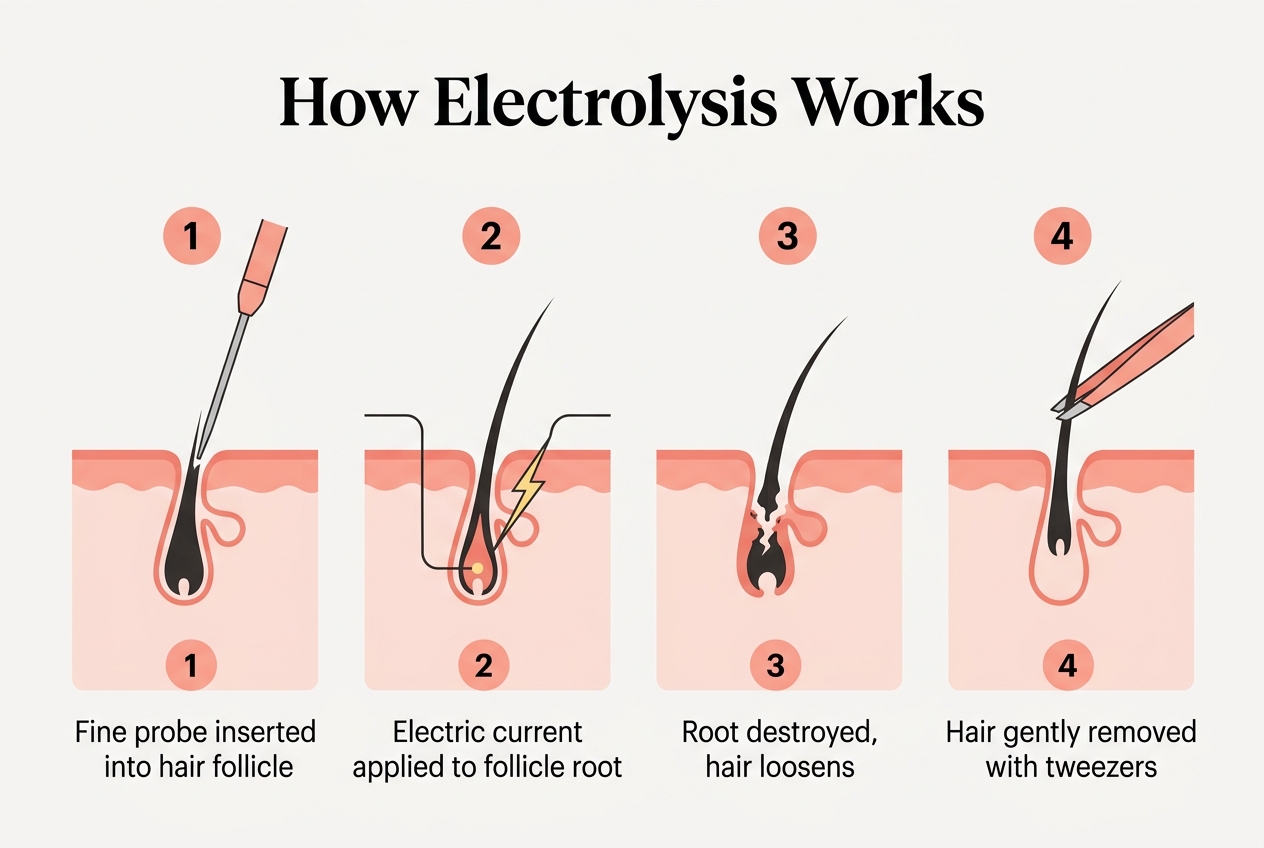
All three approaches rely on the same basic tool. A fine probe gets inserted into the hair follicle, delivering an electrical current to destroy the follicle’s growth cells. Galvanic electrolysis uses a chemical reaction, converting saline in the follicle into a substance that damages the growth tissue. It’s slow but precise. It’s also been around since the 1800s. That’s not a typo — this is genuinely old technology, refined over more than a century.
Thermolysis takes a faster route. It uses heat generated by a high-frequency current to cauterize the follicle in a fraction of a second. Blend, as the name suggests, combines both currents in one probe, aiming for the precision of galvanic with the speed of thermolysis. According to Electrolysis: Definition & Treatment, this is why the FDA recognizes electrolysis as the only method that’s truly, permanently permanent — not just hair reduction, but full destruction of the follicle’s ability to regrow hair.
Which method a provider uses often comes down to your hair type and the treatment area. Coarse chin hair might call for thermolysis speed. Finer, curved follicles sometimes respond better to blend. None of this is guesswork done at home, either — it’s a skilled, trained hand controlling current and timing session by session.
How electrolysis differs from laser hair removal
Laser hair removal targets pigment. The laser looks for melanin in the hair shaft, heats it, and damages the follicle indirectly. That’s why lasers work best on dark hair against light skin, and why they struggle with gray, white, red, or very light blonde hair. Electrolysis skips pigment entirely. The probe goes straight into the follicle and delivers current right where it’s needed, which means it works on every hair color and every skin tone — a real advantage for anyone laser treatments have historically failed.
Laser also reduces hair over time rather than eliminating it for good; most people need ongoing maintenance sessions years later. Electrolysis, done correctly, kills the follicle for good. It’s slower going, treating one follicle at a time rather than a whole patch at once, but the payoff is permanence rather than reduction. If you’ve already tried does waxing reduce hair growth as a question in your own routine, you already know temporary methods only go so far — electrolysis is built to answer that question differently.
Neither method is “better” across the board; they solve different problems. Someone with dark, coarse hair and fair skin might start with laser for speed, then finish stubborn or light-colored hairs with electrolysis. For a deeper dive into how these treatments stack up against waxing and each other, the blog covers comparisons in more detail.
Who is a good candidate for electrolysis
Not everyone needs this treatment, but plenty of people are stuck without it. If laser hair removal has left you disappointed, or you’ve got a few stubborn spots that just won’t quit, electrolysis is worth a serious look. It works differently than light-based methods, targeting the follicle itself rather than pigment in the hair. That’s exactly why it succeeds where other options fail.
Common causes of unwanted hair growth
Unwanted hair shows up for all kinds of reasons, and the cause often shapes which removal method actually makes sense. Genetics, hormones, medication side effects, and normal aging all play a part. Here’s who tends to get the most out of electrolysis:
- People with light, gray, red, or blonde hair, since these lack the pigment that lasers need to lock onto and therefore respond poorly to laser treatments.
- Anyone dealing with small, detailed areas like eyebrows, chin, upper lip, or ears, where precision matters more than speed.
- Those who want a truly permanent result and are done with the endless cycle of shaving, waxing, or touch-up sessions every few weeks.
- Clients managing hormonal or PCOS-related hair growth, once a doctor has the underlying condition under control medically.
- People looking to treat sensitive or unusual areas, since electrolysis can safely reach nearly any body part, including spots other methods avoid.
Hormonal cases deserve a quick note. Electrolysis can manage the hair, but it won’t fix the hormone imbalance driving it. Get that addressed first. If you’re weighing your options broadly, it helps to research Electrolysis Hair Removal | Cosmetic and Plastic Services before committing to a long-term plan. And if unwanted hair sits alongside other concerns, like a soft jawline, some clients pair sessions with med spa treatments that can get rid of a double chin for a more complete refresh.

What to expect during a treatment session
Devices used in modern electrolysis
Every session starts with a quick consultation. The technician will look at your hair type, check how sensitive your skin is, and ask about your goals before touching a single follicle. This isn’t just small talk — it shapes how the current gets calibrated and which probe size gets used. If you’re prepping beforehand, it’s worth knowing how to prepare for a facial follows similar logic: clean, calm skin responds better to any treatment.
Once you’re settled, the technician inserts a hair-thin probe into the natural follicle opening. No cutting, no piercing — it slides in alongside the hair itself. A tiny electrical current is applied for just a few seconds, enough to damage the follicle’s growth center for good. You’ll likely feel a brief warm or pinching sensation, then it’s over almost as fast as it started.
After the current does its job, the hair is lifted out with tweezers. If the follicle’s been properly treated, it should slide free with little to no resistance. That’s actually a good sign. Hair that fights the tweezers usually means it’ll need another pass down the line, which is normal and part of the process.
How long each session typically takes
Timing depends entirely on the size of the area and how much hair you’re clearing. A small zone like the upper lip or a patch of the chin might take only 15 minutes. Larger areas — think underarms, a full jawline, or bikini zones — can run closer to 45 minutes or a full hour. Some clinics offer virtual skin consultation style check-ins beforehand, which helps set realistic time expectations before you ever sit in the chair.
Sensitive spots deserve extra thought. Numbing cream applied 20 to 30 minutes before your appointment can take the edge off, especially on areas like the upper lip, chin, or bikini line. It’s optional, but plenty of clients ask for it, and there’s no shame in wanting the process to feel easier.
Here’s the blunt truth: electrolysis isn’t a quick fix. Each session chips away at a small percentage of hair, so don’t expect drama in one visit. For deeper background on what’s happening beneath the skin, reviewing Electrolysis FAQs can help clarify why patience matters more than speed here.

Electrolysis vs. laser hair removal vs. waxing
Choosing the right method for your skin and hair type
Every method removes hair. Only one removes it for good. That’s the core trade-off to keep in mind as you weigh time, cost, and how much patience you actually have. If you’re comparing hair removal options for the first time, it helps to see them side by side rather than judge each in isolation.
| Method | Permanence | Best hair/skin match | Time per session | Typical cost |
|---|---|---|---|---|
| Electrolysis | Permanent | Works on all colors and skin tones | 15–60 min, small areas | $45–$90/session, many needed |
| Laser | Semi-permanent reduction | Dark hair, light skin best | 20–30 min, larger areas | $200–$400/package |
| Waxing | Temporary, weeks only | Most hair types | 15–45 min | $20–$70/visit |
Electrolysis destroys the follicle itself, which is why results last. It’s slow going, especially on larger areas like legs, since each hair gets treated individually. Laser covers ground faster and shines on coarse, dark hair against pale skin, though it fades on gray or blonde hair. According to Electrolysis for Removing Hair, it remains the only method the FDA recognizes as permanent. Waxing is cheap, quick, and satisfying, but regrowth shows up in two to six weeks, no exceptions.
Think about your goal, not just your budget. Chasing total, lasting removal on fine or light hair points to electrolysis. Clearing large areas before a season of shorts favors laser. Need something for next weekend? Waxing wins. Many people also pair treatments with facials or benefits of coolsculpting as part of a broader body-care routine.
How many sessions you’ll need and why
Here’s the thing nobody wants to hear: there’s no one-and-done answer. Hair grows in three phases — anagen (active growth), catagen (transition), and telogen (resting) — and electrolysis only destroys a follicle that’s actively growing. Hair in the resting phase looks invisible under the skin, so it simply won’t respond that day. That’s why you need multiple sessions timed to catch each hair as it cycles back into anagen, which can take weeks depending on the body area.
Most treatment plans run 6 to 12 or more sessions, spaced anywhere from one to six weeks apart. As follicles get zapped repeatedly, regrowth slows and thins, so visits stretch further apart over time. Area size, hormone levels, and hair density all factor into your total count — someone with a hormonal condition affecting hair growth will likely need more rounds than someone removing a small patch of stray hairs. If you’re weighing electrolysis against other hair removal methods, it’s worth first learning about the process from an electrolysis hair removal demonstration so you know what a session actually involves.
| Body area | Typical sessions | Spacing between visits | Rough timeline to completion |
|---|---|---|---|
| Eyebrows | 6-10 | 1-2 weeks | 3-6 months |
| Upper lip/chin | 8-14 | 1-3 weeks | 4-9 months |
| Underarms | 10-15 | 2-4 weeks | 6-12 months |
| Bikini area | 12-18 | 2-4 weeks | 8-14 months |
| Legs | 15-20+ | 3-6 weeks | 12-18+ months |
Smaller, hormone-sensitive areas like the face often need closer spacing early on, since regrowth cycles faster there. Larger areas simply take longer because there’s more surface and more follicles in play. Pair sessions with gentle exfoliation between visits, since smoother skin helps the technician see fine regrowth clearly.
Safety, side effects, and aftercare
Is electrolysis painful, and how is discomfort managed
Let’s be honest: you’ll feel something. Most people describe a quick heat or pinch as the probe delivers current to the follicle, then it’s gone. It’s not nothing, but it’s brief. Discomfort varies by area — the chin and upper lip tend to be more sensitive than arms or legs — and a skilled technician can adjust intensity and timing to keep things tolerable.
Numbing cream, applied 20-30 minutes before your session, is the most common way to take the edge off. Some providers also offer cooling devices or recommend scheduling around your pain tolerance for the day. If you’ve had a chemical peel or microneedling recently, mention it — sensitized skin can make the sensation feel sharper than usual.
Recovery expectations after your first few sessions
Redness, mild swelling, and slight tenderness right after treatment are completely normal. Think of it like a mild sunburn feeling that fades within a few hours to a day. Electrolysis is generally considered safe for most skin types and tones, which sets it apart from some laser options that carry more restrictions for darker complexions.
That said, how you treat your skin afterward matters more than people expect. Skipping aftercare is where most problems start, and a few specific missteps show up again and again:
- Skipping the 24-48 hour window without makeup, sun exposure, or heavy sweating, which can irritate freshly treated follicles and prolong redness.
- Picking or scratching at treated areas, which raises the rare but real risk of scarring far more than the treatment itself does.
- Ignoring early scabbing by scrubbing it away instead of letting it heal, which can lead to pigment changes or small scars.
- Using harsh exfoliants or retinol products too soon, when the skin barrier needs a few days to settle first.
- Wearing tight clothing over treated areas on the body, trapping heat and sweat against irritated skin.
Temporary scabbing can happen if aftercare instructions get ignored, but it usually resolves on its own within a week if left alone. Keep the area clean, apply whatever soothing product your provider recommends, and resist the urge to touch it. Knowing how often you should exfoliate your skin matters here too, since over-exfoliating around a healing area only slows things down. For a broader overview of what dermatologists say about the procedure’s safety profile, WebMD’s rundown on the benefits and treatment timeline of electrolysis is a solid companion read. Finally, if you ever notice pus, prolonged swelling, or increasing pain days after a session, don’t wait it out — call a doctor. Those are signs of infection, not normal healing, and they need proper attention.
Choosing a qualified electrolysis provider
Questions to ask before booking your first appointment
Not all providers are created equal, and this is one treatment where cutting corners actually costs you money and time. A rushed consultation or a vague answer to a direct question is a red flag worth taking seriously. Before you hand over a deposit, get clear answers on the basics.
- Verify state licensing and certification in electrology, since requirements vary by state and an unlicensed operator is a liability you don’t want near your face or body with a needle.
- Ask about sterilization practices and confirm single-use, disposable probes are standard — anything less raises real infection risk.
- Request before-and-after photos of previous clients, ideally with skin tones and hair types similar to your own, so you know what realistic progress actually looks like.
- Confirm the provider has hands-on experience treating your specific hair type and skin tone, because coarse dark hair on deeper skin responds differently than fine, light hair.
- Discuss a realistic treatment plan and a total estimated session count upfront — anyone promising permanent clearance in three visits isn’t being straight with you.
- Ask about pricing per session versus package pricing, since bundled rates often work out cheaper but only make sense once you understand your likely session count.
It helps to do a little homework before you even sit down for a consult. Reading firsthand accounts, like this candid discussion of if electrolysis is the only permanent hair removal option, gives you a sense of what real timelines and costs look like outside a sales pitch. Many local businesses offer free or low-cost first consultations — take advantage of that to ask questions in person rather than over the phone. If you’re weighing treatments beyond hair removal during that same visit, it’s also reasonable to ask what else the provider offers, whether that’s a mens facial or other skin services, just to gauge how broadly trained the staff actually is.
Electrolysis asks for more time than most hair removal methods, but it is the one built for permanent results, especially on light, gray, or red hair that lasers struggle to target. Go in expecting a series of sessions spread over months, ask whether your provider is licensed in electrology where you live, and confirm they use sterile, disposable probes. If your unwanted hair is tied to a hormonal condition such as PCOS, have that looked at by a doctor as well, since electrolysis can remove the hair but will not treat what is driving it.