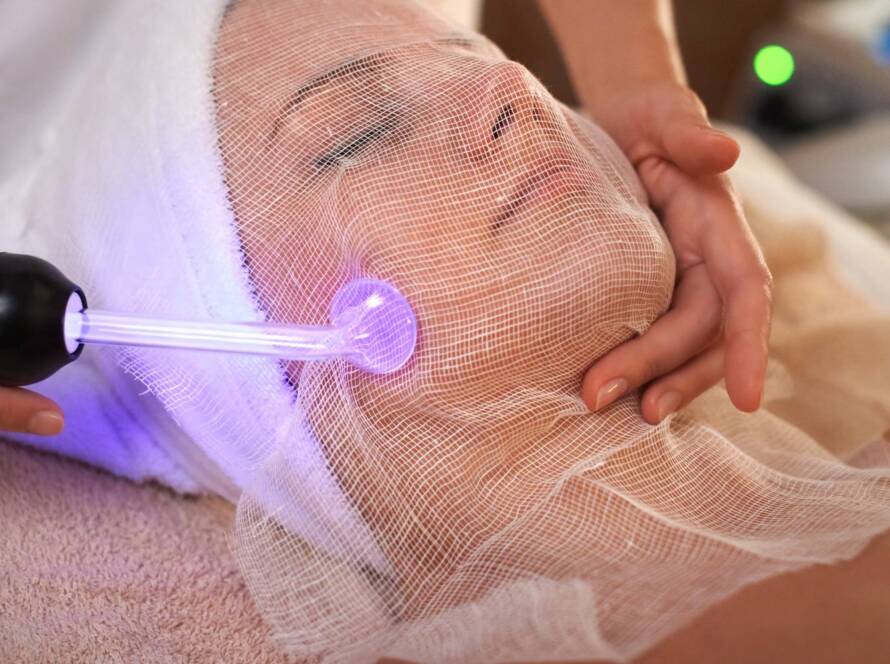
You’re tired of shaving, tweezing, and waxing, only to watch the hair grow right back. Choosing between two long-lasting options shouldn’t feel this confusing. When it comes to electrolysis vs laser hair removal, the right choice depends on your skin tone, hair type, and long-term goals. This article breaks down both treatments so you can invest in the one that actually works for you.
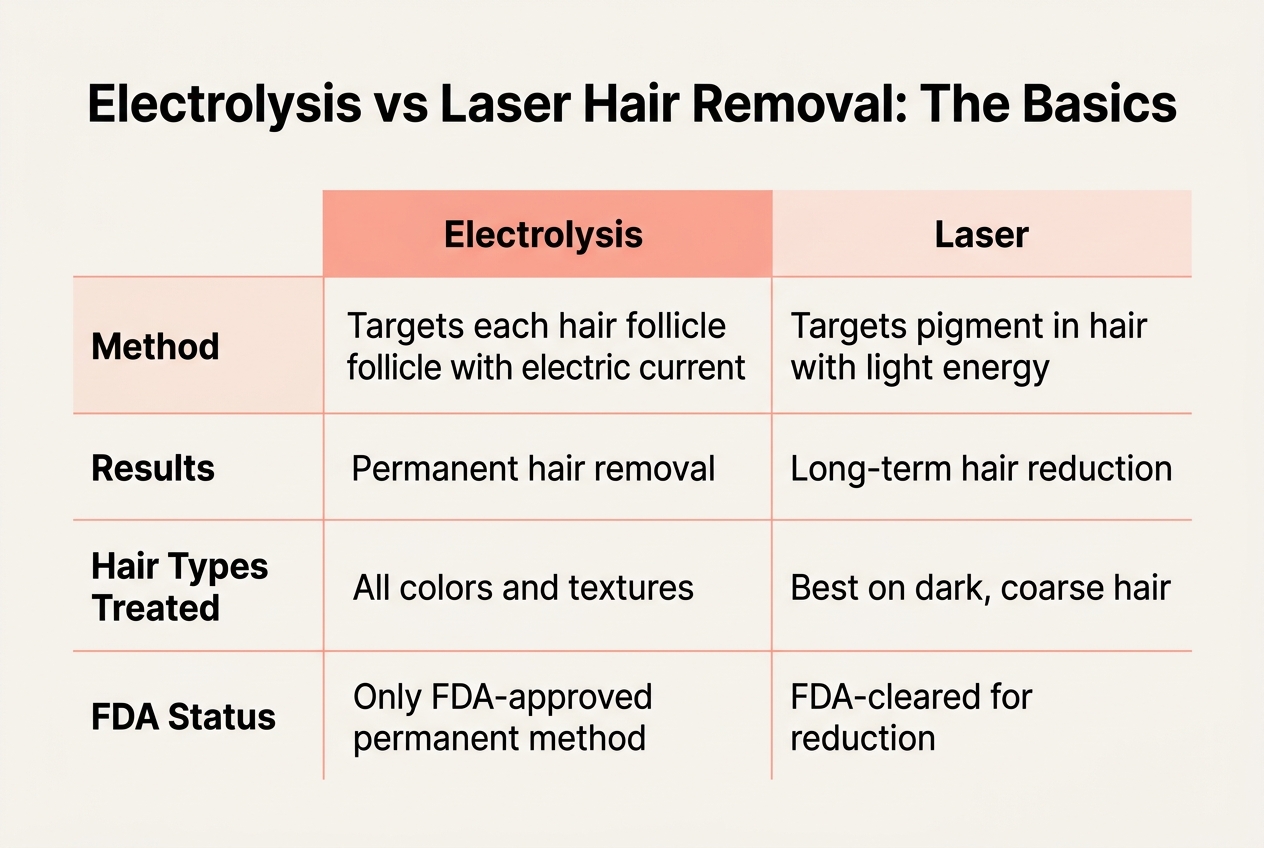
Electrolysis vs Laser Hair Removal: The Basics
How Electrolysis Works
Electrolysis is old-school in the best way. A technician slides a fine probe directly into each hair follicle and sends a small electrical current down to the growth cell, called the dermal papilla. That current damages the cell so the hair can’t grow back. It’s precise. It’s also slow, because every single hair gets treated one at a time — no shortcuts here.
Because it works follicle by follicle, electrolysis doesn’t care what color your hair is or what color your skin is. Gray, blonde, red, deep brown skin — the probe goes into the follicle regardless. That’s a real advantage for people who’ve been told laser “won’t work” on them. The FDA recognizes electrolysis as a permanent hair removal method, the only one with that specific classification. That’s a meaningful distinction when you’re comparing options long-term.
How Laser Hair Removal Works
Laser hair removal takes the opposite approach. Instead of one follicle at a time, it treats broad patches of skin in a single pass. The device fires light energy that gets absorbed by melanin, the pigment in the hair shaft, converting to heat that damages the follicle. A full leg or back can be covered in one session, which is why it’s the go-to for larger areas. If you’re weighing options for a treatment area, understanding the difference between laser and electrolysis upfront saves you from switching methods halfway through a plan.
Laser is FDA-recognized as permanent hair reduction, not permanent removal — an important wording difference. It thins hair out significantly and can knock a lot of follicles into permanent dormancy. But a few stragglers often keep cycling back, needing the occasional touch-up years later.
Both methods take multiple visits, just for different reasons. Electrolysis needs repeat sessions because you’re only clearing so many follicles per appointment. Laser needs repeat sessions because hair grows in cycles — anagen, catagen, telogen — and the laser only zaps follicles that are actively growing at the time. Miss a dormant one this month, catch it in eight weeks. Some clients bridge the gap between sessions with waxing, and it’s fair to ask whether that habit helps or hurts. There’s a solid breakdown on whether waxing actually reduces hair growth over time worth reading before you decide. Neither method is an instant fix. Anyone promising one session and done is stretching the truth.
Best Candidates: Skin Tone, Hair Color, and Treatment Areas
Who Should Choose Laser
Laser hair removal relies on melanin contrast. The device targets pigment in the hair shaft, so it works best when dark, coarse hair sits against lighter skin. Think dark brown or black hair on fair to medium skin — that’s the classic ideal case. Modern Nd:YAG lasers have widened the pool of good candidates considerably, offering safer, more effective treatment for deeper skin tones than older devices ever could. Still, results vary by machine and by the technician’s skill. Ask what equipment a provider uses before booking.
Laser shines on large, flat zones where a technician can move quickly and cover ground: legs, back, chest, underarms, and the bikini line. It’s inefficient, though, on fine, light-colored, or single stray hairs — the laser simply can’t “see” enough pigment to lock on. If you’re also dealing with stubborn fat under the chin, it’s worth knowing that a dedicated provider may pair hair removal with med spa treatments that can get rid of a double chin for a fuller lower-face refresh.
Who Should Choose Electrolysis
Electrolysis doesn’t care about pigment at all. It sends current straight into the follicle, which means it works on white, gray, red, and blonde hair — every shade laser struggles with. Skin tone is a non-issue too. Where electrolysis earns its keep is precision: eyebrows, chin, upper lip, and those one-off stray hairs that pop up years after other treatments. Comparing the two side by side helps clarify which fits your goals, and resources that break down the mechanics of electrolysis vs laser hair removal are worth a look before committing to either.
| Factor | Laser | Electrolysis |
|---|---|---|
| Best hair color | Dark, coarse | Any, including gray and blonde |
| Best skin tone | Light to medium (Nd:YAG helps deeper tones) | Any skin tone |
| Ideal treatment size | Large areas (legs, back) | Small, detailed spots |
| Speed per session | Fast coverage | Slow, hair-by-hair |
| Device dependency | High — varies by laser type | Low — technique-driven |
Bottom line: pick the tool that fits the terrain. Big, uniform areas favor laser; small, stubborn, or light-colored patches favor electrolysis. Many people end up using both.

Pain, Sessions, and Treatment Time Compared
Let’s talk feeling and time, because these two treatments couldn’t be more different in the chair. Electrolysis delivers a quick pinch or sting with each hair, one at a time, using a fine probe and a tiny electrical current. Over a big area, that adds up fast — both in discomfort and in your afternoon. Laser hair removal feels more like a rubber band snapping against skin, but a single pulse zaps dozens of hairs at once, so the sting is more spread out and the session moves quicker. Neither is painless. Both are tolerable for most people, and numbing cream or a built-in cooling tip on the laser handpiece makes a real difference.
The math on time is where things really diverge, so here’s a side-by-side look at what to expect.
| Factor | Electrolysis | Laser Hair Removal |
|---|---|---|
| Sensation | Pinch or sting per hair | Snap or flick per pulse |
| Large-area session time | Hours, often across visits | 15–30 minutes typically |
| Session frequency | Weekly or biweekly | Every 4–6 weeks |
| Total sessions | Months to a year+ | 6–8 sessions on average |
| Comfort aids | Numbing cream | Numbing cream, cooling device |
Notice the pattern: electrolysis wins on permanence claims but demands a bigger time commitment upfront, since hair grows in cycles and each follicle needs individual attention. Laser works in bulk, treating whole zones — legs, back, underarms — in one short sitting. Between laser sessions, shaving is the usual way to manage regrowth, since waxing and plucking pull out the root the laser needs to target. If you’re having electrolysis, ask your provider before waxing between visits too. If you’re weighing which approach fits your schedule and pain tolerance, comparing which one is better in more clinical detail can help set expectations before you book anything.

Cost Comparison: Which Is More Affordable Long-Term
Money matters here, and the two methods play by different rules. Laser hair removal packages are usually sold in bundles, often six to eight sessions, and pricing depends heavily on the size of the area being treated. Electrolysis, on the other hand, is billed per session or per hour, which means the total cost is tied directly to how long your hair growth takes to fully clear out. A thorough overview of Electrolysis vs Laser Hair Removal: Key Differences & … breaks down how those billing structures shape the final bill.
Before picking a method based on price alone, it helps to look at how the numbers actually shake out over time:
- Small areas like the upper lip or chin often cost less with electrolysis in the long run, since fewer follicles mean fewer billable minutes per visit.
- Large areas such as legs, arms, or the back are usually more economical with laser, because the device covers broad zones in seconds rather than hair by hair.
- Laser packages often range from a few hundred dollars for small spots to a couple thousand for larger, multi-session plans.
- Touch-up sessions are common with laser after one to two years, adding a recurring cost that’s easy to forget when budgeting upfront.
- Electrolysis results are generally considered permanent once treatment is complete, so there’s rarely a maintenance bill waiting down the road.
- Reviewing general pricing guidance for hair removal before booking can help you compare quotes across providers with more confidence.
Here’s the blunt truth: cheaper per session doesn’t always mean cheaper overall. Run the math over five years, not five visits.
It’s also worth remembering that hair removal decisions sometimes overlap with other goals, like tightening skin or reshaping problem areas. Clients weighing multiple treatments at once often read up on the benefits of coolsculpting when planning a broader budget for body-focused care alongside hair removal.
Side Effects, Risks, and Downtime
Neither method is risk-free, but the risks look different depending on which one you choose. With laser hair removal, the most common side effects are temporary redness and mild swelling around the follicles, which usually calm down within hours. The rarer, more serious risk is pigment change or an actual burn, and that mostly happens when the provider is inexperienced or mismatches the laser settings to your skin tone. This is exactly why Laser Hair Removal vs. Electrolysis: Pros & Cons is worth understanding before you commit to a full treatment package.
Electrolysis carries its own, smaller set of risks. Redness and light swelling are normal right after a session. Scarring and infection are rare, but they can happen if electrolysis isn’t done correctly, and infection in particular can come from an unsterile needle. That’s a technique and sanitation issue, not a technology flaw, so ask about their training and whether they use disposable equipment if you’re unsure.
- Laser sessions typically involve zero real downtime, meaning you can head back to work, the gym, or dinner right after your appointment.
- Electrolysis skin may look slightly irritated or blotchy for about a day, though it rarely stops anyone from going about normal activities.
- Both treatments demand strict sun protection afterward, since UV exposure on freshly treated skin raises the odds of dark spots or uneven pigment.
- Ice packs or a soothing gel can calm redness quickly after either treatment, especially on sensitive areas like the upper lip or bikini line.
- Avoid picking, scrubbing, or using harsh exfoliants for at least 24 to 48 hours, since broken skin heals slower and scars more easily.
- Skip retinoids, chemical peels, and other active treatments for a few days post-session to avoid compounding irritation on already-sensitive skin.
Aftercare Tips for Both Treatments
Good aftercare is what separates a smooth recovery from an annoying one. Keep the treated area clean, moisturized, and out of direct sun — daily SPF isn’t optional here. If you’re someone who layers in other skin treatments, space them out; getting a benefits of microdermabrasion session too close to hair removal can overwork the skin. Loose clothing helps too, especially after electrolysis on the bikini line or underarms, where friction makes redness linger longer than it needs to.
Unsure which approach fits your skin’s sensitivity level? Booking a virtual skin consultation beforehand lets a professional flag potential risks based on your skin tone, hair type, and medical history. It’s a small step. It can save you a bad reaction later.
Effectiveness and Duration of Results
Let’s talk numbers. Laser treatment typically reduces hair growth by 70-90% over a full treatment course, and for most people, that’s a life-changing result. But here’s the catch: it rarely kills every single follicle. Some hairs go dormant instead of dying, and they can wake back up years later, especially in areas like the chin or bikini line where hormones play a bigger role. Electrolysis works differently. Because each follicle gets treated individually with a fine probe, the destruction is direct and immediate, which is why it’s classified as true permanent removal rather than long-term reduction.
That distinction matters more than people expect. Anyone weighing the two methods long-term should spend time in threads like Laser v. Electrolysis : r/LaserHairRemoval, where real patients describe regrowth patterns years after finishing laser packages. Hormonal shifts complicate both methods, honestly. Pregnancy, PCOS, and menopause can all trigger fresh hair growth regardless of which treatment you chose originally, meaning touch-ups become part of the deal no matter what. Nobody tells you that upfront.
So which wins on effectiveness? Depends on your goal. Laser is the better choice for clearing dense hair across large areas fast — think legs, back, or arms — since it treats many follicles per pulse. Electrolysis is slower but wins when you need permanent removal of stubborn, resistant, or hormonally-driven hairs that laser keeps missing. Many people actually combine both: laser first to thin things out, electrolysis after to finish the job on holdouts. If you’re still removing hair between laser sessions, shave the treated area rather than waxing it, and save professional wax treatments for areas you aren’t treating with a laser.
Electrolysis vs Laser Hair Removal: Final Verdict
So which one actually wins? It depends on what you’re working with. If you’ve got large areas like legs, arms, or a back to clear, and your hair is dark and coarse against lighter skin, laser hair removal is the practical choice. Sessions move fast, discomfort per pulse is minimal, and you’ll cover a forearm in the time electrolysis needs for a small patch of chin hair. Comparing the two head to head, this breakdown of laser hair removal vs. electrolysis lines up with what most providers see in practice.
Electrolysis earns its place when hair color won’t cooperate with laser at all. Light, gray, white, or red hair lacks the pigment lasers target, so electrolysis becomes the only route to permanent removal. It’s also the better call for small, precise zones — eyebrow strays, chin hairs, a stubborn upper lip patch — where accuracy matters more than speed. Plenty of clients actually use both: laser knocks out bulk hair on big areas, then electrolysis mops up the resistant stragglers laser couldn’t fully kill. That combo, done in sequence rather than randomly, tends to produce the cleanest long-term results.
Don’t guess on this one. Skin tone, hair color, budget, and how much downtime you can tolerate all shift the answer, sometimes dramatically. A quick virtual skin consultation or in-person visit with an experienced esthetician sorts out the guesswork before you spend money on the wrong technology. Skipping that step is how people end up with six wasted sessions and hair that’s barely thinned. Between appointments, let treated skin settle fully before booking treatments like a men’s facial, and hold off on chemical peels until it has recovered. Get the assessment right first — everything else about the process gets easier after that.
The choice between electrolysis and laser usually comes down to three things: your hair color, the size of the area, and how much time you can commit. Laser covers large areas of dark hair quickly but offers long-term reduction rather than permanent removal, while electrolysis treats one follicle at a time and works on any hair color. Ask any provider how many sessions a realistic result takes, what the full series will cost, and whether they are licensed for the specific treatment, and remember that plenty of people end up using both.