Persistent breakouts, dull texture, and fine lines that seem to multiply overnight can leave even the most disciplined skincare routine feeling ineffective. If you’ve exhausted serums and spot treatments without lasting results, a high frequency facial may be the missing step your regimen needs. Estheticians have trusted this treatment for decades. At Refined Skin Club, we’ve seen firsthand how it addresses stubborn concerns at their source. This guide breaks down exactly how it works, what to expect, and the real results you can achieve in 2026.
What Is a High Frequency Facial
Origins of High Frequency Technology
High frequency devices did not start in spas. Physicians built them in the late 1800s to study electrical currents in the body. Nikola Tesla’s early experiments with oscillating current laid the groundwork for tools that could produce a gentle, controlled electrical charge through glass electrodes.
By the early 1900s, doctors used these devices for various skin conditions. Dermatologists noticed the current seemed to calm inflammation and dry out blemishes. This clinical use planted the seed for a treatment that would later become a trusted beauty tool.
How It Evolved Into a Spa Staple
Through the mid-1900s, estheticians began adopting high frequency machines for cosmetic use. They found the treatment helped tighten skin, calm breakouts, and boost circulation without needles or downtime. This made it a practical addition to standard beauty routines.
By the 1980s and 1990s, the equipment became smaller, safer, and more affordable. Spas started pairing it with facials, extractions, and microcurrent work. If you want a deeper technical breakdown, this guide on what does high frequency do for skin explains the biological effects in detail.
Common Names and Variations of the Treatment
You may hear it called violet ray therapy, HF facial, or oxygenating facial treatment. Each name points to the same core tool: a glass electrode delivering a mild electrical current.
Menus often bundle it with other services. Many local businesses pair it with dermaplaning, oxygen spray, or even lash lifts for a complete appointment.
The Science Behind How High Frequency Works
The Role of Electrodes During Treatment
The glass electrode is the heart of this therapy. Inside it sits a small amount of inert gas, usually neon or argon. When the device powers on, it produces an oscillating electrical current that pulses back and forth at high speed rather than flowing in one steady direction.
This oscillation is what makes the tool safe to glide across skin. The current changes direction thousands of times per second, so it never builds up enough force to cause a harsh shock. Instead, it delivers a gentle, controlled thermal effect.
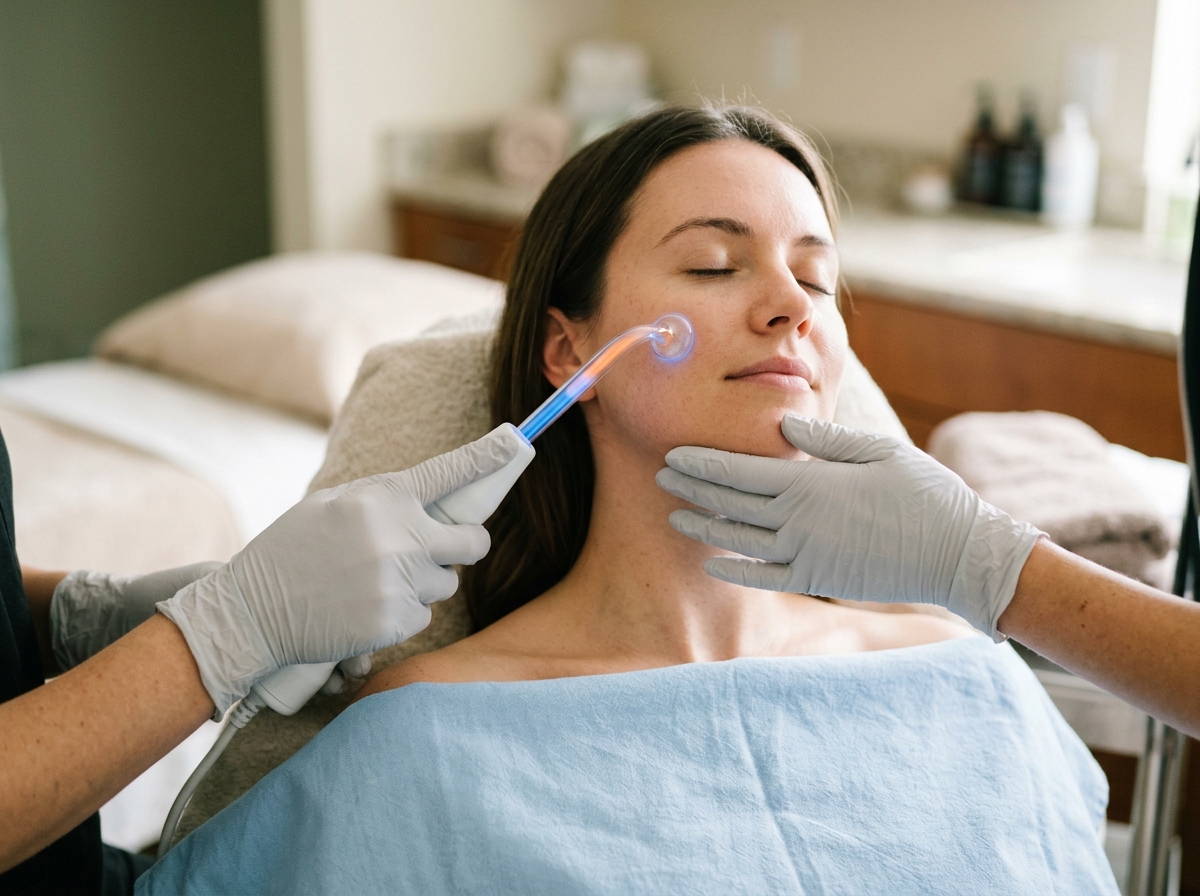
Electrode shapes vary by purpose. A mushroom-tip electrode spreads current over larger areas like the cheeks, while a comb-shaped electrode targets the scalp during hair-focused sessions. Providers often pair this step with facial extractions or a calming oxygen spray to soothe skin afterward.
Why Different Gases Are Used
Neon gas produces the familiar orange-red glow and is the most common choice for facial work. Argon gas glows violet and generates a slightly stronger germicidal effect, making it useful for acne-prone skin.
As current passes through the gas-filled tube, it generates trace amounts of ozone at the skin’s surface. This ozone has natural antibacterial properties, which helps explain why the treatment appeals to clients dealing with breakouts or congested pores.
Oxygen availability at the skin surface also increases slightly during treatment. This supports a temporary boost in cellular respiration, complementing other oxygenating services like microdermabrasion or dermaplaning.
How the Current Interacts With Skin Tissue
Once the current reaches skin tissue, it produces a mild, controlled heating effect. This warmth encourages blood vessels to dilate, improving local circulation and nutrient delivery to skin cells.
Better circulation supports collagen-producing fibroblasts and speeds cellular turnover. Many providers compare its stimulating effect to microcurrent work, though the mechanism differs.
Key Benefits of a High Frequency Facial
This treatment offers more than a quick glow. It works on several skin concerns at once, making it a popular add-on to facials and other skincare routines. The benefits build over time, but many clients notice a difference after just one session.
Tightens and Firms the Skin
The gentle current stimulates blood flow and encourages collagen activity in the treated area. This helps skin look firmer and more toned, especially around the jawline, cheeks, and neck. It is often paired with microcurrent work for clients focused on anti-aging results.
Helps Treat Acne and Breakouts
The oxygen produced during treatment may help reduce acne-causing bacteria. This makes the therapy a useful option for clients managing breakouts, especially when combined with extractions or a consistent facial schedule. For a deeper look at how facials support acne-prone skin, see this guide on do facials help with acne.
Specific benefits reported by clients and providers include:
- Reduced redness and inflammation following active breakouts
- A visible calming effect on irritated or sensitive skin
- Support for faster healing after extractions or exfoliation
- A noticeable improvement in overall skin tone and texture
- Fewer new blemishes when treatments are scheduled consistently
Reduces the Appearance of Enlarged Pores
The warming effect helps refine pore appearance and improve product absorption afterward. Smaller-looking pores and better circulation give skin a healthy, natural glow. To learn more about how the technology supports these results, this overview on High Frequency Facials Revitalize Your Skin offers helpful context.
High Frequency vs Other Facial Technologies
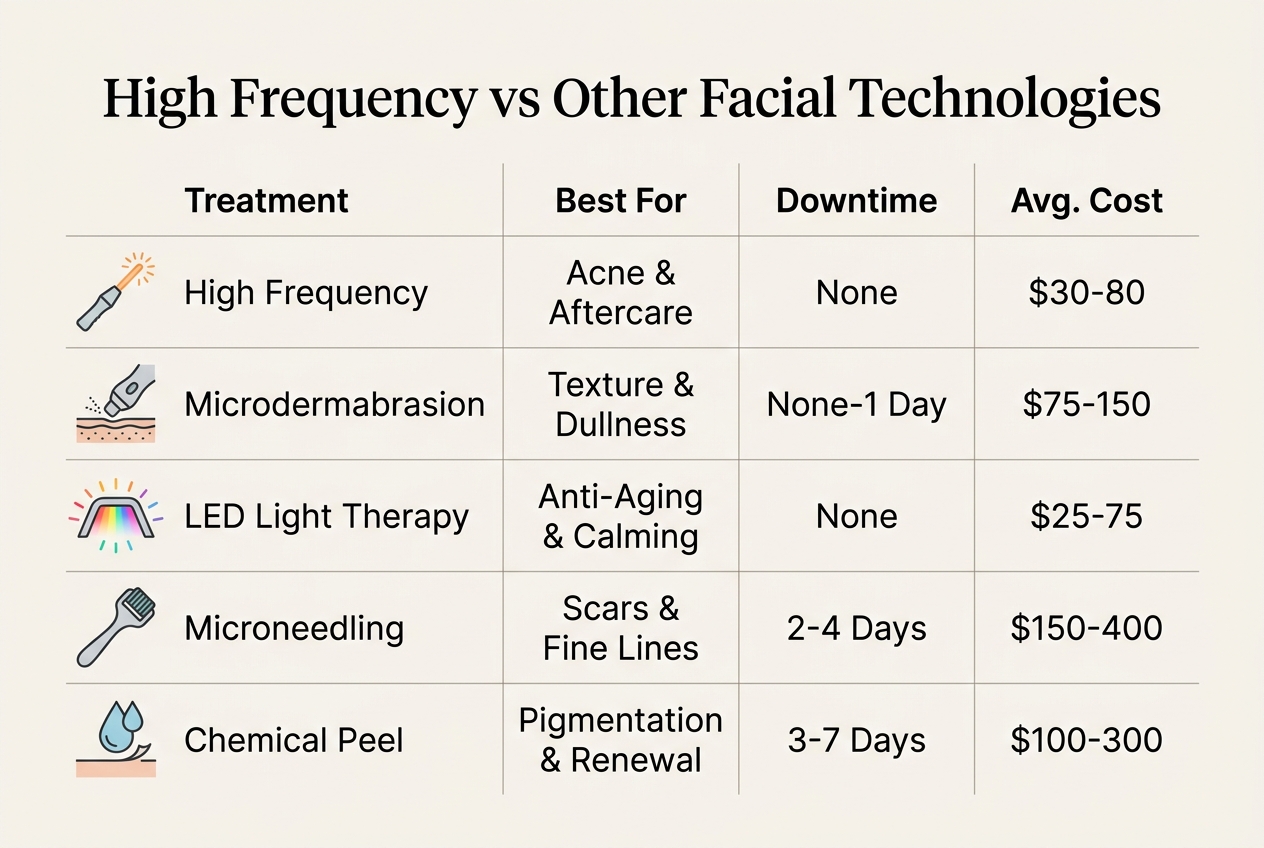
Skin clients often ask how high frequency stacks up against other popular treatments. Each technology works differently, targets different concerns, and delivers results on a different timeline. The comparison table below breaks down the basics before we look closer at each pairing.
| Technology | Mechanism | Best For | Typical Cost Range | Results Timeline |
|---|---|---|---|---|
| High Frequency | Oxygenating current, mild germicidal effect | Acne, dullness, minor puffiness | $50–$120 per session | Immediate glow, cumulative over weeks |
| Microcurrent | Low-voltage muscle stimulation | Sagging, contour, lifted appearance | $75–$200 per session | Immediate lift, fades in days |
| LED Light Therapy | Wavelengths trigger cellular response | Inflammation, collagen, tone | $40–$150 per session | Gradual, over several weeks |
| Classic Facial | Manual cleansing, extractions, masks | General maintenance, relaxation | $60–$150 per session | Immediate freshness, short-lived |
High Frequency vs Microcurrent
High frequency calms breakouts and boosts circulation using oscillating current. Microcurrent instead re-trains facial muscles for a temporary lifted look. Clients chasing clearer skin lean toward high frequency; those wanting firmer contours often choose microcurrent.
High Frequency vs LED Light Therapy
LED uses light wavelengths to reduce redness and support collagen over time. High frequency works faster on active blemishes and oxygenation. Many providers combine both for a broader approach. For more background, see What is High Frequency and Why Do We Use It?
High Frequency vs Classic Facials
A classic facial focuses on cleansing, extractions, and hydration. High frequency adds a targeted current step, often layered into a traditional service. Following proper facial aftercare matters for either option to protect results.
Who Should Consider This Treatment
Skin Types That Benefit Most
Oily and acne-prone skin often responds best to this therapy. The oxygen produced during treatment may help reduce acne-causing bacteria on the surface. Clients dealing with clogged pores, mild breakouts, or dull texture usually notice quicker results than those with other concerns.
Mature or sagging skin also benefits, since the gentle warming effect can support collagen activity and firmness. People who have had a chemical peel or microdermabrasion session should wait until their skin has fully recovered before adding this treatment. It also pairs well with regular exfoliation habits. Understanding how often should you exfoliate your skin helps skin stay prepped between visits.
Who Should Avoid High Frequency Treatments
Anyone with a pacemaker, metal implants, or epilepsy should avoid this treatment entirely. The electrical current can interfere with medical devices or trigger seizures in sensitive individuals. People with rosacea or active cystic acne may also experience irritation.
Those using strong retinoids or who recently had extractions should wait until skin calms down. A provider can recommend an alternative, such as microcurrent or oxygen spray, for gentler results.
Is It Safe During Pregnancy or With Sensitive Skin
Most providers advise skipping this treatment during pregnancy, since research on the electrical current’s effects on developing babies remains limited. It’s a precaution, not a proven risk, but caution matters here.
Sensitive skin can often tolerate shorter sessions with lower intensity settings. A virtual skin consultation beforehand helps determine safety. Watching a demonstration like How to Use a High Frequency in a Facial also shows how controlled and gentle proper application looks.
What to Expect During Your Appointment
Before the Treatment Begins
Your esthetician starts with a clean face. Makeup, oil, and debris are removed first. This step matters because the electrode glides better on bare skin. Some sessions include gentle facial extractions or dermaplaning beforehand, depending on your skin’s needs that day.
During the Electrode Application
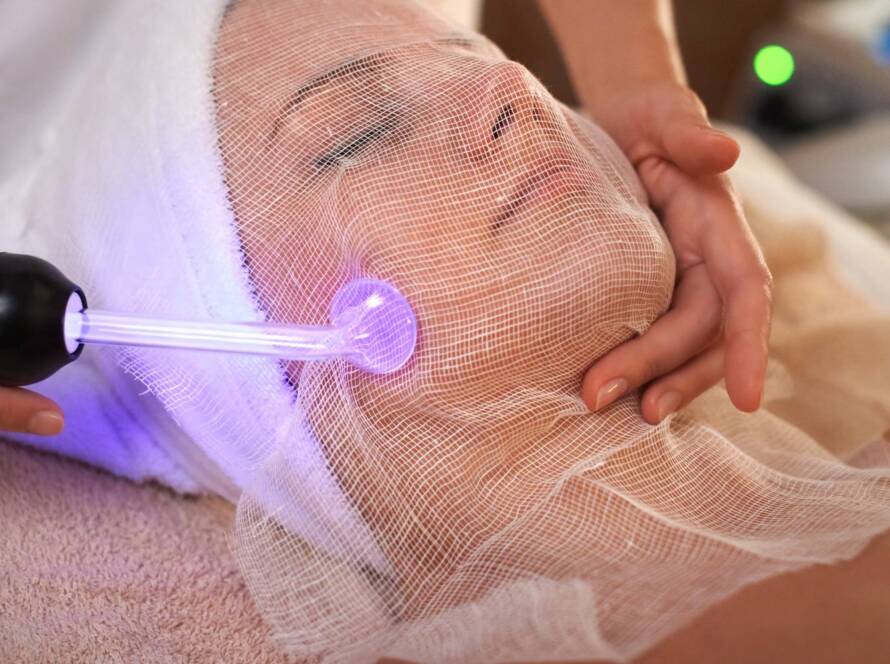
The provider places a thin layer of gauze or a serum on your skin, then glides the glass electrode across your face in slow, circular motions. A trained hand can adjust intensity for sensitive zones. The table below breaks down the typical flow.
| Step | What Happens | Approximate Time |
|---|---|---|
| Cleansing | Skin is wiped clean of oils and makeup | 5 minutes |
| Prep serum | Thin gel or gauze layer applied | 2 minutes |
| Electrode pass | Device glides over face and neck | 10-15 minutes |
| Spot treatment | Extra focus on blemishes or fine lines | 5 minutes |
| Cool down | Calming mask or oxygen spray applied | 5 minutes |
Most clients feel a mild tingling or warm buzzing sensation. It’s rarely uncomfortable. A full session, similar to how a High Frequency Machine is used in professional settings, typically runs 30 to 45 minutes total.
Immediately After Your Session
Skin often looks slightly pink and feels warm. This fades within an hour. Providers usually recommend avoiding harsh products for the rest of the day. If you’ve had recent injectables, review your botox aftercare guidance before booking, since timing between treatments matters.
How to Prepare for Your Facial
Skincare to Avoid 48 Hours Prior
Good results start with simple prep. For general guidance on how to prepare for a facial, skip harsh actives for two days before your appointment. This keeps skin calm and ready for the treatment.
- Stop retinol or retinoid creams at least 48 hours before your session to reduce sensitivity.
- Avoid new chemical peels or at-home acid exfoliants that could leave skin raw or reactive.
- Skip waxing treatments or dermaplaning the day before, since freshly treated skin can feel tender.
- Hold off on strong sun exposure, which can make skin more prone to irritation during the session.
- Avoid heavy makeup on appointment day so the esthetician can assess your skin accurately.
What to Tell Your Esthetician
Share your full history before the session begins. Mention current medications, pregnancy status, pacemakers, or any recent microchanneling or laser work. This helps the esthetician customize the therapy safely and effectively.
Setting Realistic Expectations
One session offers a nice glow, but lasting change takes time. As explained in this guide on what a high frequency facial does, consistency matters more than a single visit for real improvement.
Aftercare and Maintenance for Lasting Results
Products to Avoid After Treatment
Your skin is more sensitive right after the session. Avoid harsh actives for at least 24 to 48 hours. This means no retinol, no glycolic or salicylic acid, and no strong exfoliating scrubs. These ingredients can irritate skin that has just been treated with the therapy’s mild electrical current.
Skip fragranced products too. Heavy perfumes and alcohol-based toners can sting freshly treated skin. Gentle care matters most in the first two days. Stick to simple, soothing formulas instead of layering multiple new products at once.
If you also had extractions paired with the session, follow the stricter guidelines given for those treatments. Combination services often need extra caution around actives for a few extra days.
When to Resume Retinol or Glycolic Acid
Most estheticians recommend waiting two to three days before restarting retinol or glycolic acid products. This gives skin time to calm down and rebuild its barrier. Reintroduce one product at a time, watching for redness or dryness.
If your skin feels unusually tight or flaky, wait an extra day. Patience here protects your results and prevents unnecessary irritation. A dedicated provider can give personalized timing based on your skin type and treatment intensity.
Daily Aftercare Routine
Keep your routine simple: gentle cleanser, hydrating serum, and moisturizer. Sun protection is essential, since skin is more sun-sensitive after treatment. Apply SPF 30 or higher every morning, even on cloudy days.
For broader seasonal guidance, these summer skincare tips offer useful habits for protecting treated skin during warmer months. Consistent hydration and daily SPF help maintain your glow between appointments.
Many clients also invest in an at-home device, like the Quiet&Far High Frequency Facial Machine Skin Care Tool …, to extend results between professional sessions.
How Often You Should Schedule Treatments
Weekly vs Monthly Treatment Plans
Treatment frequency depends on your goal. For active breakouts or dull, congested skin, weekly sessions for four to six weeks often bring the fastest results. This is called a correction phase. The oscillating current helps calm inflammation and support clearer skin over repeated short sessions.
Once skin stabilizes, most clients shift to a maintenance schedule of once every three to four weeks. This mirrors a normal skin cell cycle and keeps results steady without overdoing it. Some people with mild, occasional concerns only need a session monthly, or even seasonally, especially when paired with a solid home routine.
Combining With Other Facial Services
Many providers build multi-month plans that rotate this therapy with other treatments. For example, a chemical peel every six weeks paired with high frequency sessions in between can address texture and tone more thoroughly. Microcurrent or oxygen spray sessions are also common additions for clients focused on firmness and glow.
If you’re also exploring options like med spa treatments that can get rid of a double chin, ask your provider how facial frequency should adjust around those appointments, since skin needs recovery time between more intensive procedures.
Tracking Your Skin’s Progress
Keep a simple log of breakouts, redness, and texture changes after each visit. Photos taken every two weeks under similar lighting make patterns easier to spot than memory alone.
Watch for signs you need a change: persistent dryness suggests reducing frequency, while stalled progress after six weeks may mean increasing it. For technique details between visits, this guide on High-frequency wand: How to use it and maximize results offers useful background.
Common Questions and Myths Addressed
Does It Hurt or Feel Uncomfortable
Most clients feel almost nothing. The sensation is often described as a light tingling or gentle warmth as the glass electrode passes over the skin. There may be a faint buzzing sound and a slight smell of ozone, which is normal. It is not a painful treatment, and no numbing cream is needed.
Does It Really Kill Acne-Causing Bacteria
This is a common question, and the research so far is promising but mostly from the lab. The oscillating current creates a mild germicidal effect on the skin’s surface.
- The electrode generates a small amount of ozone gas, which has antibacterial properties on contact.
- Laboratory research suggests it can reduce bacteria and fungi, though more research in people is needed.
- It calms active inflammation, which often makes red, angry blemishes look smaller within a day or two.
- It works best alongside facial extractions and a consistent home routine, not as a standalone cure.
- Results vary by skin type, and severe cystic acne should be checked by a doctor or dermatologist.
Can It Improve Fine Lines and Wrinkles
Yes, though results build gradually. The gentle heat stimulates collagen and elastin production, which can soften fine lines over repeated sessions. It works well paired with microcurrent or microchanneling for firmer results. For deeper research on anti-aging routines, the blog offers helpful comparisons.
If high frequency treatment sounds like something you’d like to explore, the most useful next step is simply learning where it fits among the other options for your skin — and being honest about what a single session can and can’t do. Often the better question isn’t which device to choose, but whether a consistent series of facials, extractions, or peels would move you further toward clear, calm skin, and a skin-focused studio like Refined Skin Club is one place that kind of steady, esthetician-led work happens. Either way, matching the treatment to your actual concern, rather than to a trending name, is what tends to make the difference over time.