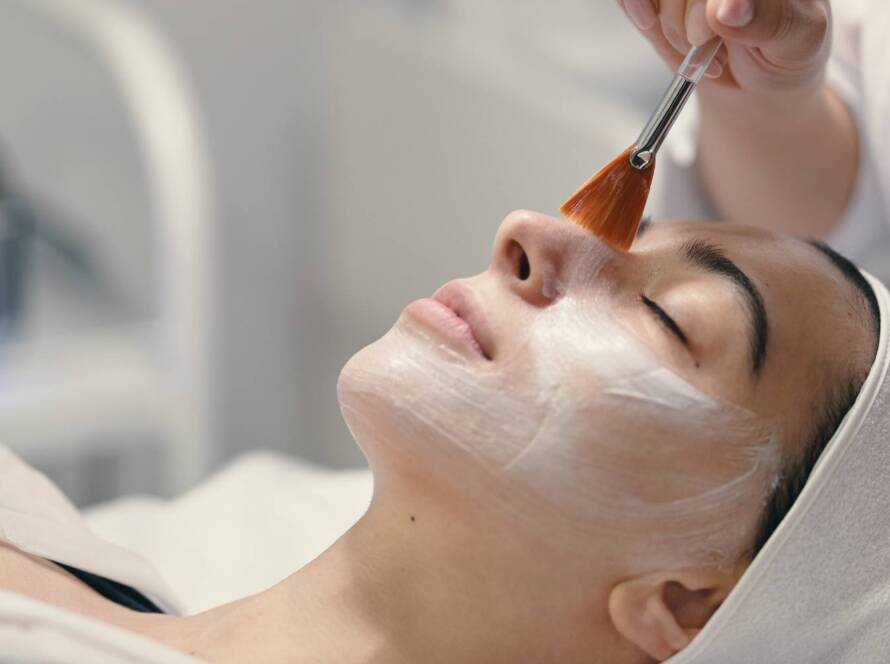
Redness that flares without warning, products that promise relief but deliver irritation instead, and the constant guesswork of what your skin will tolerate today—if this sounds familiar, you know the unique challenge of caring for a reactive complexion. At Refined Skin Club, we’ve helped countless clients move past trial-and-error and build routines that actually work. Effective facial care for sensitive skin isn’t about restriction. It’s about precision. This guide distills our clinical experience into clear, actionable strategies for calming, strengthening, and protecting your skin for the long term.
Understanding Facial Care for Sensitive Skin
What Makes Skin ‘Sensitive’
Sensitive skin reacts faster and stronger than normal skin. It can sting, burn, or turn red after products, weather changes, or even water. About half of adults describe their skin this way, though true sensitivity varies widely in cause and severity.
This skin type often has fewer natural defenses. Nerve endings sit closer to the surface, so irritants trigger a response quickly. A gentle approach matters here. Harsh scrubs or strong actives can undo weeks of progress in a single session.
The Role of the Skin Barrier
The skin barrier is a thin outer layer made of lipids and dead skin cells. It locks in moisture and blocks out bacteria, pollution, and allergens. When this barrier weakens, water escapes and irritants slip in more easily, causing dryness and redness.
A damaged barrier explains most sensitive skin complaints. Over-cleansing, hot water, and harsh exfoliants strip lipids faster than skin can replace them. Rebuilding the barrier often takes six to eight weeks of consistent, gentle care, plus proper facial aftercare following any professional treatment.
Sensitive vs. Reactive vs. Allergic Skin
These terms get mixed up often. Sensitive skin reacts to physical triggers like wind or fragrance. Reactive skin flares in response to specific products or environmental shifts. Allergic skin involves the immune system, producing hives, swelling, or persistent rash after contact with an allergen.
Knowing the difference shapes treatment choices, including whether options like facials, chemical peels, or microchanneling suit your skin, and whether do facials help with acne concerns without triggering flare-ups. The rest of this guide breaks down signs, triggers, ingredients, and routines built around these distinctions.
How to Recognize the Signs of Sensitive Skin
Physical Signs to Watch For
Sensitive skin often shows itself in small, repeated clues. Consistency matters more than one bad day. If your skin reacts the same way to certain products, weather, or treatments every time, that pattern is worth tracking.
- Persistent flushing or blotchy patches that appear after washing your face or applying new products.
- Rough or flaky texture that returns quickly, even after moisturizing.
- Small bumps or breakouts that show up without a clear cause.
- Visible fine capillaries, especially across the cheeks and nose.
- Skin that feels raw or irritated after mild exfoliation, which is why knowing how often should you exfoliate your skin matters for reactive types.
Redness, Tightness, and Stinging Explained
Redness that fades within minutes is often just circulation. Redness that lingers for hours, paired with heat or swelling, points to true sensitivity. Tightness after cleansing usually means the skin barrier is stripped. Stinging or burning from water, sunscreen, or even gentle serums is a strong signal your skin is reacting, not just adjusting.
Simple At-Home Sensitivity Test
Before booking a facial, chemical peel, or even lash lifts, try a small patch test. Apply a new product to your inner arm or jawline. Wait 24 hours. Watch for redness, itching, or bumps. If nothing happens, test a small area on your face next. This simple step helps you spot reactions early, before they spread across your whole face.
What Causes Sensitive Skin to Flare Up
Genetic and Hormonal Factors
Sensitive skin often runs in families. If a parent has a weak skin barrier, you may inherit the same trait. This can mean thinner skin, fewer natural oils, and quicker reactions to products or weather.
Hormones play a big role too. Many women notice more redness and breakouts around their period, during pregnancy, or through menopause. Shifting estrogen levels affect oil production and how well skin holds moisture. Stress hormones like cortisol can also weaken the barrier over time, making calming treatments such as facials or oxygen spray helpful for restoring balance.
Some people are simply born with more nerve endings near the skin’s surface. This makes them feel stinging or burning faster than others, even from mild products. Understanding your genetic and hormonal baseline helps explain why sensitivity can appear suddenly, even without a clear cause.
Environmental Triggers Like Weather and Pollution
Weather changes are a major cause of flare-ups. Cold, dry air strips moisture fast, while intense summer heat increases sweating and irritation. Wind can chap skin within minutes, especially on the cheeks and nose.
Pollution is another hidden trigger. Tiny particles in city air can settle on skin and break down its protective layer. Over time, this leads to dullness, dryness, and inflammation. Reviewing the Best Skin Care for Sensitive Skin 2026 can help you choose products built to shield against these outdoor stressors.
Indoor environments matter too. Dry heating in winter and strong air conditioning in summer both pull moisture from skin. Hard water, high in minerals, can also leave residue that irritates already reactive skin.
Lifestyle Habits That Worsen Sensitivity
Daily habits often make sensitivity worse without people realizing it. Long, hot showers strip natural oils. Over-washing or scrubbing too hard damages the skin barrier further.
Diet and sleep matter as well. Spicy foods, alcohol, and poor sleep can trigger redness and flushing. High stress levels raise inflammation throughout the body, showing up first on the face.
Skipping proper aftercare following treatments like chemical peels or microdermabrasion can also cause flare-ups. Learning what does high frequency do for skin shows how gentle, controlled tools can calm reactive skin instead of aggravating it.

Key Ingredients to Look For (and Avoid)
Beneficial Ingredients for Calming Skin
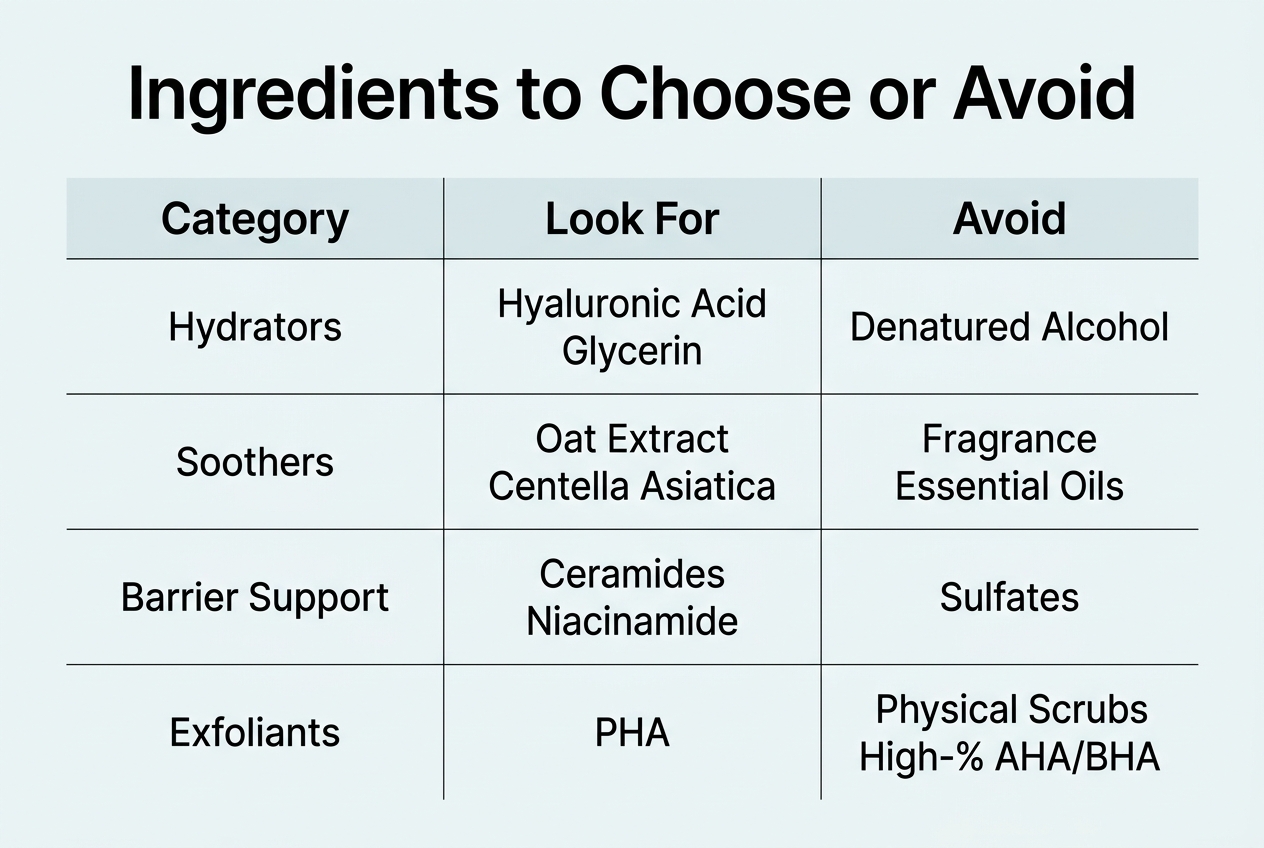
Some ingredients calm redness and rebuild the skin barrier. Others quietly trigger flare-ups. Knowing the difference helps before buying anything new. Look for ceramides, niacinamide, oat extract, and centella asiatica. These ingredients reduce inflammation and hold moisture in place. Many browsing Skin Care Products For Sensitive Skin notice these names appear often on trusted labels.
Common Irritants to Avoid
Fragrance, alcohol denat, and harsh sulfates top the list of common triggers. Essential oils, despite being “natural,” can also cause stinging or breakouts. The table below breaks down what to seek out versus skip.
| Ingredient | Effect on Skin | Recommendation |
|---|---|---|
| Ceramides | Repairs barrier | Seek out |
| Niacinamide | Reduces redness | Seek out |
| Fragrance | Common trigger | Avoid |
| Alcohol denat | Dries and strips skin | Avoid |
| Centella asiatica | Calms irritation | Seek out |
How to Decode Ingredient Labels
Ingredients are listed by concentration, highest first. Check the first five for irritants before buying. A patch test on the inner arm, worn for 48 hours, catches reactions early. If a product ever burns or stings, stop use immediately. For clients also managing stubborn fullness under the jaw, exploring med spa treatments that can get rid of a double chin alongside gentle skincare can support overall results.
Building a Daily Facial Care Routine for Sensitive Skin
A consistent routine helps calm reactive skin over time. The order of application matters just as much as the products themselves. For a deeper breakdown, What is the best skincare routine for sensitive skin? offers useful guidance on building habits that support the skin barrier.
Morning Routine Steps
Mornings should focus on protection. Cleanse gently, apply a lightweight serum, follow with moisturizer, then finish with sunscreen. Skip harsh actives before daytime exposure.
Evening Routine Steps
Evenings focus on repair. Remove makeup, cleanse thoroughly, apply treatment serums, then seal with a richer moisturizer. This is when active ingredients work best, since skin repairs itself overnight.
| Step | Morning | Evening |
|---|---|---|
| 1 | Gentle cleanser | Oil or micellar cleanser |
| 2 | Hydrating toner (optional) | Gentle cleanser (second wash) |
| 3 | Antioxidant serum | Treatment serum (retinol or peptide) |
| 4 | Moisturizer | Richer night moisturizer |
| 5 | Broad-spectrum SPF 30+ | Facial oil (if needed) |
Adjusting Frequency of Treatments
Actives like retinoids or acids should start slowly, once or twice weekly, then increase gradually. Watch for redness or peeling before adding frequency. Many local businesses recommend spacing professional treatments, such as chemical peels or a high frequency facial, three to four weeks apart. This allows the skin barrier to recover fully between sessions.
Choosing the Right Cleanser, Moisturizer, and Serum
Gentle Cleansing Options
A gentle cleanser removes dirt without stripping natural oils. Harsh formulas rely on sulfates and high foaming action, which break down the skin barrier. Look for cream, gel, or milk textures instead of foaming bars. These leave skin feeling soft, not tight or squeaky.
pH balance matters more than most people realize. Healthy skin sits around 4.5 to 5.5. Cleansers above that range disrupt the acid mantle and invite irritation. Many people asking about this online, including one detailed thread titled Looking for a skincare routine and products for very …, discover that switching to a low-pH, fragrance-free cleanser resolves persistent tightness and stinging.
During a professional facial, estheticians often use micellar water or a cream base before extractions. This keeps the skin calm and prepared, rather than reactive, for the steps that follow.
Moisturizers That Support the Barrier
A strong moisturizer contains ceramides, glycerin, or squalane. These ingredients rebuild the barrier rather than sitting on top of it. Thicker creams suit dry, sensitive skin, while lightweight lotions work better for combination types prone to breakouts.
Avoid products loaded with alcohol or heavy fragrance blends. These evaporate quickly and pull moisture away from deeper layers, leaving skin more reactive over time.
Serums and Treatments for Redness-Prone Skin
Redness responds well to serums with niacinamide, centella asiatica, or azelaic acid. These reduce visible blood vessels and calm inflammation without causing further sensitivity. Apply serums on damp skin for better absorption and less friction.
Some clients pair serums with light in-clinic care, such as oxygen spray or microcurrent, to soothe redness between facials. Even routine habits, like hair removal, deserve attention. Understanding does waxing reduce hair growth helps sensitive-skinned clients choose treatments that won’t trigger unnecessary flare-ups nearby.
Sun Protection and Makeup for Reactive Skin
Best Sunscreen Types for Sensitive Skin
Mineral sunscreens are usually the safer choice for reactive skin. Zinc oxide and titanium dioxide sit on top of the skin and reflect UV rays, rather than absorbing into pores. They rarely cause stinging, and they start working immediately after application.
Chemical sunscreens use ingredients like avobenzone or oxybenzone. These absorb into the skin and can trigger redness or breakouts in some people. If a chemical formula has always worked well, there’s no need to switch. But new flare-ups after switching brands often trace back to this ingredient category.
Look for SPF 30 or higher, fragrance-free labeling, and a short ingredient list. Many local businesses offering skin consultations can recommend a formula suited to a specific skin type after a quick assessment.
Choosing Non-Irritating Makeup
Reactive skin does best with mineral-based makeup. Foundations and powders built on zinc oxide or iron oxides tend to sit calmly on inflamed skin instead of clogging pores. Avoid products with talc, alcohol, synthetic dyes, and heavy fragrance, since these are common triggers for stinging or breakouts.
Cream-based formulas often blend more smoothly and require less rubbing than powders. This matters because friction itself can provoke flare-ups. Reading the label for “non-comedogenic” and “hypoallergenic” claims is a good starting habit, though patch testing new products always beats trusting a label alone. For deeper background on ingredient sensitivities across skin types, the guide on How To Manage Sensitive Skin in Different Skin Types offers useful detail.
Gentle Application Techniques
How makeup goes on matters as much as what’s in it. Use soft, clean sponges instead of stiff brushes, and pat products rather than dragging them across the skin. Dragging motions increase friction, which can worsen redness on already reactive areas.
Applying sunscreen in thin layers, then letting it settle for a few minutes before makeup, reduces pilling and irritation. For clients exploring options beyond daily makeup, many spas offer non-surgical treatments that dont require a knife, which can improve skin tone and reduce reliance on heavy coverage over time.
Common Mistakes That Make Sensitive Skin Worse
Over-Exfoliation and Harsh Scrubbing
Many people scrub harder when skin looks dull or bumpy. This backfires fast. Over-exfoliation strips the skin barrier and leads to redness, tightness, and stinging. Gritty scrubs, stiff brushes, and daily acid use are common culprits. Sensitive skin usually needs exfoliation just once or twice a week, using a gentle method. Layering a scrub, an acid toner, and a retinol in one routine is a fast path to irritation. For a clearer plan on pacing these steps, this guide on How To Build a Skincare Routine for Sensitive Skin breaks down safe order and frequency.
Skipping Patch Tests Before New Products
Skipping a patch test is one of the most avoidable mistakes. A new serum, mask, or cleanser can trigger a reaction days after first use. Testing on the inner arm or behind the ear for 48 hours helps catch problems early, before a full-face application causes lasting damage.
Mixing Too Many Actives Together
Combining strong ingredients at once often overwhelms sensitive skin. A few common layering errors include:
- Using vitamin C and retinol in the same routine without spacing them across morning and night.
- Applying a chemical exfoliant right before or after a physical scrub, doubling up on abrasion.
- Introducing several new actives in the same week, making it impossible to identify the trigger.
- Pairing benzoyl peroxide with strong acids, which raises the risk of dryness and peeling.
- Using multiple fragranced products together, stacking irritant exposure without realizing it.
A simpler routine, built one product at a time, protects the barrier better. Reviewing a trusted non surgical skin treatments guide can help clarify which professional options pair safely with an existing home routine.
Professional Treatments and Advanced Solutions
Calming Facials for Redness and Irritation
Some flare-ups need more than a gentle cleanser. A calming facial uses cool tools, soothing masks, and light pressure to reduce redness without triggering more irritation. Many providers add an oxygen spray or a brief cryotherapy pass to instantly cool inflamed skin. These sessions often skip harsh extractions and steam, which can worsen sensitivity.
A therapist trained in reactive skin will assess your triggers before starting. This differs from a spa-day facial, since ingredients and pressure get customized. Treatments like microcurrent can also improve circulation gently, supporting skin without added friction or heat.
Gentle Chemical Peel Options
Not all peels are aggressive. Mild options, like low-percentage lactic acid or enzyme-based formulas, exfoliate without the sting of stronger acids. These are formulated specifically for reactive skin types, targeting dullness and uneven texture while avoiding deep irritation.
Unlike box-store peel kits, a professional session controls exposure time and concentration precisely. This precision lowers the risk of burns or rebound redness, something The Ultimate Skin Care Routine for Dry Skin also emphasizes for compromised skin barriers.
When to Consult a Skincare Professional
If redness, burning, or breakouts persist beyond two weeks despite a careful routine, it’s time for expert input. Persistent sensitivity can signal rosacea, eczema, or an allergy needing targeted care. A trained esthetician can identify patterns that are hard to see at home.
Starting with a virtual skin consultation lets you discuss symptoms before booking in person. This step helps match you with the right treatment intensity from the start.
Frequently Asked Questions About Sensitive Skin Care
Is Hyaluronic Acid Safe for Sensitive Skin
Hyaluronic acid is one of the gentlest actives available. It occurs naturally in skin and simply attracts water to the surface. Many people confuse it with harsher acids like glycolic or salicylic acid, but it works differently. It does not exfoliate or change skin’s pH. Most estheticians consider it safe for daily use, even after a chemical peel or microchanneling session. For more ingredient breakdowns, check the blog before adding new actives.
How Often Should You Change Products
Sensitive skin does best with slow, deliberate changes. Introduce one new product at a time, not several at once. Consider these guidelines before switching anything:
- Wait at least two to four weeks before judging whether a new product truly agrees with your skin.
- Patch test on the inner arm for three days before applying any new formula to the face.
- Avoid switching cleanser, moisturizer, and serum simultaneously, since it becomes hard to identify the cause of a reaction.
- Keep a simple log noting redness, itching, or breakouts after each change.
- Consult a specialist, such as one offering a virtual skin consultation, if irritation lasts beyond a week.
Can Sensitive Skin Become Less Reactive Over Time
Yes, consistency helps. A stronger skin barrier often means fewer flare-ups. Gentle routines, regular facials, and time set aside to manage stress, whether that’s rest or a visit to a wellness studio such as Anmowell, support long-term improvement.
Sensitive skin rarely responds well to guesswork, so the kindest next step is usually the slowest one: simplify what you’re already using, give your barrier a few uncomplicated weeks, and pay attention to what actually calms things down versus what only seems to. When you’re ready for professional help, a gentle facial with someone who reads your skin before touching it — the sort of unhurried approach Refined Skin Club takes with facials — tends to teach you more about your triggers than another round of trial and error at home. And if redness or reactivity keeps escalating despite a pared-back routine, a dermatologist is worth looping in, since some sensitivity has a medical cause that no amount of careful skincare will resolve on its own.