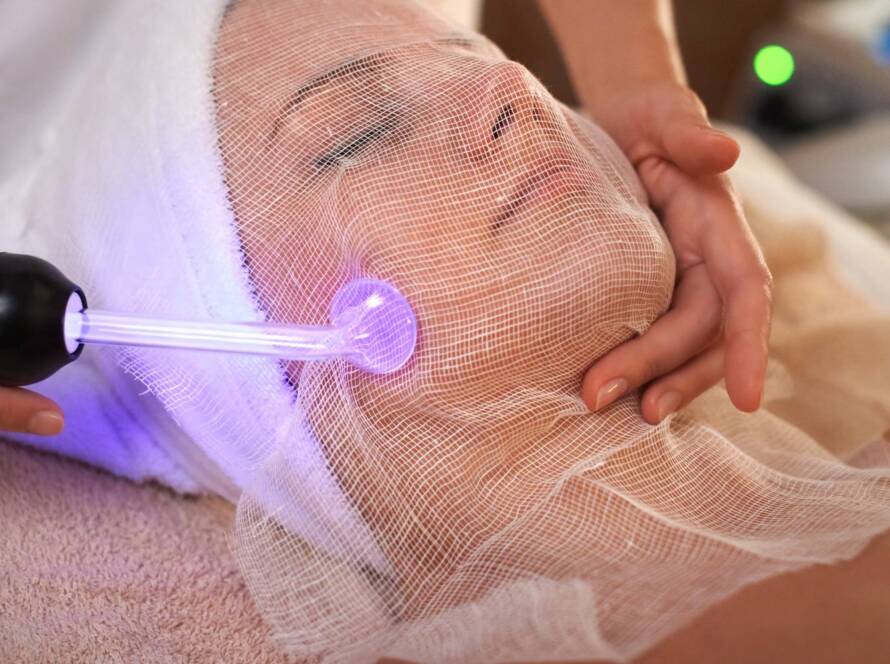
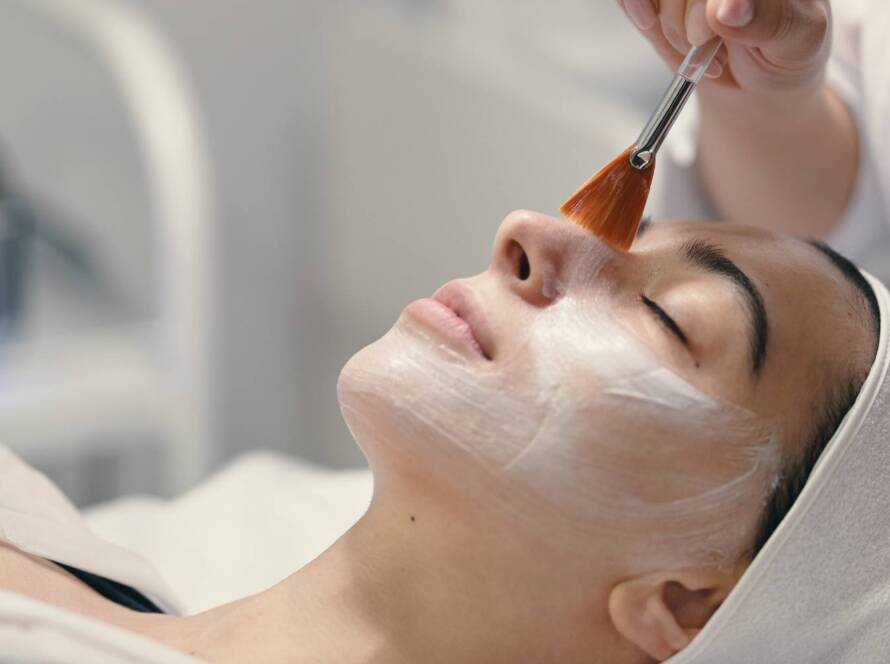
You catch your reflection and notice it again: that stubborn darkening framing your lips, resisting every cream you’ve tried. It’s frustrating, honestly. Discoloration around the mouth can stem from sun exposure, hormonal shifts, or even the toothpaste you use daily. Pinpointing the real cause is the first step toward clearer skin. This guide breaks down exactly why it happens and what actually works to treat and prevent it in 2026.
What Causes Discoloration Around the Mouth
Melasma and hormonal pigmentation
Most dark patches around the mouth trace back to one thing: excess melanin production. Your skin makes pigment as a defense mechanism. Certain triggers push it into overdrive. Melasma is the big one. It shows up as symmetrical brown or gray-brown patches, often across the upper lip, and it loves hormonal fluctuation. Pregnancy, birth control pills, and hormone replacement therapy can all set it off. That’s why some people call it the “mask of pregnancy,” even though plenty of non-pregnant folks get it too.
Hormonal contraceptives aren’t the only medications to watch. Certain antibiotics, anti-seizure drugs, and even some chemotherapy agents are known to darken skin with prolonged use. It’s worth mentioning to your doctor if you notice new discoloration after starting a medication. Thyroid imbalances and other endocrine issues can also nudge melanin production up around the mouth, chin, and cheeks. So it’s not always just sun or skincare related.
There’s a lesser-known cause worth flagging: vitamin deficiencies. Low vitamin B12 has been linked to patches of darker skin, and a simple blood test can check for it. A bluish or gray tint around the lips is a different matter: it can signal low oxygen in the blood, so get medical care promptly if you notice it. And if you’ve already spent time reading through a [Skin Concerns] I have a lot of hyperpigmentation around … thread comparing notes with strangers online, you know how many possible causes get thrown around. Narrowing it down usually takes an actual diagnosis, not guesswork.
Sun exposure and skin trauma
UV exposure is the great amplifier. It doesn’t necessarily start the pigmentation problem, but it makes existing melanin activity worse and harder to fade. Melasma patients who skip sunscreen often see their patches darken within a single beach afternoon. Sun exposure also thins the skin barrier over time, making the mouth area more reactive to everything else on this list, from friction to product irritation.
Then there’s trauma-driven pigment change, technically called post-inflammatory hyperpigmentation, or PIH. It’s your skin’s overreaction to injury or inflammation. Pick at a breakout near your lip line, and you may trade a pimple for a brown mark that outlasts it by months. The same thing happens after waxing or laser hair removal on upper-lip hair if the skin isn’t cared for afterward. That’s one reason understanding does waxing reduce hair growth matters before choosing a hair removal method near sensitive facial skin. Friction from harsh scrubbing or ill-fitting masks can trigger the same response.
Here’s the blunt version: repeated irritation without recovery time is a pigmentation factory. Give your skin a break between treatments, and you cut the risk substantially. If you’re trying to sort out which of these overlapping causes applies to you, a broader library of skin condition breakdowns on a clinic’s blog can help you get oriented before booking an actual evaluation.
Who Is More Prone to Pigmentation in This Area
Not everyone’s skin reacts the same way to irritation, sun, or hormones. Some people can pick at a blemish and never see a trace of it a week later. Others get a dark or discolored patch that lingers for months. A few factors make that second outcome far more likely. It helps to know where you stand before you start any treatment plan.
- Darker skin tones on the Fitzpatrick scale (types IV-VI) produce more melanin during healing, which makes post-inflammatory marks around the mouth show up darker and last longer than in fairer skin.
- Women face a higher risk of melasma, a hormone-driven form of pigmentation triggered or worsened by pregnancy, birth control pills, or hormone replacement therapy.
- A family history of melasma or other pigmentation disorders raises your personal odds, since genetics influence how reactive your melanin-producing cells are.
- Frequent upper-lip waxing, threading, or laser sessions can cause repeated micro-trauma, and each round of irritation adds another chance for a dark mark to form.
- People who already deal with acne or perioral dermatitis in that zone tend to see more staining simply because there’s more inflammation to begin with.
Worth noting: choosing gentler hair removal methods and spacing out sessions can lower that trauma-related risk considerably. If you’re unsure whether what you’re seeing is pigmentation or something else entirely, this quick Darkness/discoloration around the mouth? Here’s what it … explainer breaks down the visual differences well.
Perioral Dermatitis, Lip-Lick Dermatitis, and Other Look-Alikes
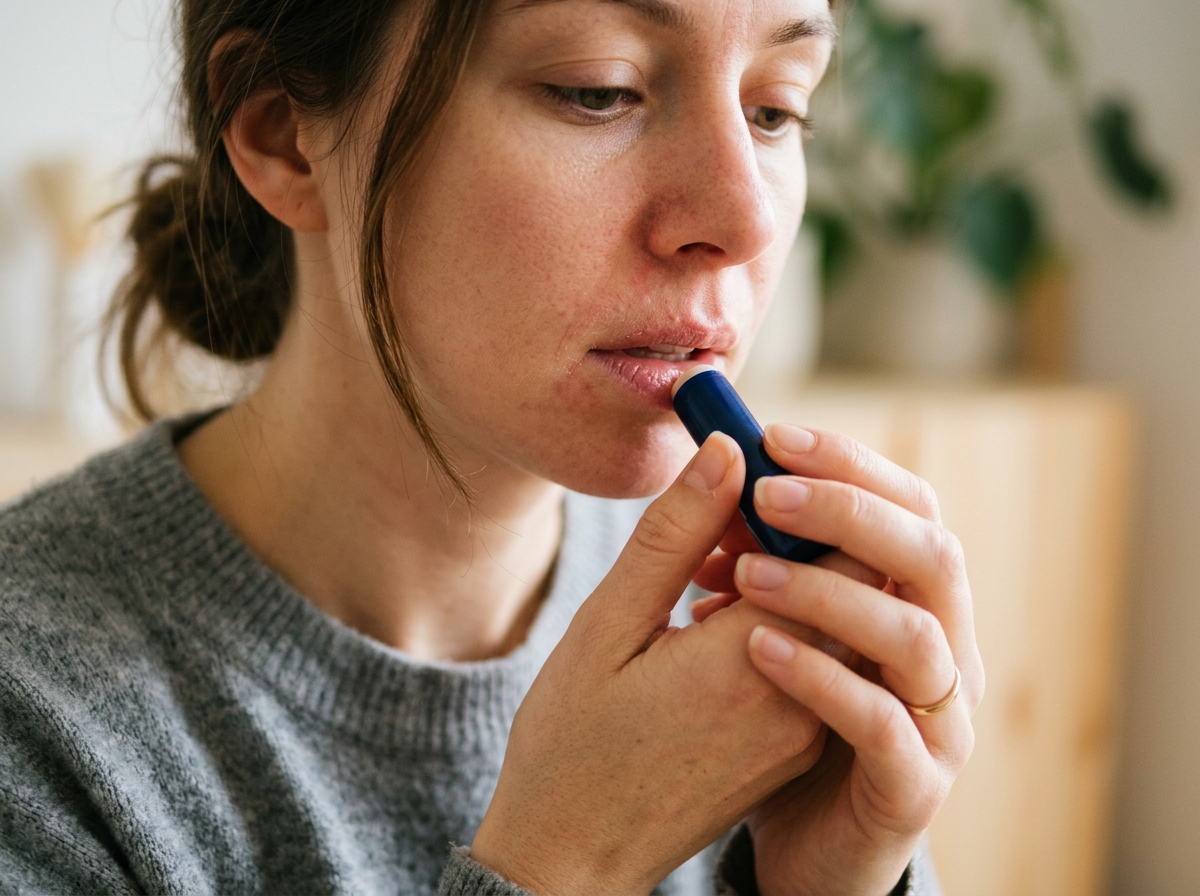
Not every dark patch near the mouth is pigmentation. Perioral dermatitis shows up as tiny red or brown bumps clustered around the lips, sometimes with a bit of scaling. It gets mistaken for melasma or sun spots constantly, but it’s actually an inflammatory rash, not a pigment problem. It tends to flare with steroid creams, heavy moisturizers, or fluorinated toothpaste, and it loves the skin just outside the lip border, sparing a thin margin right next to the lips themselves. That clue alone helps separate it from true discoloration.
Lip-lick dermatitis is simpler to spot once you know it. Constant saliva contact — think anxious lip licking, or kids who do it out of habit — breaks down the skin barrier and leaves a chapped, darkened ring circling the mouth. It looks patchy, dry, sometimes cracked at the corners. Left alone, it usually fades once the licking habit stops and the barrier heals, though stubborn cases benefit from barrier-repair balms rather than pigment-focused treatment.
Common allergens and irritants
Food can trigger this too. Spicy dishes, citrus, tomatoes, even certain wines cause a mild contact reaction on the lips and surrounding skin. At first it’s just redness and irritation. Repeat that exposure daily, though, and the skin responds with post-inflammatory darkening that lingers long after the burning stops. It’s the skin’s memory of irritation, basically — annoying, but predictable once you connect the dots.
Toothpaste is a sneaky culprit. Sodium lauryl sulfate (SLS) and cinnamon flavoring are two of the most common offenders, causing a scaly, itchy ring right where the tube touches your lips. Switching to an SLS-free, unflavored formula often clears it up within a couple of weeks. Anyone dealing with unexplained lip-area darkening should read up on hyperpigmentation around the mouth causes and treatment options, since allergic and pigmentary issues often overlap and get lumped together incorrectly.
When patch testing is recommended
If the discoloration keeps coming back despite switching products, patch testing is worth discussing with a dermatologist or allergist. It involves applying small amounts of suspected allergens to the skin and watching for a reaction over 48 to 72 hours. This step matters most when someone’s tried three or four “fixes” already and nothing’s worked. Guessing wastes time and money.
Testing also protects the skin during in-office work. A provider planning chemical peels or microchanneling needs to know if you’re reacting to a lip balm ingredient, not the treatment itself. It’s a small step that prevents a lot of frustration later, and it gives everyone — patient and provider — a clearer starting point before layering on active ingredients.
Discoloration Around the Mouth: Comparing Treatment Options
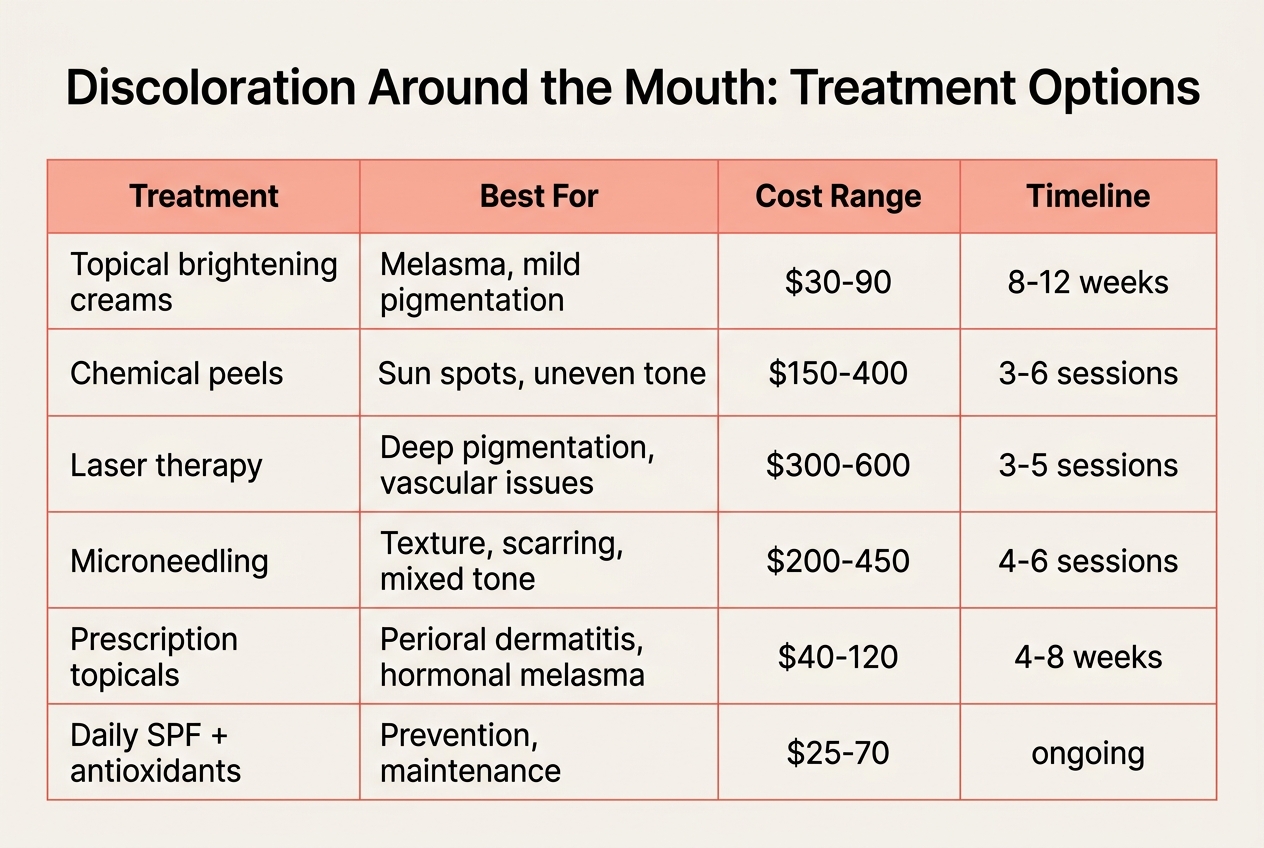
Once you know what’s causing the darkening, the next question is simple: what actually works, and how fast? Not every option moves at the same speed, and that’s the part people underestimate. A cream might take three months to show a difference. A peel can show one in three weeks. Understanding how to get rid of hyperpigmentation around the mouth really comes down to matching the treatment’s depth to how deep the pigment actually sits.
Topicals like azelaic acid, vitamin C, niacinamide, and retinol work at the surface and just below it, gradually calming pigment-producing cells. Chemical peels speed things up by forcing faster cell turnover, so old, discolored skin sheds sooner. Microneedling and microchanneling create tiny channels that let brightening serums absorb deeper, while also nudging skin toward a more even tone over time. Lasers go deepest, breaking up stubborn or genetic pigment that creams never touch — but they cost more and ask more of your downtime.
| Treatment | Depth Reached | Typical Timeline | Downtime |
|---|---|---|---|
| Topical ingredients | Surface layer | 8–12 weeks | None |
| Chemical peels | Surface to mid-dermis | 3–6 sessions | 1–5 days flaking |
| Microneedling/microchanneling | Mid-dermis | 4–6 sessions | 1–3 days redness |
| Laser treatments | Deep dermis | 3–5 sessions | 3–7 days |
| Home remedies | Very surface | Months, if at all | None |
Home remedies deserve an honest word here: lemon juice and turmeric masks aren’t nothing, but they’re slow, mild, and rarely touch genetic or hormonal pigment. If you’re patient and the discoloration is faint, fine. If it’s stubborn, you’re wasting months. For those curious about starting at home before committing to in-office care, it helps to first review can you do microneedling at home guidance, since technique and needle depth matter more than people assume. Seasonal habits matter too — sun exposure undoes progress fast, which is why pairing any treatment plan with sound summer skincare tips keeps results from sliding backward.
Professional In-Clinic Treatments Compared
Once you sit down with a provider, the conversation usually narrows to four options. Each one handles pigment differently, and each asks something different of your schedule. Here’s how they stack up side by side.
| Treatment | Downtime | Sessions Needed | Best For |
|---|---|---|---|
| Chemical peels | Mild, 2-5 days of flaking | 3-6 sessions | Surface-level pigment |
| Microneedling/microchanneling | Minimal, mild redness | 3-4+ sessions, gradual | Tone and texture together |
| Laser treatments | Longer, several days to a week | Varies by pigment depth | Deep or resistant discoloration |
| Brightening facials | None | Ongoing maintenance | Upkeep between deeper treatments |
Recovery and downtime expectations
Chemical peels sit in the middle of the pack. You’ll see some flaking, maybe tightness, but you’re not hiding indoors. Microneedling and microchanneling are gentler still, often just a flushed look for a day. Laser treatments are the trade-off play: more precision on stubborn pigment, but recovery stretches longer and the price climbs with it. If downtime just isn’t an option for you, a dedicated provider will likely steer you toward the milder end first.
Realistic timelines for visible results
Patience matters here. Peels typically show noticeable change across three to six sessions, spaced weeks apart. Microneedling works more gradually, and pairing it with a targeted brightening serum tends to speed things along. Laser results depend heavily on how deep the pigment sits. Facials with brightening ingredients won’t erase discoloration alone, but they’re a low-commitment way to hold the line between bigger treatments. None of this happens overnight. Honestly, anyone promising instant results is overselling it.
A solid plan weighs your skin type, how much downtime you can tolerate, and what you’re willing to spend before recommending a protocol. That same logic applies broadly to cosmetic care; even someone exploring a mens facial for routine upkeep will get better results from a plan matched to their skin than a one-size-fits-all approach. It’s also worth knowing that effective options exist beyond anything surgical, and researching treatments that dont require a knife can widen the field considerably. Some people also fold in adjacent wellness routines, and comparing massage pricing & packages can help you budget for skin care alongside broader self-care spending.
At-Home Care and Ingredient Guide
Good news: you don’t need a dramatic overhaul to make progress at home. What you need is consistency, and the right ingredients used in the right order. A smart routine for facial care for sensitive skin matters even more around the mouth, since this area folds, stretches, and gets touched constantly throughout the day.
Some ingredients fade what’s already there. Others just stop new pigment from forming. You want both types working together.
- Vitamin C brightens existing tone and helps shield skin from the sun damage that triggers new pigmentation down the road.
- Azelaic acid is mild enough for sensitive, breakout-prone skin yet still effective at fading stubborn dark patches over time.
- Glycolic acid exfoliates dull surface cells, gradually revealing smoother, more even-toned skin underneath the discolored layer.
- Niacinamide calms redness and inflammation, taking the edge off blotchy, uneven patches without stinging or irritating skin further.
- Retinol speeds up cell turnover, but it needs a slow, gradual introduction, or it’ll just cause more irritation than it solves.
- Daily broad-spectrum SPF is non-negotiable, full stop, since UV exposure worsens nearly every form of pigmentation, no exceptions.
Order matters as much as ingredient choice. Vitamin C in the morning, exfoliating acids a few nights a week, retinol on alternating nights, and sunscreen every single day, rain or shine. Skip the sunscreen and the rest is basically wasted effort. For a deeper look at what actually drives this kind of pigment change, this guide on pigmentation around the mouth is worth reading before you build your routine.
If your skin is already reactive, layering three active ingredients at once is a recipe for trouble. Introduce one new product every two to three weeks and watch how skin responds before adding another.
When to See a Professional and How to Prevent Recurrence
Building a long-term prevention routine
Most mild discoloration responds to patience and good habits. But some signs mean it’s time to stop guessing. If the patch spreads, darkens quickly, or shows up with bumps, flaking, or itching, don’t wait it out. That combination often points to something more active than sun-related pigmentation — an infection, an allergic reaction, or a dermatitis that will only get worse if you keep treating it like a tan line.
This is where a trained eye matters. A licensed esthetician or dermatologist can tell melasma apart from perioral dermatitis or an allergy-driven flare, and that distinction changes everything about treatment. Melasma responds to pigment-targeting care; dermatitis often gets worse with the same approach. Guessing wrong wastes months. If you’re unsure which you’re dealing with, reading a clear breakdown of causes, treatment, and prevention can help you describe your symptoms more accurately during a consultation.
Prevention itself isn’t complicated, just consistent. Daily sunscreen, reapplied if you’re outside for hours, is non-negotiable. Gentle exfoliation — not scrubbing — keeps pigment from building up in dead skin layers. And if hair removal near the mouth is part of your routine, skip harsh physical methods in favor of a gentler wax service, since repeated friction and irritation are a common trigger for recurring dark patches.
Lasting results usually come from combining approaches, not picking one. A professional plan might pair in-office work, like a chemical peel or microneedling session, with home care such as vitamin C serum and strict sun protection. Skipping the home half undoes the clinical progress fast. Estheticians across Hoboken, Englewood, and West Caldwell offer consultations to build a plan around your skin type, budget, and how much downtime you can realistically afford.
Before you commit to anything, it’s worth getting clear on what you’re actually hoping to change — softer lines, better texture, more even tone, or simply skin that feels cared for again — because that answer shapes whether a laser or a steady series of facials and peels makes the most sense for you. Ask any provider how many sessions a realistic result takes, what the recovery looks like for your schedule, and whether the treatment suits your skin type and history, and be a little wary of anyone who promises a single dramatic fix. Gradual approaches ask more patience of you, but they also tend to leave more room to adjust course as you learn how your skin responds.