Scrolling through countless chemical peel before and after photos online, only to find inconsistent results, vague timelines, and no real explanation of what happens to your skin in between—sound familiar? At Refined Skin Club, we know that choosing a chemical peel takes more than admiring dramatic transformations. You need to understand the recovery process, realistic timeframes, and what your skin will actually look like at each stage. This guide brings together honest chemical peel before and after visuals alongside a day-by-day recovery roadmap. Use it to set expectations, prepare properly, and feel confident before you ever sit in the treatment chair.
How Chemical Peels Work on Your Skin
The Science of Controlled Exfoliation
A chemical peel works by creating a controlled wound on the skin’s surface. Acids break down the bonds holding dead cells together, letting damaged outer layers lift away. Underneath, fresher skin gets exposed. It sounds harsh. But the process is measured and predictable when done correctly.
This controlled injury does more than remove dead cells. It tells the body to speed up cell turnover, so new cells rise to the surface faster than they would on their own. Collagen production also increases, since skin reads the peel as a small repair job. Over weeks, this rebuilding shows up as smoother texture and tighter tone.
Many providers pair peels with treatments like Microcurrent or Oxygen Spray to support this renewal phase. Learn more about how chemical peels fit into a broader skin plan.
Superficial vs Medium vs Deep Peels
Depth determines how strong the results will be. Superficial peels only affect the epidermis, the outermost layer. They cause mild redness and light flaking for a day or two. Medium peels reach the upper dermis, producing more noticeable peeling over five to seven days.
Deep peels go further into the dermis. They deliver the most dramatic change, but they demand longer healing and closer medical supervision. Choosing depth means weighing your desired results against downtime and skin sensitivity.
Common Acids Used and Their Roles
Glycolic acid, derived from sugar cane, works well on dullness and fine lines. Salicylic acid targets oil and clogged pores, making it useful for acne-prone skin. Trichloroacetic acid, or TCA, handles deeper concerns like pigmentation and scarring. Lactic acid offers a gentler option for sensitive or first-time clients.
Each acid has a distinct molecular size, and that affects how deeply it travels. Providers often blend acids to target multiple concerns at once. Many spas explain these formulas further on their blog, helping clients understand what’s in each solution before booking.
Skin Concerns a Peel Can Actually Improve
Acne and Post-Acne Marks
Peels help break down the oil and dead cells that clog pores and trigger breakouts. Salicylic acid formulas work especially well because they cut through excess sebum. Many clients wonder if do facials help with acne the same way peels do. Both can help, though peels reach deeper into the pore lining.
Melasma, Sun Spots, and Uneven Tone
Years of sun exposure leave behind flat brown patches and uneven pigment. A peel speeds up cell turnover, fading discoloration layer by layer over several sessions rather than overnight.
Texture, Pore Size, and Early Aging Signs
Peels also address rough patches, dullness, and the first fine lines around the eyes and mouth. Common improvements include:
- Smoother skin surface, since flaky and rough patches slough away within days.
- Reduced appearance of enlarged pores, as debris and dead cells are cleared out.
- Softer fine lines, especially with peels that stimulate collagen production over time.
- Brighter, less sallow complexion, thanks to fresh skin cells rising to the surface.
- More even makeup application, since texture irregularities are minimized.
Some clients pair peels with dermaplaning or microcurrent for added texture benefits. Even small add-ons like lash lifts can round out a full refresh appointment.
Chemical Peel Before and After: What Real Results Look Like
What Changes After One Session
A single session often brings visible but modest change. Skin looks brighter within a few days. Fine flaking or peeling reveals fresher skin underneath. Redness fades within 24 to 72 hours for light peels.
Most people notice smoother texture right away. Pores may look tighter. Makeup often sits better on the skin. These early wins build motivation to keep going.
One session rarely erases deep pigmentation or scarring. Those changes need repeated chemical peel sessions spaced weeks apart. Anyone curious about realistic timing can review a Chemical Peel Before and After Photo Gallery | Orlando, … to see how gradual the process looks in real patients.
What Changes After a Series of Treatments
Cumulative results are where peels shine. After three to six sessions, many clients see noticeably even skin tone. Dark spots lighten. Acne scars soften. Fine lines around the eyes and mouth appear less defined.
Texture improvements compound too. Skin feels smoother to the touch. Photos taken monthly often show a steady, gradual fade in discoloration rather than one dramatic jump.
Many providers pair peels with microchanneling or microdermabrasion to speed collagen renewal. Some clients combine facial treatments with body-focused options, including med spa treatments that can get rid of a double chin, for a fuller rejuvenation plan across the face and jawline.
How Skin Tone and Type Affect Visible Results
Results differ by skin type. Fair skin often shows redness and peeling faster. Deeper skin tones need careful peel selection to avoid post-inflammatory darkening. A trained esthetician adjusts strength and acid type accordingly.
Oily skin may tolerate stronger peels with less irritation. Dry or sensitive skin usually needs gentler formulas and longer gaps between sessions. Age and sun exposure history also shape how quickly visible results appear.
Peel Types Compared: Depth, Downtime, and Results
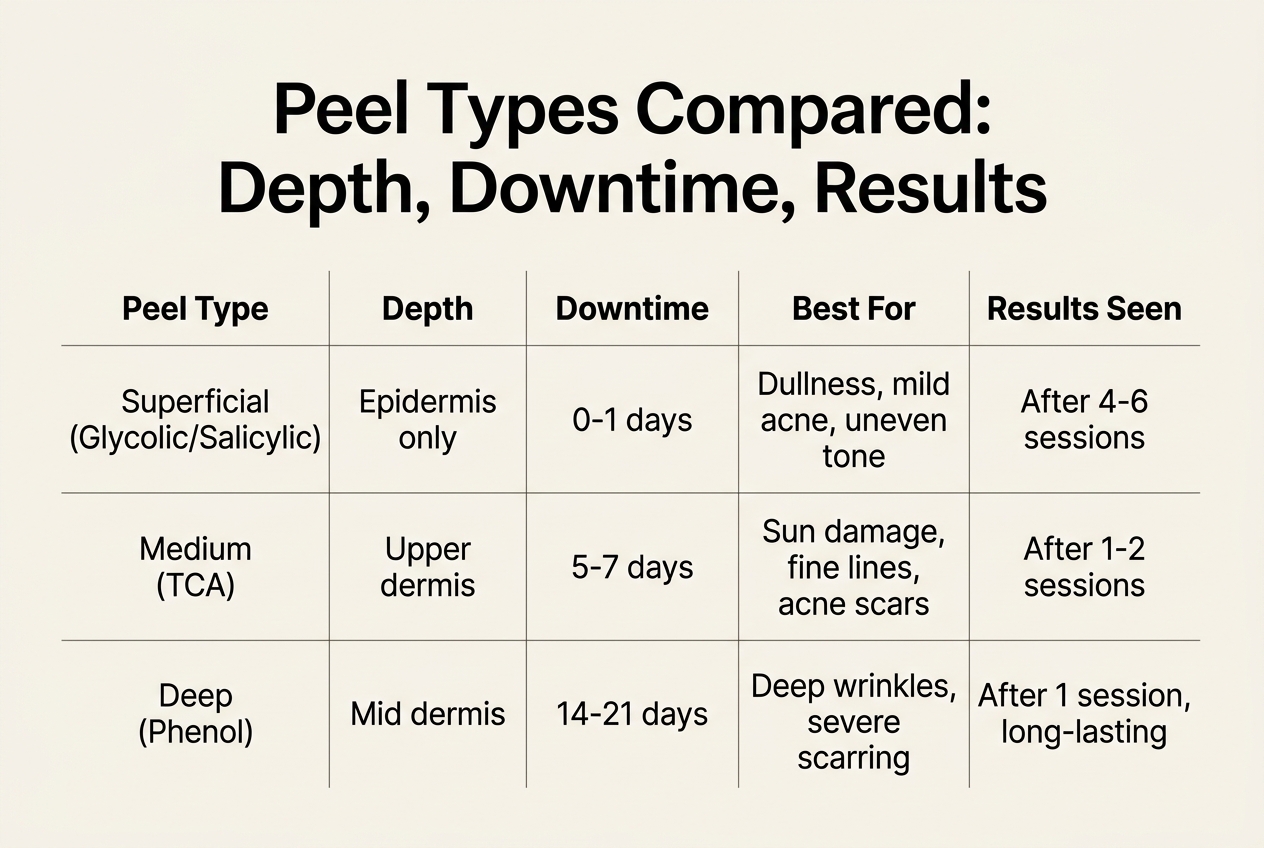
Not all peels work at the same level of the skin. The table below compares depth, downtime, and typical results side by side, so you know what to expect before booking a session.
| Peel Type | Common Acids | Downtime | Visible Results |
|---|---|---|---|
| Superficial | Glycolic, Lactic | 0-2 days | Brighter tone, mild texture change |
| Medium | TCA, Jessner | 5-7 days | Reduced fine lines, fading dark spots |
| Deep | Phenol | 2-3 weeks | Dramatic smoothing, major wrinkle reduction |
Superficial Peels (Glycolic, Lactic)
Superficial peels target only the outer layer of skin. Glycolic and lactic acids gently loosen dead cells. Redness is usually mild and fades within hours. Many clients pair these light sessions with other types of facials for added glow without extra recovery time.
Medium Peels (TCA, Jessner)
Medium-depth peels reach the upper dermis. TCA and Jessner solutions address sun damage and shallow scars. Peeling and flaking last about a week, but results are more noticeable than superficial options.
Deep Peels (Phenol)
A phenol Chemical peel goes deepest, producing the most dramatic change. Healing takes two to three weeks, with significant redness and swelling. Results, though, can last for years.
Your Recovery Timeline Week by Week
Days 1 to 3: Redness and Tightness
The first few days follow a predictable pattern. Skin often looks flushed, feels tight, and may sting slightly, similar to a sunburn. This is a normal part of the healing process, not a sign something went wrong. Redness peaks around day two for most medium-depth peels, then slowly starts to fade.
Swelling can appear around the eyes or mouth after stronger treatments. A gentle, fragrance-free moisturizer helps calm irritation. Just as with injectables, following clear guidance matters here, the same way patients research what not to do after botox to protect their results. Avoid hot showers, sweat-heavy workouts, and touching your face during this window.
Days 4 to 7: Peeling and Flaking
This stage brings visible peeling and flaking, usually starting around day four. Skin sheds in small flakes or larger sheets, depending on peel depth. It can look worse before it looks better, especially on days five and six.
Picking or pulling loose skin raises the risk of scarring or dark spots. Let flakes release on their own. Many providers suggest pausing exfoliating tools like dermaplaning or microdermabrasion until peeling fully resolves. Bland moisturizer and patience matter more than active products right now.
Weeks 2 to 4: Renewed, Brighter Skin
Most visible improvement appears once peeling fully stops, usually by week two. Texture feels smoother, tone looks more even, and fine lines soften. Reviewing a Chemical Peel Before & After Photos | Bay Area Dermatology gallery can help set realistic expectations for this stage.
New skin stays sensitive for several weeks. Daily sunscreen, at least SPF 30, is essential to protect results and prevent pigmentation changes. Continued brightening often shows through week four, especially with follow-up facials or maintenance sessions supporting the renewal process.
Getting the Most Out of Your Peel Results
Preparing Skin Before Your Appointment
Good outcomes start before the session begins. Skin that is well-prepped absorbs the solution more evenly and heals faster. Many providers recommend a simple routine in the two weeks leading up to treatment, similar to guidance found in Chemical Peel Before & After: What Results Can You Expect?.
- Pause retinoids and exfoliating acids about five to seven days before the appointment to reduce sensitivity.
- Apply broad-spectrum sunscreen daily, since sun exposure makes skin more reactive to peeling agents.
- Stay hydrated in the days prior, since dehydrated skin can flake unevenly during recovery.
- Avoid waxing treatments or harsh scrubs near the treatment area for at least a week.
- Share your full skincare routine and medical history during consultation so the peel strength can be matched safely.
Aftercare Steps That Protect Your Results
What happens after the session matters just as much as the peel itself. Consistent aftercare locks in improvements and prevents setbacks like irritation or uneven pigment. Keep skin clean, moisturized, and shielded from sun for at least a week, and resist picking at any flaking.
Pairing Peels With Other Treatments
Peels often work best as part of a broader plan. Many clinics combine them with microdermabrasion, dermaplaning, or microcurrent sessions spaced weeks apart to build on results gradually. For those exploring non-surgical options overall, reviewing treatments that dont require a knife can help map out a longer-term rejuvenation strategy.
Peel Aftercare Do’s and Don’ts
Healing skin is fragile skin. The first seven days set the tone for how smooth and even the final results look. Simple daily habits matter more than expensive products during this window.
Do’s for Faster, Safer Healing
Keep skin calm and protected. Apply a gentle, fragrance-free moisturizer several times a day. Use mineral sunscreen every morning, even indoors. Let peeling skin flake off on its own instead of picking. If unusual redness or swelling shows up, a dedicated provider can check for reactions early.
Don’ts That Can Compromise Results
Avoid habits that stress healing tissue. Skipping sunscreen, picking at flakes, or overwashing can lead to scarring or dark spots. Hot showers, saunas, and heavy sweating also slow recovery. This guide on Chemical Peel Before And After: Your Smoother Skin … outlines similar recovery missteps to avoid.
| Action | Do | Don’t |
|---|---|---|
| Sun exposure | SPF 30+ daily | Tanning beds or direct sun |
| Cleansing | Lukewarm water, mild cleanser | Hot water, scrubbing |
| Exfoliation | Wait 7-10 days | Microdermabrasion or dermaplaning |
| Makeup | Mineral makeup after day 3 | Heavy foundation immediately |
| Exercise | Light walking | Intense sweating sessions |
Products to Avoid During Recovery
Retinoids, acids, and vitamin C serums should pause for one to two weeks. Fragranced lotions and alcohol-based toners can sting healing skin. Patients treating unrelated concerns, like those researching botox for uneven eyes, should mention any peel to their provider first.
What Chemical Peels Cannot Fix
Limitations With Severe Aging Signs
A chemical peel works on surface texture and tone. It cannot lift skin or rebuild lost collagen the way surgery can. Deep static wrinkles, heavy jowls, and severe sagging along the jawline usually need firmer solutions. Microcurrent or body contouring may help mild laxity, but true sagging often calls for a cosmetic surgeon’s input.
Even a strong peel has boundaries. For readers curious about how far peeling can realistically go, the Phenol Chemical Peel Before + After Photos gallery shows dramatic texture change without any lifting effect. That distinction matters when setting expectations for aging skin.
Conditions That Need Medical Treatment Instead
Peels improve tone and clogged pores, but they are not a cure for medical skin disease. Active cystic acne, rosacea flares, eczema, and diagnosed skin cancers need a dermatologist, not a spa treatment. Peeling inflamed or infected skin can actually make irritation worse and delay proper healing.
Some concerns sit in a gray area. Understanding what are blackheads and how to treat them helps clarify when extractions or microdermabrasion are enough, versus when a medical exam is the safer first step.
Why Consistency Matters More Than a Single Session
One session rarely delivers dramatic change. Most visible results build across three to six treatments, spaced weeks apart. Skipping aftercare or expecting instant transformation leads to disappointment, even when the peel itself was well chosen.
Realistic goals protect both skin and confidence. A dedicated provider will explain what a single session can achieve versus a full series, so progress feels steady instead of rushed.
Is a Chemical Peel Right for You?
Good Candidates for Chemical Peels
Most healthy adults with sun damage, mild acne scarring, or dull texture make good candidates for peeling. Fair to medium skin tones with realistic goals tend to see the smoothest results. Someone bothered by fine lines, uneven tone, or clogged pores often responds well to a light or medium peel.
Skin type and sensitivity still matter. Oily, thicker skin usually tolerates stronger acids better than thin, reactive skin. A provider will also ask about your tanning habits, prior treatments like microdermabrasion or dermaplaning, and how your skin has reacted to facials or extractions in the past before recommending a strength.
Who Should Avoid or Delay Peeling
Certain conditions are true contraindications for peeling. Active cold sores, open wounds, sunburn, or eczema flare-ups need to heal first. Pregnant or breastfeeding clients are typically advised to avoid stronger acids and wait until later.
Darker skin tones can still get great results but need careful strength selection to avoid pigment changes. Anyone using isotretinoin, recent Botox, or who just had waxing or a new tattoo nearby should mention it. This guide on What to Expect Before and After a Chemical Peel Treatment covers more red flags worth discussing beforehand.
Questions to Ask During a Skin Consultation
A proper consultation determines the right peel strength for your skin, not a generic chart. Ask what ingredients are in the formula, how many sessions are recommended, and what downtime to expect. Ask whether microchanneling, oxygen spray, or microcurrent might work better for your specific concern.
If visiting in person isn’t easy, a virtual skin consultation lets a specialist review photos and history remotely. Bring a list of current products, medications, and past reactions so recommendations stay accurate and safe.
Choosing a Peel Provider You Can Trust
Professional vs At-Home Peel Kits
Drugstore peel kits use low-strength acids meant for surface-level change. A professional peel uses stronger, medical-grade formulas applied under trained supervision. This difference matters for safety and results. Some people wonder can you do microneedling at home instead of visiting a clinic, and the same caution applies to peels — deeper treatments need professional oversight, not guesswork at your bathroom sink.
Credentials and Experience to Look For
A licensed esthetician or medical professional can customize acid type, strength, and layering based on your skin tone and concerns. This training reduces the risk of burns, scarring, or uneven results. Before booking, look for these qualifications:
- A current state esthetics or medical license displayed or available on request.
- Documented training in specific peel types, such as glycolic, salicylic, or TCA formulas.
- A track record of treating your skin tone safely, since darker skin needs adjusted protocols.
- Willingness to review your medical history and current medications before treatment.
- Clear before-and-after photos from real clients, not stock images.
Questions to Ask Before Booking
A short consultation reveals a lot about a provider’s skill. Ask these questions before your first session:
- What peel depth and acid concentration do you recommend for my skin type?
- How many sessions have you performed, and what results can I expect?
- What downtime and aftercare should I plan for after treatment?
- How do you handle complications like irritation or unexpected peeling?
The most useful thing you can do with all those before-and-after photos is treat them as a starting point rather than a promise — look at skin types similar to yours, note how many sessions it took, and pay attention to what the peel was actually meant to address. A conversation with a qualified esthetician, whether that’s through a consultation at Refined Skin Club or another skin-focused practice offering chemical peels, will tell you far more about your own likely outcome than any gallery can. Your results will be your own, and they tend to show up gradually, over a series, in the mirror rather than in a side-by-side.