Fine lines, stubborn hyperpigmentation, and acne scars that won’t budge with retinol or at-home exfoliants push a lot of people toward stronger, professional-grade options. That’s exactly where a tca peel earns its reputation as one of the most effective resurfacing treatments around today. Unlike surface-level glycolic treatments, trichloroacetic acid gets down into deeper layers of skin and sparks real, visible renewal. But strengths, downtime, and results vary so much that the whole thing can feel confusing without solid guidance. At Refined Skin Club, we’ve broken down exactly what a TCA peel involves, who it’s right for, and what to expect before, during, and after your treatment in 2026.
What Is a TCA Peel and How Does It Work
The Chemistry Behind Trichloroacetic Acid
Trichloroacetic acid is a synthetic acid made from acetic acid. It has nothing to do with fruit acids like glycolic or lactic acid. Instead, it acts as a protein-coagulating agent. It binds to proteins in skin cells and makes them solidify, or “coagulate,” right on contact.
You can actually watch this happen during treatment. The skin turns white — a reaction called frosting. That frosting shows the acid has hit its target depth and denatured the damaged surface proteins. Unlike acids that just exfoliate, TCA physically changes the structure of the tissue it touches, which kicks off a full repair response underneath.
How the Skin Responds to the Peel
Once the acid coagulates those outer proteins, the body treats it like a controlled injury. Inflammation kicks in first, then rebuilding starts. Fresh keratinocytes move upward to replace the damaged layer. Deeper down, fibroblasts activate and start producing new collagen and elastin fibers over the following weeks.
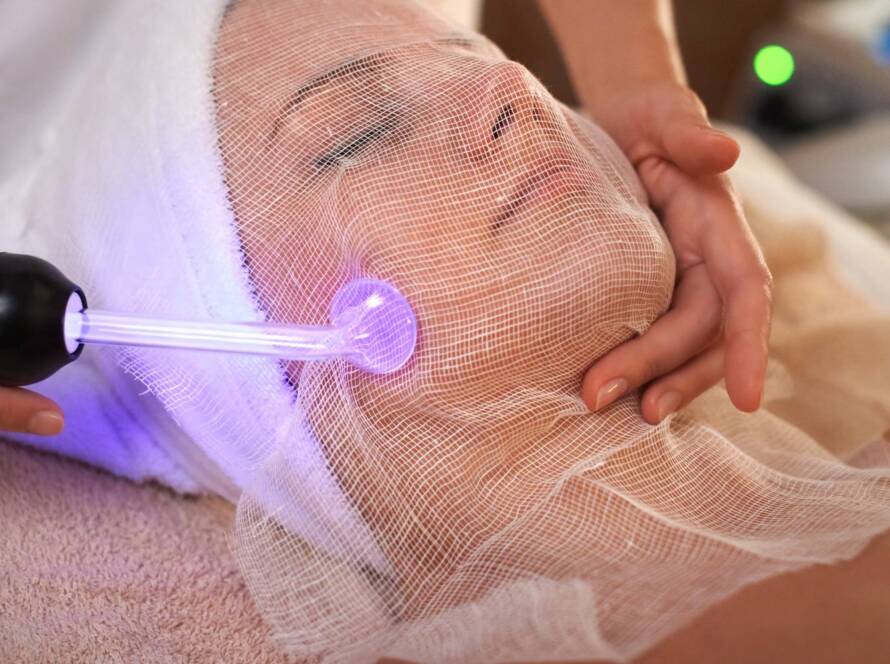
This is why results keep improving for a month or more after the session. Skin doesn’t just shed old cells — it builds new structural proteins from scratch. It’s a bit like how what does high frequency do for skin treatments stimulate collagen through gentle thermal energy, though TCA gets there through direct chemical action instead.
Depths of Penetration: Superficial, Medium, Deep
TCA concentration decides how deep the acid travels. Lower percentages, around 10 to 20 percent, create a superficial peel that only affects the epidermis. Medium-depth formulas, roughly 25 to 40 percent, reach the papillary dermis. Deep concentrations above 40 percent are rarely used without medical supervision.
Medical-grade solutions are compounded precisely and applied by trained professionals who control timing and layering closely. Cosmetic-strength versions sold for home use stay diluted for safety reasons. This gap in strength — similar to comparing professional waxing with home kits when people ask does waxing reduce hair growth — explains why professional results go deeper and last longer.
Benefits of a TCA Peel for Skin Rejuvenation
Correcting Hyperpigmentation and Melasma
Dark patches from sun exposure, melasma, or old breakouts sit in the upper layers of skin. The peel strips away those damaged layers and encourages fresh, evenly toned cells to surface instead. Many clients notice softer, brighter patches within just a few weeks. This works well alongside other services; for anyone still building a skincare routine, understanding do facials help with acne can clarify how regular treatments support clearer skin over time.
Smoothing Acne Scars and Enlarged Pores
The acid solution targets uneven texture left behind by past breakouts. It softens the edges of pitted scars and shrinks the look of stretched pores.
- Shallow acne scars often appear less noticeable after a series of sessions.
- Rough, bumpy texture becomes smoother as new skin forms.
- Enlarged pores tighten as collagen support improves underneath.
- Sun damage spots and thickened patches fade with repeated treatment.
- Overall skin tone becomes more consistent across the face.
Long-Term Anti-Aging Effects
Beyond the surface changes, the peel stimulates collagen production deep in the skin. This keeps going for weeks after treatment, gradually smoothing fine lines. Pairing seasonal care with these habits, including summer skincare tips, helps protect new skin and stretch out your results. Over time, many people notice firmer, more resilient skin with fewer visible signs of aging.
Types of TCA Peels: Strength and Formula Comparison
Low vs Medium vs High Concentration Peels
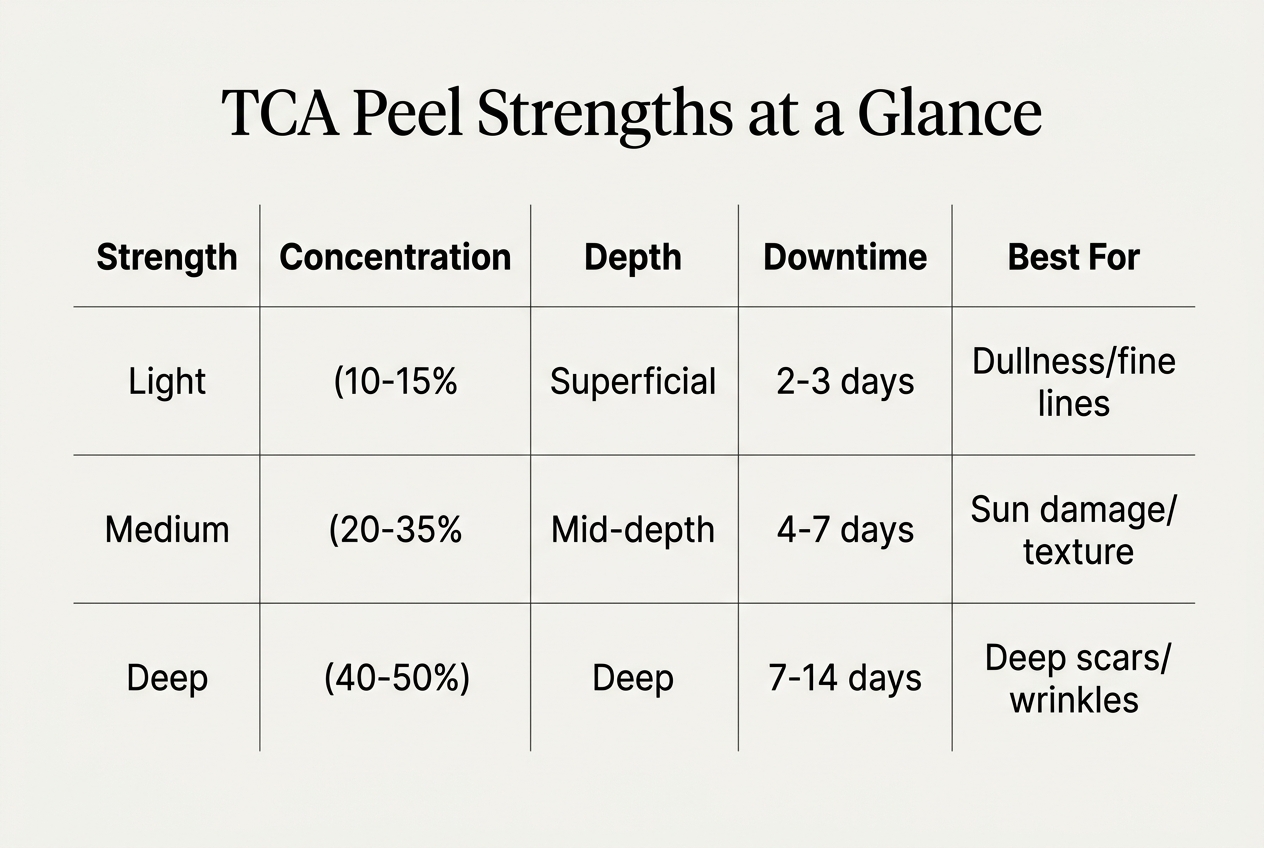
Concentration determines depth and downtime. Formulas typically range from 10% to 50%. Lower strengths lift dead skin gently, while higher strengths reach deeper layers and demand longer healing. A provider picks the strength based on your goals, skin tone, and how often should you exfoliate your skin already as part of your home routine.
| Concentration | Depth | Typical Use | Downtime |
|---|---|---|---|
| 10-15% | Superficial | Mild texture, first-time clients | 1-2 days |
| 20-25% | Light-medium | Sun spots, fine lines | 3-4 days |
| 30-40% | Medium | Acne scarring, uneven tone | 5-7 days |
| 45-50% | Deep | Advanced resurfacing, done in stages | 7-14 days |
Enhanced Formulas with Added Actives
Some formulas blend TCA with retinol, kojic acid, or lactic acid. Doing this boosts brightening or eases irritation. Buffered formulas use a neutralizing base, spreading penetration more evenly than plain acid-only mixes, which can act unevenly on thicker patches of skin.
Choosing the Right Strength for Your Skin Type
Sensitive skin usually does better with cool-action or soothing formulas that calm redness during application. A dedicated provider might pair these with cryotherapy or oxygen spray afterward. Beginners often start with a TCA 10% Peel – Light Strength before moving up.
What to Expect During Your TCA Peel Treatment
The Pre-Treatment Consultation
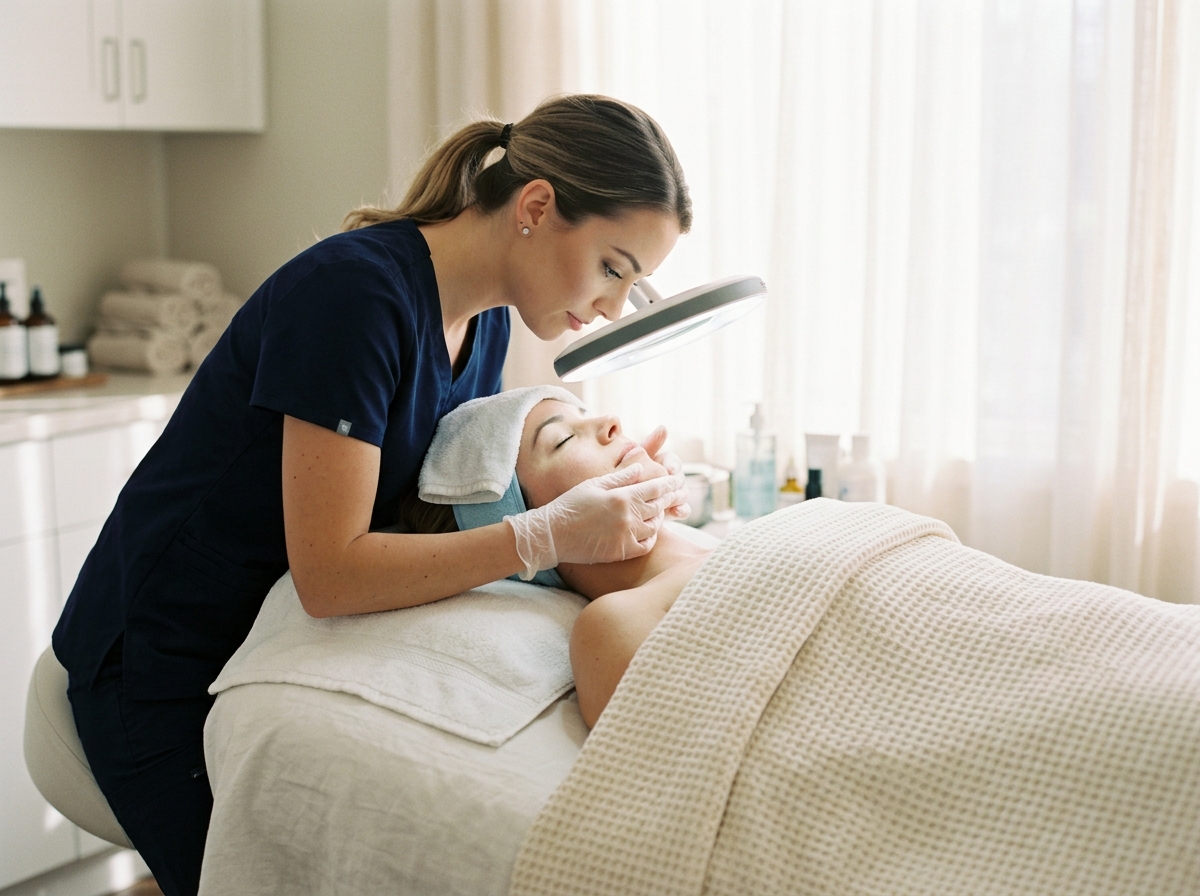
Every treatment starts with a detailed skin assessment. A trained esthetician or provider checks your skin tone, texture, and concerns like acne scarring, sun damage, or fine lines. This helps them land on the right peel strength for your goals and skin type.
Expect questions about your medical history, current medications, and any past reactions to skincare products. Providers usually ask about recent sun exposure too, since tanned or sunburned skin needs extra caution. If you can’t get in person right away, a virtual skin consultation 2 can help you prepare questions and figure out what to bring to your first appointment.
This is also the moment to talk through expectations. A good provider lays out realistic timelines, potential downtime, and how many sessions you’ll likely need to see real results.
Step-by-Step Application Process
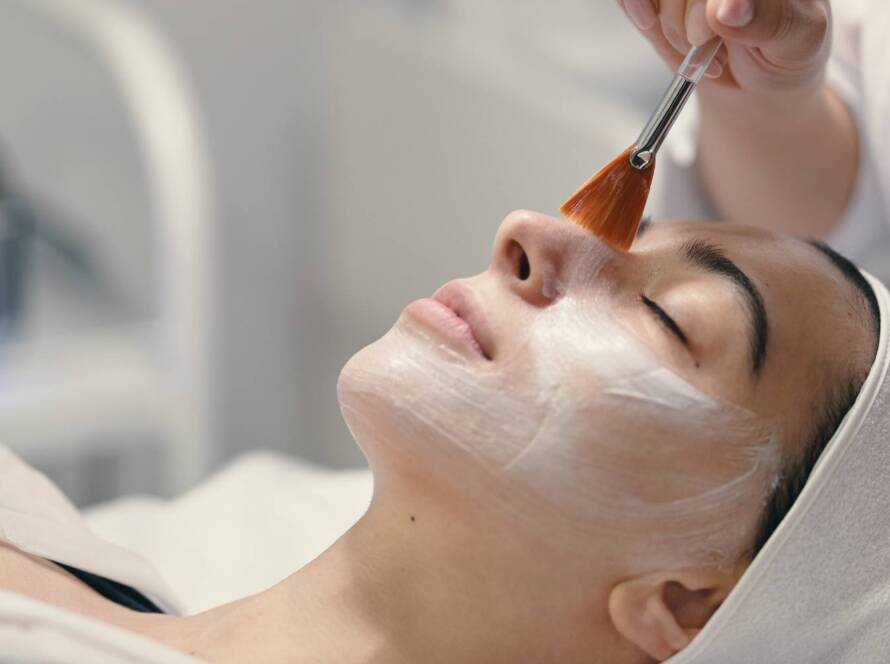
The session starts with a thorough cleanse to clear off oil, makeup, and debris. The provider then applies the TCA solution in careful layers, using gauze or a brush, moving section by section across the face.
Within minutes, the skin turns white and frost-like. This frosting effect signals the acid is penetrating and coagulating proteins in the skin. Lighter frosting points to a superficial peel; denser, more opaque frosting means deeper penetration. Providers watch this closely, since frosting patterns guide whether more layers are needed.
Application usually takes 15 to 30 minutes, depending on strength and treatment area. For more on formulation standards, resources like Certified TCA Chemical Peels | Platinum Skincare offer good background on professional-grade solutions.
Immediate Post-Application Reactions
Most people feel a warm, tingling sensation during application, sometimes building to noticeable stinging. This usually peaks in the first few minutes, then eases off as skin adjusts.
A cooling fan or compress often helps with discomfort. Redness and tightness show up right away, looking a lot like a moderate sunburn. These reactions are expected, and they typically fade within hours to a few days, depending on how deep the peel went.
TCA Peel Recovery Timeline and Aftercare
Day-by-Day Healing Stages
Healing follows a fairly predictable pattern, though the depth of the peel changes the speed. Peeling typically begins day 2-3 and can run for up to a week. Skin often looks tight and pink before flaking starts. Research on Trichloroacetic Acid Peeling for Treating Photoaging – PMC confirms this staged shedding is a completely normal part of how the acid renews the skin’s surface.
| Day | What to Expect |
|---|---|
| Day 1 | Redness, tightness, mild swelling |
| Day 2-3 | Peeling and flaking begin |
| Day 4-5 | Heaviest shedding, itching possible |
| Day 6-7 | Peeling slows, fresh skin emerges |
| Week 2 | Residual pink tone fades |
Post-Peel Skincare Routine
Gentle care speeds up recovery. Hydration matters most in the first week, since new skin loses moisture fast. Apply a bland moisturizer several times a day and drink plenty of water. Stay out of the sun entirely, and wear broad-spectrum SPF 30 or higher once skin can handle it. Skip exfoliants, retinoids, and harsh cleansers until you’re fully healed. These rules mirror standard botox aftercare advice about limiting irritation and sun contact.
When to Contact Your Provider
Mild redness, tightness, and flaking are all normal. Call a dedicated provider if you notice thick yellow discharge, spreading warmth, fever, or peeling that hasn’t started by day 5. Severe pain or blistering also calls for a prompt phone call.
Comparing In-Office TCA Peels to At-Home Alternatives
Why Professional Application Matters
A trained esthetician or medical provider controls acid concentration, timing, and neutralization. This precision matters a lot, because TCA works fast, and uneven application can leave scarring. Professional supervision cuts out the guesswork home users can’t avoid, even with careful research like reading about can you do microneedling at home before trying similar treatments solo.
Risks of At-Home Peel Kits
At-home kits usually cap acid strength well below clinical levels, but timing or prep mistakes can still cause burns, blotchy pigmentation, or infection. Without professional grading of your skin type, you risk applying entirely the wrong strength.
| Factor | In-Office TCA Peel | At-Home Kit |
|---|---|---|
| Typical Strength | 15%–35% | Under 10% |
| Supervision | Licensed provider | None |
| Downtime Management | Guided aftercare plan | Self-directed |
| Average Cost | $150–$400 per session | $30–$80 per kit |
| Complication Risk | Lower with expertise | Higher without training |
Combining Professional Treatments with Home Maintenance
Many people pair periodic clinical sessions with gentle home products to stretch out their results. A mild option like the TCA Multi-Acid Face Peel can help with upkeep between visits, but it should never replace professional-strength treatments for deeper concerns.
Who Is a Good Candidate for This Treatment
Best Candidates for Deep Resurfacing
A medium-depth peel works best for people dealing with real texture problems, not just dullness. It targets damage sitting below the surface layer.
- Moderate to deep acne scarring that has not responded to lighter treatments or facials
- Sun damage showing as brown patches, rough texture, or fine lines around the mouth and eyes
- Melasma or stubborn hyperpigmentation that has plateaued with topical creams alone
- Visible wrinkling from aging or sun exposure, especially on the cheeks and forehead
- Uneven skin tone paired with enlarged pores or a leathery texture
Some clients pair a peel with related procedures, like skin tag removal, during the same consultation visit.
When to Avoid a TCA Peel
Certain conditions make this therapy unsafe until they’re resolved. A provider should always screen for these before booking anything.
- Active cold sores, warts, or bacterial infections on the treatment area
- Isotretinoin use within the past six to twelve months, due to delayed healing risk
- Pregnancy or breastfeeding, since safety data remains limited
- Open wounds, eczema flare-ups, or recent sunburn on the face
For a clear explanation of screening steps, watch TCA PEEL | Lindsey Pennington, M.D. Facial Plastics.
Special Considerations for Sensitive or Melanin-Rich Skin
Darker skin tones carry a higher risk of post-inflammatory pigment changes. A lower concentration, careful patch testing, and slower depth progression all help protect the final results.
Enhancing and Maintaining Your Results
Boosting Results with At-Home Products
A solid skincare routine can stretch out the life of your peel. Retinoids and vitamin A creams speed up cell turnover between sessions. This keeps skin smooth and stops dullness from creeping back in. Most providers wait one to two weeks after a peel before bringing these products back, since fresh skin stays sensitive for a while.
Daily sunscreen matters just as much. Peeled skin is more prone to sun damage and pigment changes. Broad-spectrum SPF 30 or higher, applied every morning, protects new cells and helps keep tone even. Gentle hydrating serums with hyaluronic acid also support the skin barrier as it rebuilds itself.
How Often You Should Repeat Treatments
Frequency depends on the peel’s strength. Light peels can repeat every four to six weeks. Medium-depth peels usually need six to twelve weeks between sessions to allow full healing. Deep peels are often a one-time treatment, sometimes touched up years down the line.
Many patients read stories like TCA Peels have totally transformed my skin! and want fast results right away. A provider will build a realistic schedule instead — usually two to four peels per year for maintenance, adjusted to your goals and how well your skin tolerates treatment.
Pairing with Other Aesthetic Services
Combining treatments can speed up visible improvement. Microchanneling or microneedling, spaced weeks apart from a peel, boosts collagen production even further. LED therapy calms inflammation and supports healing without adding extra downtime.
Some clients also look into med spa treatments that can get rid of a double chin alongside facial resurfacing for a fuller rejuvenation plan. Dermaplaning or microdermabrasion beforehand can help the peel penetrate better, while oxygen spray afterward soothes freshly treated skin.
Potential Side Effects and Safety Considerations
Expected Side Effects vs Warning Signs
Most people notice redness, tightness, and swelling right after the session. Peeling and flaking follow within a few days. These are normal reactions and usually fade within a week. Warning signs look different. Watch for spreading blisters, pus, fever, or pain that keeps getting worse instead of better. Those symptoms need prompt medical attention, not home care.
Minimizing Risk Through Proper Technique
Rare complications can happen, including scarring, infection, or lasting pigment changes. Careful technique cuts these risks down significantly. A skilled provider controls several key factors during treatment.
- Choosing the correct acid concentration based on skin type and treatment goals
- Applying the solution evenly to avoid uneven penetration or missed spots
- Monitoring frosting closely to know exactly when to stop the reaction
- Screening for conditions like active infections or recent isotretinoin use beforehand
- Giving clear aftercare instructions to reduce sun damage and irritation risk
Why Provider Expertise and Certification Matter
A dedicated provider with proper training understands how skin behaves at each depth. This experience counts even more with medium and deep peels, where the risks climb. Resources like the blog can help you figure out what to ask before booking. For a clinical overview of technique and safety standards, see this guide on the TCA (Trichloroacetic Acid) Peel | Southlake Dermatology TX. Plenty of local businesses offer peels, but certification and hands-on experience make the real difference.
Cost of a TCA Peel and What Influences Pricing
Average Price Ranges by Peel Depth
Pricing for a TCA peel usually comes down to strength. A light peel, using a concentration around 10-15%, often runs $150 to $300 per session. Medium-depth peels, in the 20-35% range, typically cost $350 to $700. Deep peels above 40% are less common outside medical settings and can run past $1,000, since they need closer monitoring and longer downtime.
Geography plays a role too. Clinics in bigger cities tend to charge more than providers in smaller towns, which reflects overhead and demand. A medical spa with physician oversight may price higher than a standard skin care studio doing lighter formulas.
Many clinics bundle peels with other services, like microdermabrasion or dermaplaning, to boost results and value. These combo sessions usually add $50 to $150 to the base price, but they can improve outcomes by prepping the skin beforehand.
What Affects the Final Cost
Single sessions almost always cost more per treatment than package pricing does. Many providers offer three, five, or six-session packages at a 10-20% discount, since a series is often what’s needed for noticeable, lasting improvement. That makes packages the smarter financial choice for anyone treating acne scarring or sun damage over several months.
Clinic reputation plays a real role in pricing too. A dedicated provider with advanced training, strong before-and-after results, and consistent safety protocols will often charge a premium. Add-ons like LED therapy, oxygen spray, or numbing cream can raise the total, while consultation fees may apply if they’re not built into the package. Some spas also offer complementary services during the same visit, like lash lifts, though these are priced separately from resurfacing treatments.
Getting the Best Value from Your Investment
The lowest price isn’t always the best deal. A qualified provider lowers your risk of complications, which can cost more to fix down the road. Ask about credentials, product sourcing, and aftercare support before you book anything.
Compare package pricing across a few local businesses, and factor in travel time and whatever extras are included. A slightly higher price with proper follow-up care often delivers better long-term value than a cheaper, unsupported session.
If you’re considering a TCA peel and want the process handled with real expertise, Refined Skin Club is worth a visit. As a premier day spa and skin care clinic, they specialize in personalized skincare solutions for acne, anti-aging, and overall skin rejuvenation, so your treatment plan is tailored to what your skin actually needs. Book a consultation with their team to see how a TCA peel can fit into your journey toward healthier, refreshed skin.