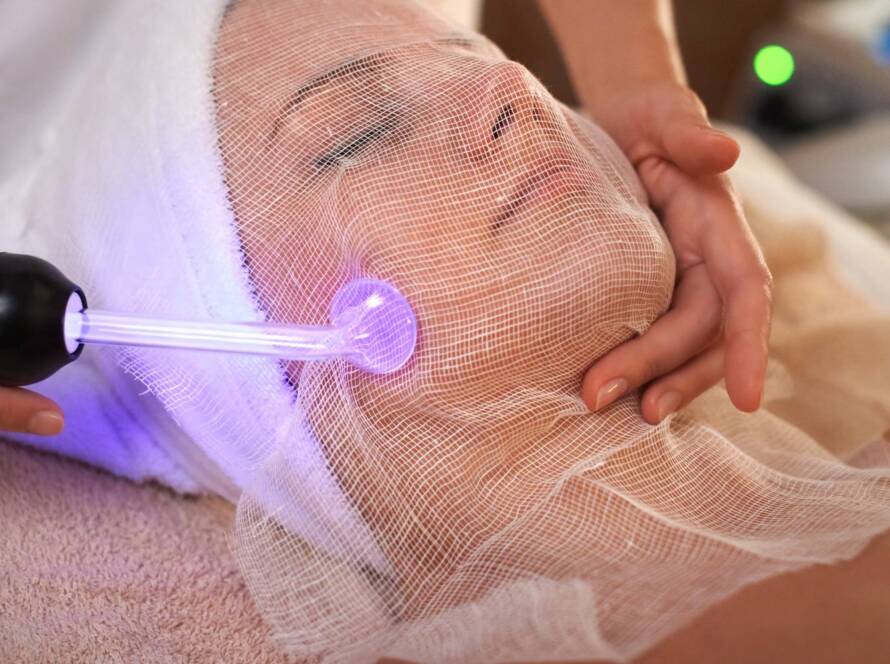
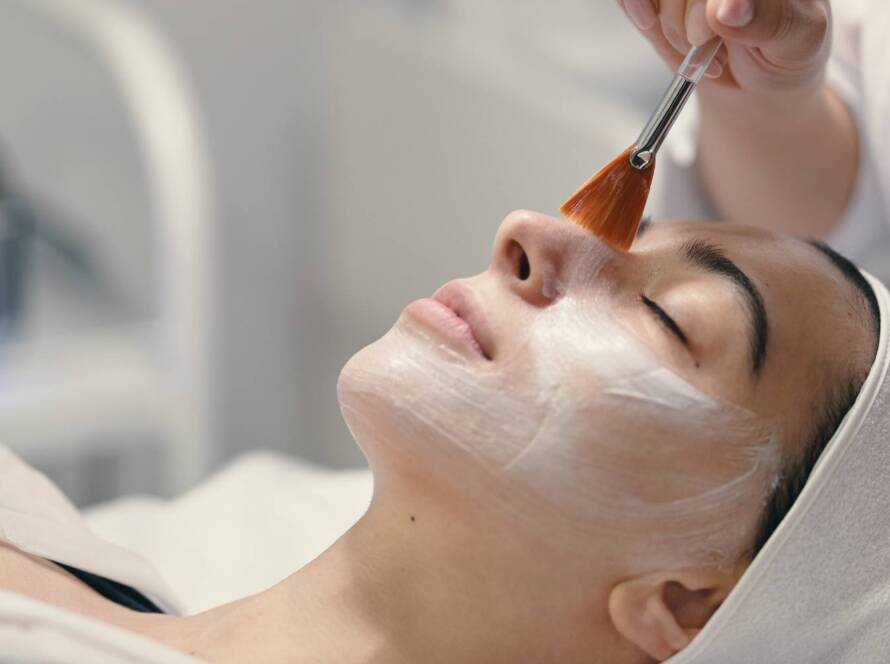
Dull texture, lingering post-breakout marks, and fine lines that seem to appear overnight can leave you searching for a solution stronger than your skincare routine but less intense than a full resurfacing procedure. A light chemical peel bridges that gap. It offers visible renewal with minimal downtime by targeting only the outermost layer of skin. At Refined Skin Club, we’ve seen how this gentle yet effective treatment restores brightness and smooths uneven tone. Clients want real results without the redness or recovery time tied to deeper peels. This 2026 guide breaks down how light chemical peels work, who they suit best, and what to expect before, during, and after treatment.
What Is a Light Chemical Peel?
How Light Peels Work on the Skin
A light peel targets only the outermost layer of skin, called the epidermis. The mild acid solution loosens dead cells so they shed faster than they would on their own. This is superficial exfoliation, not deep resurfacing. There is no wounding of deeper tissue layers.
Because the treatment stays shallow, results build gradually rather than dramatically. Many clients compare it to a deeper version of a facial, with a bit more flaking in the days after. The skin barrier stays mostly intact, which keeps risk low.
Regular sessions, similar to routine chemical peels booked every few weeks, help maintain smoother texture over time. A single treatment offers a nice refresh. Consistency delivers the real long-term payoff for tone and clarity.
Common Acids Used in Light Peels
Alpha hydroxy acids, or AHAs, are among the most common choices. Glycolic acid and lactic acid fall into this group. They work well for dullness, dryness, and early signs of sun damage.
Beta hydroxy acid, or BHA, usually means salicylic acid. It is oil-soluble, so it penetrates clogged pores more effectively. That makes it a popular pick for acne-prone or oily skin.
Low-strength trichloroacetic acid, or TCA, can also show up in light concentrations, often below 15 percent. Providers sometimes blend acids together to balance exfoliation with comfort, tailoring the mix to each client’s tolerance and goals.
Light vs. Medium vs. Deep Peels
Medium peels penetrate further into the dermis, often using stronger TCA concentrations. Deep peels, sometimes phenol-based, reach even deeper and require significant downtime, sometimes weeks. Light peels involve none of that extended recovery.
Downtime is the clearest distinction. A light peel typically causes mild redness or flaking for a few days. Deeper options can mean swelling, oozing, and social downtime lasting a week or longer.
Choosing between them depends on skin concerns and lifestyle. Someone wanting subtle upkeep between other services, like lash lifts or facials, often prefers the light option for its minimal disruption.
Conditions a Light Chemical Peel Can Treat
Acne and Breakouts
A light peel can calm active breakouts and clear out clogged pores. The acid gently dissolves debris and excess oil sitting on the skin’s surface. Many people wonder whether do facials help with acne, and peels work on a similar principle by unclogging pores and reducing surface bacteria. That makes the treatment a good option alongside facials or extractions.
- Mild to moderate acne breakouts caused by excess oil and bacteria buildup on the skin’s surface.
- Blackheads and whiteheads that form when clogged pores trap dirt and dead skin cells.
- Rough, congested texture that makes skin feel bumpy or uneven to the touch.
- Post-breakout marks left behind after pimples heal and fade.
Hyperpigmentation and Dullness
Uneven skin tone often comes from sun exposure, hormonal shifts, or old acne scars. A light peel encourages fresh cell turnover, revealing brighter, more even skin underneath. This is one of several treatments that dont require a knife that address discoloration without downtime.
- Dull, tired-looking skin that lacks natural radiance and glow.
- Dark spots and patches caused by mild sun damage over time.
- Uneven tone left over from old blemishes or minor scarring.
Early Signs of Aging
Fine lines around the eyes and mouth often show up first. A light peel softens their look by boosting collagen production gradually. It works well for early prevention, before deeper wrinkles set in.
- Fine lines forming from repeated facial expressions and sun exposure.
- Slightly rough or thinning skin texture linked to early collagen loss.
Is a Light Chemical Peel Right for Your Skin Type?
Best Candidates for a Light Peel
Most people across Fitzpatrick skin types I through VI can safely try a light chemical peel. Since the treatment only affects the outer skin layer, it tends to be gentler than deeper resurfacing options. That makes it a good fit for beginners, busy schedules, and anyone easing into professional skincare for the first time.
Ideal candidates have mild concerns like dullness, uneven texture, small breakouts, or early sun spots. Someone with healthy, non-reactive skin and no active infections usually tolerates the session well. If facials or microdermabrasion have worked for you before, a light peel is often a comfortable next step.
Precautions for Sensitive or Darker Skin
Sensitive skin can still react to acids, even mild ones. Redness, tightness, or light flaking may last longer than expected. Patch testing beforehand helps a provider gauge sensitivity before committing to a full-face application.
Darker skin tones, particularly Fitzpatrick IV through VI, carry a higher risk of post-inflammatory hyperpigmentation. This doesn’t rule out treatment, but formula strength and aftercare matter more here. A trained provider will often choose milder acids and stricter sun protection guidelines to reduce this risk.
Skin Conditions That May Need Alternatives
Active eczema, rosacea flare-ups, open wounds, or recent sunburn are reasons to pause or avoid peeling altogether. Certain medications, like isotretinoin, also require a waiting period first. In these cases, alternatives such as oxygen spray or microcurrent may offer gentler options.
A professional consultation is essential whenever your skin history feels complicated. Starting with a virtual skin consultation 2 lets a specialist review your concerns beforehand. For broader background, the Light Chemical Peel overview from a trusted medical resource is worth reading too.
Light Chemical Peel vs. Other Resurfacing Treatments
Light Peel vs. Medium Peel
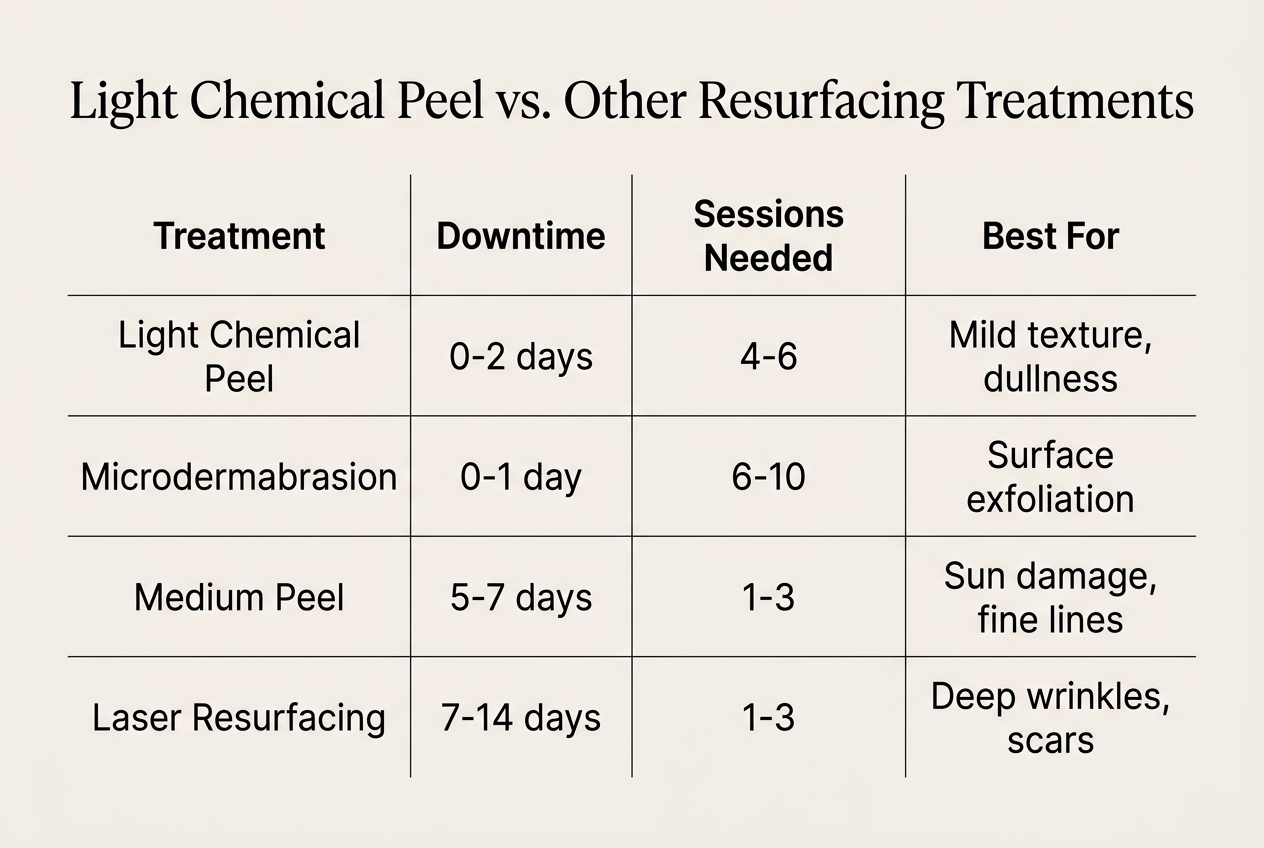
A light peel works on the outermost skin layer only. A medium peel reaches deeper, targeting the upper dermis for more dramatic results. That extra depth means more downtime and more redness. The table below breaks down the key differences.
| Factor | Light Peel | Medium Peel |
|---|---|---|
| Common acids | Glycolic, salicylic (low %) | TCA, Jessner’s solution |
| Downtime | 0–2 days | 5–10 days |
| Visible peeling | Minimal flaking | Noticeable shedding |
| Sessions needed | 4–6 for full results | 1–3 for full results |
| Best for | Dullness, mild texture issues | Deeper lines, sun damage |
Light Peel vs. Microdermabrasion
Microdermabrasion physically buffs away dead cells using a wand or crystals. A Chemical peel uses acid solution instead. Both refresh the surface, but peels also encourage deeper cell turnover. Sensitive or acne-prone skin often tolerates a light peel better, since microdermabrasion can irritate active breakouts. Many providers rotate the two treatments seasonally.
Light Peel vs. Laser Treatments
Laser resurfacing uses focused light energy, not acid, and can be far more aggressive than a light peel. Fractional lasers may require a week or more of healing, while light peels rarely disrupt daily routines. For clients weighing jawline concerns alongside skin texture, it’s worth exploring med spa treatments that can get rid of a double chin during a broader consultation. Choosing between options depends on goals, budget, and how much recovery time is realistic.
How the Treatment Is Performed
Pre-Treatment Skin Preparation
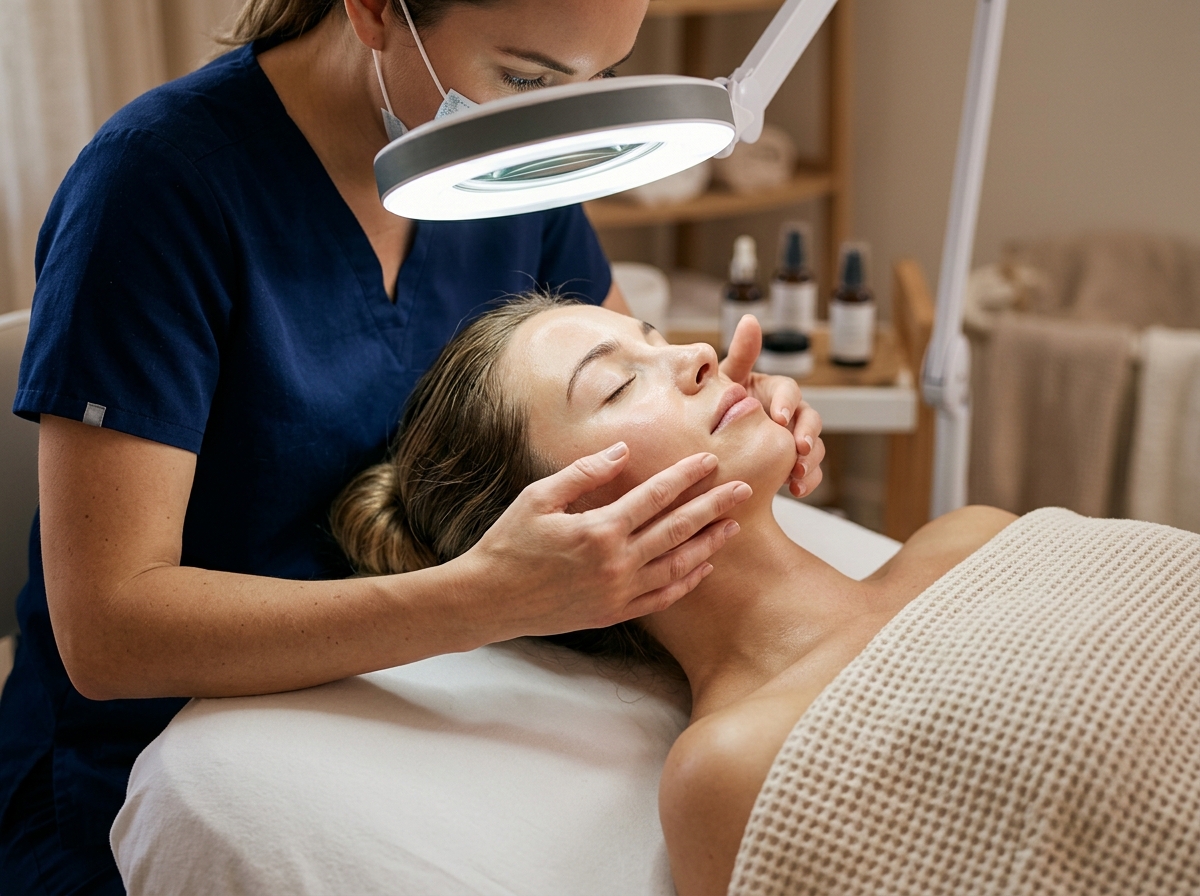
Every session starts with a thorough cleanse. The provider removes oil, makeup, and debris so the acid can absorb evenly. Skin gets checked for redness, active breakouts, or sensitivity. Some providers pair this step with dermaplaning or facial extractions to clear away rough patches and clogged pores before the acid goes on.
Application and Timing of the Acid
Next comes the main event: applying the peel solution. A light chemical peel often uses glycolic, salicylic, or lactic acid at low strength. Products like the Salicylic Acid 10% Peel – Light Strength show the gentle concentrations typical of this category. The table below outlines a standard appointment flow.
| Step | Duration | What Happens |
|---|---|---|
| Cleansing | 5 minutes | Skin washed and dried thoroughly |
| Acid application | 3-5 minutes | Solution brushed on in even layers |
| Processing time | 1-5 minutes | Mild tingling or warmth noted |
| Neutralization | 2 minutes | Solution stopped and rinsed |
| Finishing | 5 minutes | Soothing serum and sunscreen applied |
Neutralizing and Finishing Steps
Once timing is complete, the acid is neutralized or rinsed away. Skin gets patted dry, then treated with calming serums, hydrating masks, or oxygen spray. Total appointment time runs 30 to 45 minutes. Many clients feel comfortable enough to return to work right after, unlike downtime linked to body contouring or the benefits of coolsculpting procedures.
Benefits and Possible Side Effects
Key Benefits of Light Peels
A light peel offers real rewards with very mild risk. Most patients notice smoother texture, brighter tone, and fewer fine lines within days. Because downtime is short, this treatment fits easily into a busy schedule, unlike deeper resurfacing options.
- Improved skin tone and reduced dullness, often visible after just one session
- Softer fine lines and smaller-looking pores from gentle surface exfoliation
- Fading of mild sun spots, melasma patches, and post-acne discoloration over time
- Better absorption of serums and moisturizers used afterward at home
- Minimal recovery time compared to medium or deep peels or laser resurfacing
For daily upkeep between sessions, our summer skincare tips guide helps protect fresh, treated skin from sun damage.
Common Side Effects
Redness is expected right after treatment and usually fades within hours. Some flaking or dryness follows over the next two to four days. Skin may feel tight or slightly sensitive to touch, heat, or sun exposure during this window. These reactions are normal signs the acid is working on the surface layer.
Rare but Possible Complications
Serious problems are uncommon with a properly performed peel, but patients should still watch for warning signs.
- Prolonged redness or swelling lasting more than a week without improvement
- Small breakouts or milia forming under newly treated skin
- Uneven pigmentation, especially in deeper skin tones exposed to sun too soon
- Allergic reaction to acids or added botanical ingredients in the solution
This short video, Light chemical peel exfoliates and creates glowing skin |…, shows how normal exfoliation looks compared to true complications.
Recovery Timeline and Aftercare Tips
Days 1-3: Redness and Flaking
Right after the session, skin looks pink, similar to a mild sunburn. This usually fades within a few hours to a day. By day two, tightness sets in, and light flaking may begin around the mouth and nose. Redness typically peaks early and calms fast with a light peel, since the treatment only affects the outer skin layer.
During these first days, stick to gentle cleansing and a bland moisturizer. Skip active ingredients like retinol or vitamin C until flaking stops. A fragrance-free healing balm can ease tightness and reduce irritation overnight.
Days 4-7: Peeling and Renewal
Visible peeling often starts around day three or four. Small flakes appear near the forehead, cheeks, and chin. Never pick or pull loose skin, since this can cause scarring or uneven tone. Let flakes shed naturally while keeping skin hydrated.
By day six or seven, most peeling finishes, revealing smoother, brighter skin underneath. Many people notice smaller pores and a more even texture at this stage. This is also a good time to resume gentle exfoliation. Understanding how often should you exfoliate your skin helps prevent overdoing it while renewal continues.
Long-Term Aftercare and Sun Protection
Once peeling ends, daily SPF 30 or higher becomes essential. New skin stays more sensitive to UV damage for several weeks. Reapply sunscreen every two hours during outdoor activity, and wear a wide-brimmed hat when possible.
Long-term results depend on consistent care. Many local businesses recommend spacing future peels four to six weeks apart, alongside gentle facials or microdermabrasion for maintenance. For more background, this overview of Chemical Peels: Types of Peels, Conditions Treated, What … explains healing expectations in greater detail.
How Often Should You Get a Light Chemical Peel?
Ideal Treatment Intervals
Most people do well with a light peel every two to four weeks. This pace matches the skin’s natural renewal cycle. It lets fresh cells surface without disrupting the barrier underneath.
For active acne or dullness, a provider might suggest a tighter schedule, such as six sessions spaced three weeks apart. Once skin looks clearer, many clients shift to monthly or quarterly maintenance visits. A good starting point is reading What to Expect When Getting A Light Chemical Peel before booking your first appointment.
Combining Peels With Other Skincare Services
A dedicated provider can build a rotation that pairs peels with other services. For example, a peel one month, followed by microdermabrasion or dermaplaning the next, keeps skin refreshed without overworking it. Facials and oxygen spray sessions work well in between, adding hydration without added exfoliation.
Many local businesses also schedule microcurrent or headspa treatments on off-weeks to support circulation and relaxation. If waxing is part of your routine, space it apart from peel days, since both affect surface skin. Interestingly, some clients ask does waxing reduce hair growth when planning long-term hair removal alongside their skincare calendar.
Signs of Over-Exfoliation
Watch for persistent redness, tightness, or stinging that lasts more than a day. Flaking that feels rough rather than light also signals too much acid exposure. These symptoms mean it’s time to slow down.
If breakouts increase or skin feels thinner and more sensitive to sun, pause treatments for several weeks. A provider can reassess your schedule and adjust strength or frequency accordingly.
Cost, Insurance, and What to Expect Financially
Average Cost Ranges
A single session typically costs between $75 and $200. This range covers most superficial options, including glycolic, salicylic, and lactic acid formulas. Many local businesses price treatments based on the acid strength and the specific concern being addressed.
Package deals are common, since a series of peels often produces better results than one visit alone. A set of four to six sessions might run $300 to $900, offering savings compared to booking each treatment separately. Some clinics bundle sessions with Facial Extractions or Microdermabrasion for added value.
Insurance Coverage Explained
Insurance companies classify these treatments as cosmetic procedures. Since they improve appearance rather than treat a diagnosed medical condition, coverage is almost never provided. Patients should expect to pay out of pocket for every session.
There are rare exceptions. If a dermatologist prescribes a peel to manage a documented skin disease, partial reimbursement might apply. This is uncommon and requires prior authorization, detailed medical records, and a provider willing to submit insurance claims on the patient’s behalf.
Factors That Influence Pricing
Geographic location plays a large role. Clinics in major cities often charge more than those in smaller towns. Provider credentials also matter; treatments performed by licensed estheticians or medical professionals may cost more than similar options at budget spas.
The type of acid used, session length, and add-on services affect final pricing too. Combining a peel with Microcurrent or Oxygen Spray increases cost. Before committing, reading about Light Chemical Peels helps set realistic expectations. Those curious about at-home alternatives can also explore can you do microneedling at home for comparison.
Choosing a Qualified Provider for Your Peel
Credentials to Look For
A licensed esthetician or dermatology staff member should perform your peel. Licensing means they passed state exams covering skin anatomy, chemical safety, and reaction management. Ask if the provider has specific training in chemical peel protocols, not just general facials. Many local businesses list certifications on their websites or display them in the treatment room. If you cannot verify credentials, ask directly before booking.
Questions to Ask During a Consultation
A good consultation feels like a conversation, not a sales pitch. Come prepared with questions that reveal the provider’s real experience.
- What acid type and concentration will be used, and why was it chosen for my skin?
- How many light peels have you performed, and can you share before-and-after examples?
- What happens if I have a stronger reaction than expected during the session?
- Do you review my medical history and current products before treatment?
- Can you explain aftercare steps in detail before I leave?
Their answers should be specific, not vague reassurances. For more background before your visit, many providers recommend browsing a clinic blog to learn peel basics in advance.
Risks of DIY or Unlicensed Peels
At-home kits sold online often list vague acid percentages or skip safety warnings entirely. Watch for these red flags:
- No listed ingredient concentration or pH level on the packaging.
- Instructions that ignore patch testing or skip timing guidance.
- Sellers with no professional or medical background answering questions.
Unsupervised use risks burns, uneven pigmentation, and infection.
If you’re ready to see what a light chemical peel can do for your skin, the team at Refined Skin Club is a great place to start. As a premier day spa and skin care clinic, they specialize in personalized skincare solutions tailored to your unique concerns, whether that’s acne, early signs of aging, or general rejuvenation. Stop by or book a consultation to discuss which peel is right for you.