You’ve probably seen dozens of laser hair removal ads promising silky-smooth skin, but figuring out who’s actually qualified to treat you shouldn’t be guesswork. Choosing dermatologist laser hair removal means putting your skin in the hands of someone trained to handle every skin tone, hair type, and potential complication safely. Before you book an appointment anywhere in New Jersey, you deserve to know what separates a reputable provider from a risky one. This guide breaks down exactly what to look for, what to ask, and what your treatment should actually feel like.
How Dermatologist Laser Hair Removal Actually Works
Laser vs. IPL vs. Electrolysis
The laser targets melanin, the pigment inside the hair follicle. That pigment soaks up the light energy, heats up, and disables the follicle’s ability to grow new hair. The surrounding skin barely notices. It’s precise. That’s the whole point.
True medical-grade lasers, the kind used in a clinical setting, deliver consistent, calibrated energy at wavelengths suited to different skin types and hair textures. At-home IPL devices work on a similar idea but at a fraction of the power. That means slower, less predictable results. If you’re weighing options, learning about professional-grade hair removal versus drugstore gadgets is worth doing before you spend money either way.
Electrolysis takes a different approach entirely, inserting a fine probe into each follicle individually to destroy it with electrical current. It works on any hair color, but it’s slow going, hair by hair. Laser treats broader areas fast. That’s a big reason it’s become the more popular clinic option.
How Skin Tone and Hair Color Affect Results
Hair grows in cycles, and only follicles in the active anagen phase respond well to laser energy. That’s why one session never finishes the job. Sessions get spaced weeks apart specifically to catch hair as it cycles into that growth phase over time.
Skin tone and hair color both matter a lot here. Lasers hunt for melanin, so dark, coarse hair on lighter skin gives the clearest contrast and the fastest results. Gray, red, or very blonde hair has little pigment to target, which limits effectiveness regardless of the machine. Darker skin tones need specific wavelengths, like Nd:YAG, to avoid pigment changes — a detail that separates trained providers from anyone running a cheap device.
This is where proper training actually earns its keep. A qualified provider assesses skin type, hair density, and medical history before ever firing a laser. In New Jersey, laser hair removal is classed as a medical service, and state rules bar estheticians and other cosmetology licensees from performing it. If you want the deeper mechanics explained further, the clinic’s blog breaks down more of the science in plain terms. Rules on who may operate a hair removal laser vary by state, so check yours before you book. Skip the standards, and you risk burns instead of smooth skin.
Areas Commonly Treated, Session Time, and Comfort Level
Not every body part behaves the same way under the laser. Face and body areas differ in hair thickness, skin sensitivity, and how long you’ll be sitting there. Knowing what to expect for each zone helps you plan your day and set your pain tolerance accordingly.
On the face, the chin, upper lip, and sideburns are the most requested spots, usually because shaving or waxing leaves stubble or irritation fast. On the body, underarms, arms, legs, bikini line, back, and chest see the most bookings. Session length scales directly with surface area, which is why a quick underarm visit and a full-leg appointment feel like completely different experiences.
| Area | Typical Session Time | Comfort Level |
|---|---|---|
| Underarms | 10–15 minutes | Mild snapping, brief |
| Upper lip / chin | 10–15 minutes | Noticeable, quick pinch |
| Bikini line | 15–20 minutes | More sensitive, tolerable |
| Full arms or back | 30–45 minutes | Moderate, steady rhythm |
| Full legs | 45–60+ minutes | Mild to moderate, long haul |
Comfort really comes down to skin thinness and nerve density. The face and bikini area tend to sting more, while arms and legs feel more like a rubber band snap that fades fast. If you’re weighing your options before committing, reading up on how Laser Hair Removal sessions are structured elsewhere can give you a useful comparison point. Thicker, coarser hair generally hurts more than fine hair, for what it’s worth. Some clients pair longer sessions with a chest or back treatment and knock out two birds in one visit. And if you’re also dealing with stubborn fullness under the jaw, it’s worth knowing that certain med spa treatments that can get rid of a double chin are sometimes scheduled alongside hair removal visits for efficiency. Either way, discomfort is temporary. Redness usually settles within an hour or two.
Is Laser Hair Removal Safe for Your Skin Type?
Here’s the good news: today’s devices aren’t one-size-fits-all. Modern lasers are built to read across the full Fitzpatrick scale, which means darker and deeper skin tones can be treated just as effectively as fair ones, provided the settings are dialed in correctly. That calibration matters more than the brand name on the machine. An experienced provider will adjust wavelength and pulse duration to match your tone, reducing the odds of pigment changes and getting better results in fewer passes.
Risk stays low when the person holding the device knows what they’re doing. Proper aftercare — think gentle cleansers, no harsh exfoliants, and sun protection — plays just as big a role as the treatment itself. If you’re already following a routine built around summer skincare tips, you’re ahead of the curve, since sun-smart habits and post-laser care overlap quite a bit.
Expect some temporary side effects. Redness, mild swelling, and a sting similar to light sunburn are common right after a session. These usually fade within a few hours to a day. Cool compresses and fragrance-free moisturizer help. If irritation lingers past 48 hours, call your provider. That’s not typical, and it’s worth checking.
Who Should Wait or Avoid Treatment
Not everyone is a candidate right now, and that’s fine. Timing matters. Pregnancy is a common reason to hold off, since hormonal shifts affect skin sensitivity and there’s limited safety data on treating expectant clients. Certain medications also raise the stakes. Photosensitizing drugs, including some acne prescriptions and antibiotics, can make skin react unpredictably to laser energy, so full disclosure of what you’re taking isn’t optional. It’s essential.
Active sunburn or a fresh tan is another hard stop. Treating compromised or overly pigmented skin increases the risk of blistering or uneven tone changes. Providers generally ask you to wait until skin returns to its baseline color, sometimes two to four weeks, before scheduling. If you need hair removal in the meantime, shaving is the safe short-term alternative, since wax treatments have to stop several weeks before your first session.
Bottom line: honesty during your consultation protects you. Skipping details about medication or sun exposure doesn’t speed things up. It just raises your risk. A thorough intake, including a look at options like Laser Hair Removal in Orange County for comparison on protocols, helps set realistic expectations before you ever sit in the chair.
Pros and Cons Compared to Waxing and Shaving
Every hair removal method has a trade-off. Laser asks for more money and patience upfront but pays that back over time. Waxing and shaving cost less per visit but never really stop costing you. The table below lays out the basics so you can compare them honestly.
| Method | Durability | Typical Cost Pattern | Common Downside |
|---|---|---|---|
| Laser (in-office) | Long-term reduction, often permanent thinning | Higher per-session cost, paid across a series | Requires multiple sessions before results settle in |
| Waxing | 2-4 weeks per session | Cheaper upfront, but repeats for years | Ingrown hairs, redness, skin sensitivity |
| Shaving | 1-3 days | Lowest cost per use, endless upkeep | Razor burn, nicks, fastest regrowth |
| At-home IPL devices | Weeks to a couple months, results vary | One-time device cost, moderate | Less powerful than in-office equipment |
Here’s the honest math: waxing every three weeks for five years adds up fast, and so does the time spent booking it. Shaving is free-ish but daily, which is its own tax on your mornings. If you’re curious how waxing stacks up on regrowth specifically, it’s worth understanding does waxing reduce hair growth over repeated sessions before assuming it’s a long-term fix. Laser wins on total cost and time saved for anyone treating the same area for years. Some clients pair a session series with other non-invasive upkeep, and browsing options for treatments that dont require a knife can round out a broader skin routine. Shaving stays useful for quick touch-ups between sessions. Waxing still has its place for last-minute events. But for consistent, repeat removal, laser is the one that actually saves you money down the line.

What Happens Before, During, and After a Session
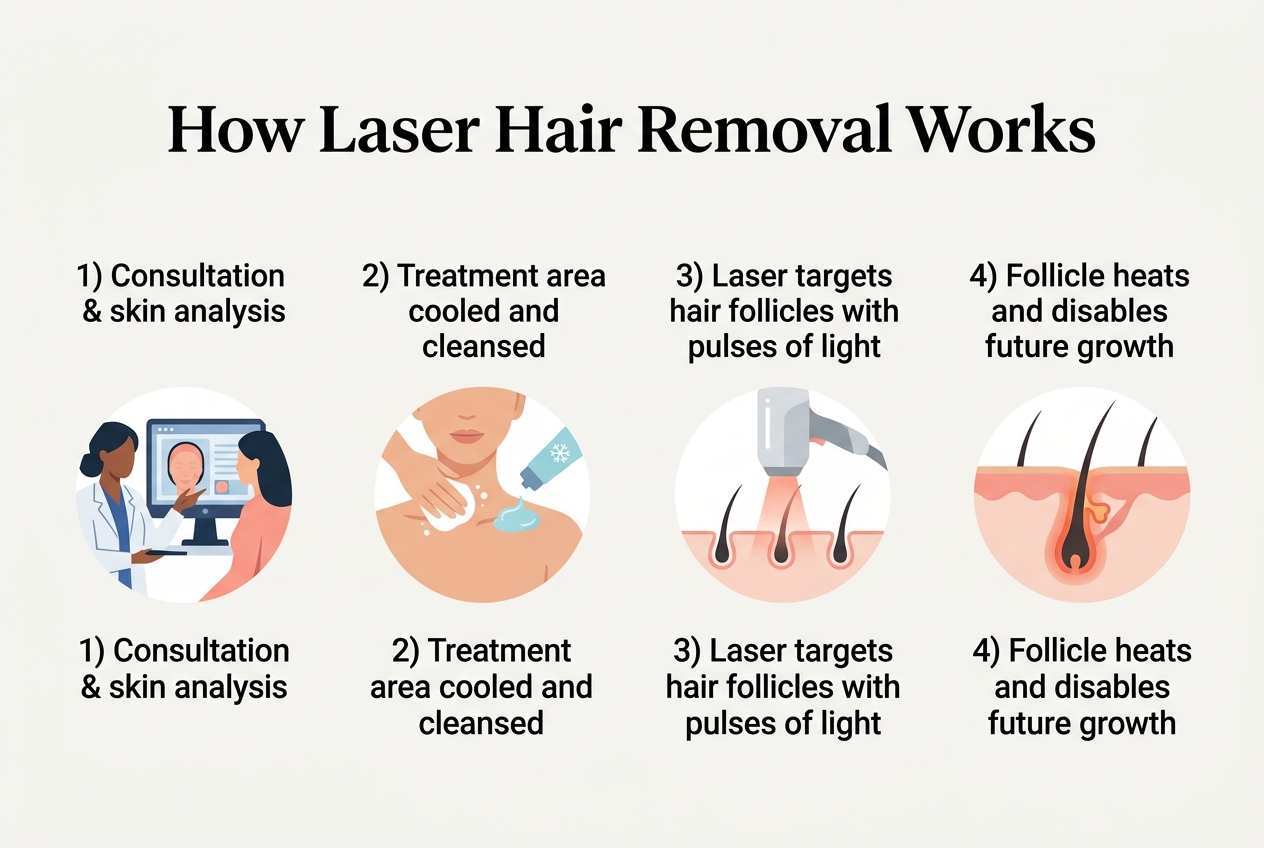
Good results start before the laser ever touches your skin. Every visit opens with a consultation where a provider looks at your skin tone, hair color and density, and asks about medical history, medications, and any past reactions to treatment. This isn’t a formality. It’s how a provider figures out the right settings for your skin, and whether you’re a good candidate at all. If you’re not sure what to expect walking in, write down your questions ahead of your first appointment.
Preparation matters just as much as the session itself. Skip these steps and you’ll either get a weaker result or a harsher reaction. Here’s what actually needs to happen beforehand:
- Stay out of the sun and skip tanning beds for at least two to four weeks, since tanned or sunburned skin raises the risk of irritation and pigment changes.
- Stop waxing, plucking, or using depilatory creams for several weeks prior, because the laser needs an intact hair root under the skin to target.
- Shave the treatment area the night before or morning of your appointment, leaving the root in place but clearing surface hair that could singe.
- Arrive with clean skin, free of lotion, deodorant, or makeup on the area being treated.
During the session, a cooling gel or built-in cooling device keeps the skin comfortable as pulses of light hit the follicles, and you’ll wear protective eyewear the entire time. Afterward, expect mild redness, a bit like a sunburn. For the next 24 to 48 hours, apply SPF diligently, avoid hot showers, saunas, and sweaty workouts, and stick to gentle skincare rather than active ingredients. Some people pair recovery with a virtual skin consultation to double-check aftercare fits their specific skin. Skip that advice, and you’re rolling the dice on irritation.
How Many Sessions You’ll Realistically Need
Nobody wants to hear this, but one session won’t cut it. Hair grows in three separate cycles, and the laser only works on follicles that are actively growing. That’s why most people need a string of visits spaced weeks apart, not a single quick fix.
- Most treatment areas call for 6 to 8 sessions spaced roughly 4 to 6 weeks apart, timed to catch new hair as it enters its active growth phase.
- Coarser, darker hair usually responds faster because it absorbs laser energy more efficiently, while fine or light-colored hair can take longer and sometimes needs extra rounds.
- Hormonal shifts from PCOS, pregnancy, or new medications can wake up dormant follicles, meaning touch-up sessions down the road aren’t unusual.
- Skin tone and hair color together determine your timeline, which is part of why understanding Laser Hair Removal basics before you start helps set realistic expectations.
- Once you finish the initial series, a maintenance visit once or twice a year keeps regrowth sparse and manageable.
- Areas with dense hair, like the back or legs, often sit at the higher end of that 6-to-8 range, while smaller zones like the upper lip may wrap up sooner.
Progress isn’t always a straight line, and that’s normal. Some months you’ll see dramatic thinning; other months barely anything changes. Stick with the schedule anyway. Skipping sessions, or spacing them too far apart, tends to stretch out the whole process and cost more in the long run. If you’re also exploring other services like lash lifts for a separate part of your beauty routine, plan around your laser calendar so treatments don’t overlap or interfere with each other.

Choosing the Right Dermatologist Laser Hair Removal Provider
Questions to Ask During a Consultation
Not every provider is created equal, and that matters more with lasers than with most spa treatments. Start by asking who’s actually running the device and what training they’ve had. Licensing matters — a trained technician working under proper medical oversight, using FDA-cleared equipment, is non-negotiable. If a place gets vague about credentials or dodges the question about which laser system they use, treat that as a red flag, not a small detail.
Next, ask how the plan gets built around you specifically. Skin tone, hair color, hair thickness, and the treatment area all change what settings and timeline make sense — someone with fine, light hair on the upper lip needs a different approach than someone targeting coarse leg hair. Budget matters too, so ask for a realistic per-session cost and an honest estimate of total sessions, not just an optimistic sales number. While you’re there, it’s worth asking whether the practice also handles related concerns like skin tag removal, since providers who cover a broader range of skin work tend to have deeper diagnostic experience.
Finally, confirm a patch test happens before any full session. A small test spot, checked after 24 to 48 hours, tells you how your skin actually reacts before a laser touches your whole underarm or leg. Skip this step and you’re gambling. Ask these questions before you commit to anything, and compare quotes and session estimates from more than one qualified provider.
Frequently Asked Questions About Laser Hair Removal
Does It Hurt?
Let’s address the big one first. Most people describe each pulse as a quick snap, like a rubber band flicked against the skin. It’s not pleasant, but it’s brief, and most devices have a built-in cooling tip that numbs the area as it fires. Sensitive spots — upper lip, bikini line, underarms — sting a bit more than legs or arms. If you’re nervous, ask about numbing cream beforehand. According to Laser hair removal research, discomfort typically fades within minutes of finishing. Nobody loves it. Nobody usually dreads the second visit either.
Is It Permanent?
No, and be wary of anyone who promises otherwise. What you’re getting is long-term hair reduction, not a guaranteed lifetime of smooth skin. Most people see a dramatic drop in density and thickness, sometimes 70-90% fewer hairs after a full course, but stray hairs can return over the years as follicles slowly wake back up. Hormonal shifts, pregnancy, and certain medications can trigger regrowth too. Annual touch-ups keep results looking sharp, kind of like how a facial or chemical peel needs occasional maintenance to hold its glow.
Can I Shave Between Sessions?
Yes — shave away. It’s actually encouraged, since the laser needs a trimmed hair shaft to target the follicle properly. What you can’t do is wax, pluck, or use depilatory creams between appointments. Those methods pull the hair out at the root, and the laser has nothing left to grab onto. Skip a session’s worth of progress that way. Stick to shaving and you’re fine.
How Soon Will I See Results?
Within one to three weeks after a session, treated hairs start shedding. It looks like regrowth, but it’s actually the dead hair working its way out. Don’t panic if it seems slow at first. Full results build gradually across a series of sessions, not overnight.
Laser hair removal works best when the provider, the device, and your expectations all line up. Look for someone legally permitted to perform laser hair removal where you live who asks about your skin tone, hair color, and medications before the first pulse, and who can explain why a particular laser suits you. Plan on a series of sessions spaced weeks apart, treat the result as long-term reduction rather than a promise of permanence, and ask what maintenance looks like a year from now, since the answers tend to tell you more than any before-and-after photo will.