You’ve seen the term everywhere, and you’re wondering whether dermal filler for facial balancing is the missing piece in your routine or just another trend. Injectable volume is a medical treatment. It’s performed by licensed injectors, not something you’ll find on a spa menu. But that doesn’t mean firmer, more balanced-looking skin is out of reach. This guide walks through what facial balancing really involves, and where skin-focused treatments fit into the picture.
What Is Facial Balancing, and Why Is It Trending?
Where the Concept Came From
The idea isn’t new. Plastic surgeons have talked about facial proportion and “the golden ratio” for decades. What’s new is how fast it spread outside clinical circles. Social media turned facial balancing into a household phrase, with before-and-after videos showing subtle shifts in chin or jaw projection instead of one plumped-up lip. People started comparing their own profiles to filtered images, and that fed demand for a more holistic approach.
That shift in thinking pushed injectors to talk about the face as a set of relationships, not isolated parts. A chin that looks “too small” might just be reading that way because the jaw is underprojected. A nose might look larger simply because the chin recedes. Proportion, not perfection, became the goal. It’s a more forgiving framework, honestly, and one reason it’s stuck around longer than most beauty trends.
Facial Balancing vs. Treating a Single Feature
Treating one feature in isolation — just the lips, just under-eye hollows — can sometimes throw the rest of the face out of sync. Facial balancing takes a wider view. It adjusts chin, cheeks, jaw, and nose together using injectable dermal filler and neuromodulators placed by a licensed medical injector. The goal is harmony between features, not maximizing any single one. It’s a planning difference as much as a technique difference.
This is worth saying plainly: facial balancing is a medical, injectable approach. It’s not interchangeable with skin-quality treatments like facials, peels, or microneedling, which improve texture and tone rather than reshape proportions. Both have their place, and plenty of people pursue them side by side. If you’re researching the broader landscape before deciding what’s right for your face, the blog covers related skin-health topics worth understanding first. Men increasingly ask about these proportion questions too, and a provider’s approach may differ slightly based on facial structure, which is part of why a dedicated mens facial consult sometimes comes up in the same conversation about overall appearance goals. Either way, know which category — injectable or skin-quality — actually addresses your concern before booking anything.
How Dermal Filler for Facial Balancing Actually Works
The Consultation and Facial Mapping Process
Before any needle touches your skin, a qualified injector maps your face. They’ll look at your facial thirds — forehead to brow, brow to nose base, nose base to chin — checking whether they’re roughly equal or thrown off somewhere. They’re also studying bone structure underneath and how much soft tissue volume you’ve got, since both change how light and shadow fall across your face. This is less art project, more geometry lesson.
From there, the injector builds a plan specific to you. Someone with a recessed chin might need a different approach than someone with flat cheekbones or hollow temples. It’s worth understanding that facial balancing isn’t about chasing a single ideal face shape; it’s about proportion relative to your own features. A good consultation also covers your goals honestly, including whether filler is the right tool at all, or whether something else would serve you better.
Expect questions about your medical history, prior injectable work, and any allergies. A responsible provider will also photograph your face from multiple angles, sometimes using digital mapping software to visualize projected changes. This step matters more than people realize — it’s the difference between a plan built for your face and one copied from someone else’s.
Typical Areas Addressed
Hyaluronic acid filler gets placed strategically depending on what’s pulling your proportions off balance. Cheeks are common, since added projection there can lift the whole midface. Chin and jawline filler can sharpen a soft angle or correct asymmetry. Temples hollow out with age, and filling them subtly restores an oval shape to the upper face. Under-eyes are trickier and more technique-dependent, often reserved for more experienced injectors given the thin skin in that area.
Results show up immediately, which is part of the appeal. But filler isn’t permanent — most formulations last somewhere between 6 and 18 months, depending on the product density and where it’s placed. Thinner areas like under-eyes tend to metabolize filler faster than denser areas like the chin or cheeks. That’s just how the body processes it; everyone’s timeline varies slightly.
One thing worth saying plainly: this is a medical procedure. It requires a licensed injector — a nurse practitioner, physician, or physician assistant — not an esthetician, no matter how skilled. If your main goal is firmer, more lifted-looking skin without needles, microchanneling, microneedling, and microcurrent work by stimulating your own collagen instead, producing a slower but still noticeable change. Hydration plays a role here too, and some people researching skin quality even look into whether chlorine exposure affects skin and acne alongside their injectable or skincare routine. Either path you choose, the underlying skin still needs its own care plan.

Dermal Filler vs. Non-Injectable Approaches to Facial Balance
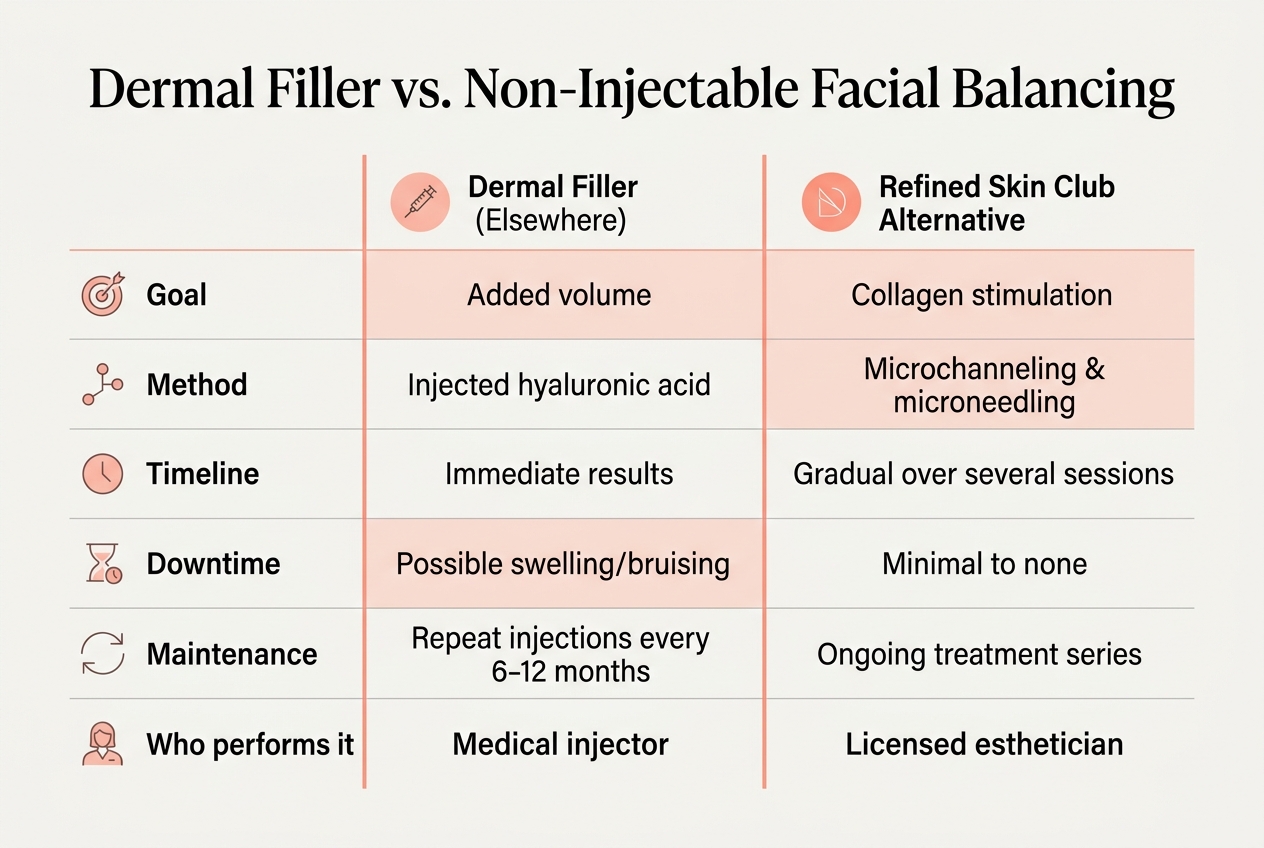
Here’s the thing people mix up constantly: filler and skin treatments aren’t competing for the same job. One adds material. The other coaxes your skin into making more of its own structural protein over time. Knowing which outcome you’re actually after makes the decision a lot simpler, so before weighing providers it helps to look at treatments that dont require a knife side by side with injectables.
| Factor | Dermal Filler | Collagen-Stimulating Skin Treatments |
|---|---|---|
| Primary goal | Reshape contour, restore lost volume instantly | Improve tone, texture, firmness gradually |
| Mechanism | Injected hyaluronic acid gel fills space | Controlled micro-injury triggers the body’s own collagen |
| Downtime | Mild swelling or bruising, 2-7 days | Minimal; mild redness for a day or so |
| Results timeline | Visible immediately, settles within 2 weeks | Builds over 4-12 weeks, often several sessions |
| Longevity | 6-18 months depending on area | Maintenance sessions, cumulative benefit over months |
Filler is a structural fix. It’s physically placed where volume is missing, and you see the change the same day. Skin-focused approaches work differently: they rely on your own repair process, which simply takes longer. Neither one replaces the other. No injectable volume treatments are performed at a day spa setting like this — that work requires a medical injector. For fuller, firmer-looking skin without needles, microchanneling, microneedling, and microcurrent stimulate collagen production instead of adding volume directly, a subtler and slower kind of change. If your concern is hollowing under the eyes or a flattened cheek, skin treatments alone won’t fully solve it. If it’s dullness, fine texture, or early crepiness, jumping straight to filler is often overkill.
Who Typically Considers Facial Balancing
There’s no single “type” of person who walks into a consultation asking about this. But patterns do show up, and most of them come down to proportion, not perfection. People notice a feature that feels out of step with the rest of their face, and they want it to sit more comfortably — not changed, just balanced.
Signs You Might Be a Candidate
If any of the following sound familiar, facial balancing is probably worth a conversation with a qualified injector. It’s less about fixing something broken and more about evening things out.
- A recessed or weak chin that makes the profile look off when viewed from the side.
- Flat or hollow cheeks that lack the soft projection that gives a face its structure.
- Noticeable asymmetry between the right and left sides of the jaw, cheeks, or chin.
- A desire for a more defined, contoured jawline without surgery or significant downtime.
- Generally good health, realistic expectations, and a clear understanding that filler results are temporary, not permanent.
- Motivation tied to a specific timeline, like a wedding, or simply an interest in gradual, ongoing refinement over time.
That last point matters more than people expect. Someone prepping for a wedding in ten weeks has very different timing needs than someone easing into small changes over a year. A thorough virtual skin consultation 2 conversation early on can help sort out which camp you fall into before any product gets near your face.
When to Pause or Reconsider
Filler isn’t right for everyone, and a responsible provider will say so. Active skin infections near the treatment area, certain autoimmune conditions, and pregnancy are all standard reasons to wait or skip it entirely. A licensed injector should screen for these during your first visit, no exceptions. If yours doesn’t ask, that’s a red flag, not a shortcut.
Asymmetry itself isn’t always a filler issue, either. Some facial unevenness has nerve or muscular origins rather than volume loss, which is a different problem entirely; reading about botox for uneven eyes is a useful way to understand how providers distinguish between the two before recommending treatment.
Safety, Risks, and Choosing a Qualified Injector
Let’s be honest about the downside first. Bruising, swelling, and mild asymmetry are the most common temporary effects, and they usually fade within a week or two. Rare risks exist too — vascular occlusion, where filler blocks blood flow, is the big one. It’s uncommon, but it’s serious, and it’s exactly why injector experience matters more than almost anything else on your checklist. Reviewers of the A.S.S.E.S.S. for Facial Fillers – PMC framework note that structured pre-treatment evaluation of facial anatomy is a key factor in reducing complications.
Questions to Ask Before Treatment
A good consultation feels unhurried. If an injector skips straight to the needle without discussing your bone structure, muscle movement, or skin thickness, that’s a red flag. Ask these before you commit:
- What are your credentials, and how many years have you specifically spent doing facial balancing work rather than general cosmetic injections?
- What product brand are you using, and is it FDA-cleared for the specific area we’re treating?
- Can I see before-and-after photos of clients with a similar facial structure to mine, not just your best overall results?
- What’s your protocol if something goes wrong, like vascular compromise or an uneven result?
- How much time do you set aside for consultation versus the actual injection appointment?
- What happens during follow-up, and how soon would you want to reassess the outcome?
Price shopping here is the wrong instinct. This is a medical procedure, not a spa add-on, so vetting matters far more than saving fifty dollars. A rushed provider is a bigger risk than an expensive one. If you’re still building your skin’s foundation before considering any injectable work, understanding what are blackheads and how to treat them is a reasonable place to start, since clear, well-prepped skin gives any provider a better canvas to work with. No injectable service is offered at a day spa like this — that work belongs with a licensed medical injector, full stop.
Supporting Skin Quality Alongside Facial Balancing Goals
Where Collagen-Stimulating Treatments Fit In
Here’s the thing to get straight first: filler moves and holds volume. It fills a hollow, lifts a flattened area, redefines an edge. What it doesn’t do is fix crepey texture, dull tone, or the fine etched lines across your forehead or around your mouth. Those are skin quality issues, not structural ones, and they need a different toolkit entirely. Reading up on Dermal fillers: The good, the bad and the dangerous makes this distinction clear — volume correction and surface quality are two separate conversations.
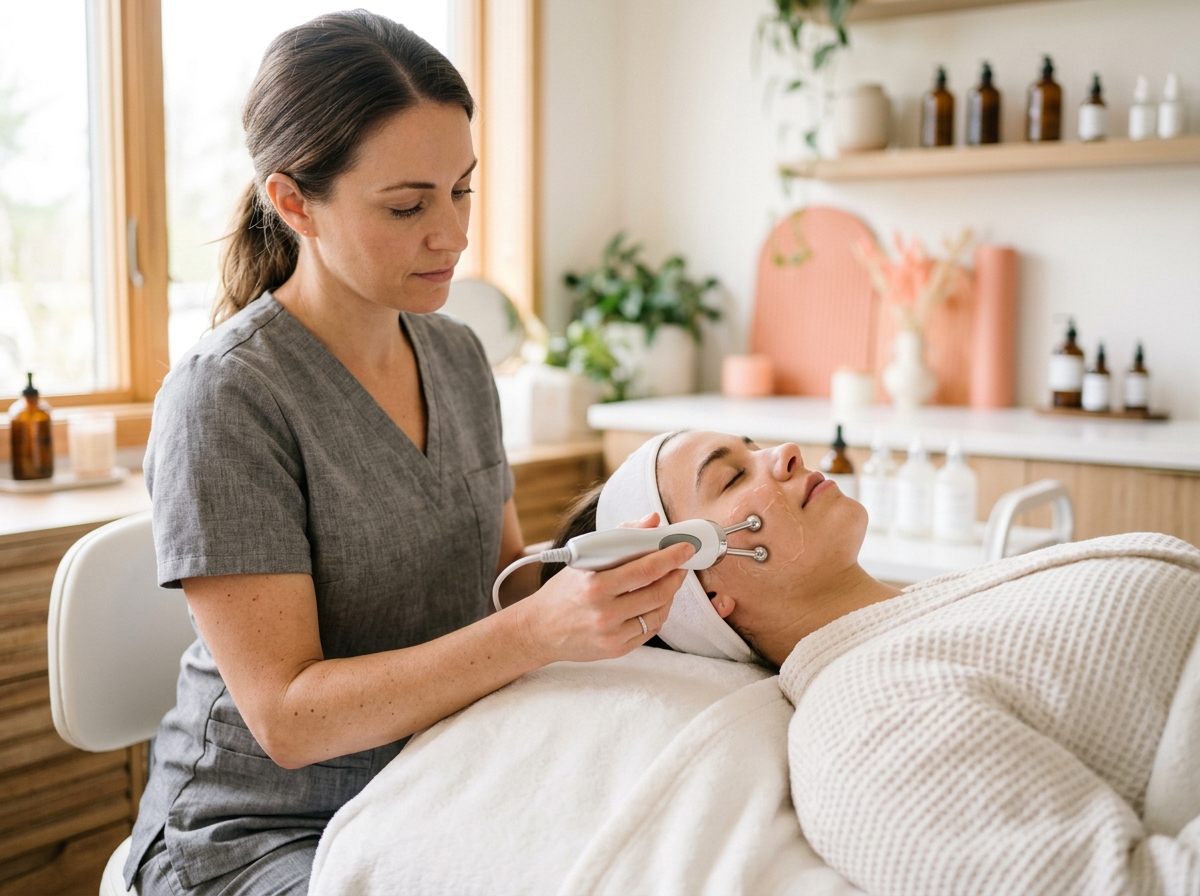
For readers who’d rather skip needles altogether, or who want to support results between injector visits, collagen-stimulating options are worth knowing. Microchanneling, microneedling, and microcurrent all work by triggering the skin’s own repair response rather than adding material under it. The change is slower and subtler — think weeks and months, not minutes. But it builds firmness and bounce in a way that reads as healthier skin, not just reshaped contours.
None of these replace what filler does structurally. They’re solving a different problem, and that’s worth remembering before you book anything.
Building a Combined Skincare Routine
Plenty of local businesses now build their offerings around exactly this non-injectable lane — chemical peels, facials, dermaplaning, and microcurrent sessions designed to keep skin quality moving in the right direction. A well-run chemical peels series, for instance, can noticeably improve tone and texture over several sessions, which pairs naturally with whatever volume work you’re having done elsewhere. A dedicated provider in this space will typically build a plan around your age, skin type, downtime tolerance, and budget rather than pushing a one-size routine.
In practice, many clients end up running two tracks at once: periodic filler appointments with a licensed injector for shape and volume, and ongoing esthetic visits for skin health in between. That might mean a facial every four to six weeks, a dermaplaning session before a big event, or microneedling spaced through the year. It’s maintenance, not glamour.
Think of it as two separate budgets, two separate calendars, one face. Keeping them distinct actually makes planning easier, not harder.
Cost, Longevity, and What to Expect Long-Term
Filler is sold by the syringe, and that’s the number that drives your whole budget. One syringe might soften a single area, but true facial balancing often blends two or three zones, so costs stack fast. Most plans metabolize over time, which means this isn’t a one-and-done purchase. Think of it as an ongoing relationship with your face, not a single transaction.
Steps to Plan a Facial Balancing Budget
Before you book a consult, it helps to map out the full financial picture rather than reacting to one quoted price. The table below breaks down a typical planning sequence, from initial assessment through the first-year touch-up.
| Step | What Happens | Typical Cost Factor |
|---|---|---|
| 1. Consultation | Injector maps areas needing balance (chin, jawline, cheeks) | Often $0-$150, sometimes credited toward treatment |
| 2. Initial treatment | One to four syringes placed across target zones | Priced per syringe; full-face plans vary widely |
| 3. Two-week review | Swelling resolves, minor adjustments considered | Usually included in original fee |
| 4. Maintenance visit | Touch-up as filler metabolizes | Needed roughly every 6-18 months |
| 5. Annual review | Reassess goals, adjust areas treated | Rolled into yearly skin-care budget |
Compare that to esthetic treatment series, which run lower per visit but ask for patience. A single session rarely costs what a syringe does, yet you’re often booking six or more sessions for gradual, cumulative results. Neither path is wrong. It’s really a question of what kind of spending rhythm suits you, how much change you want to see, and how fast. Good facial aftercare habits also stretch results further between appointments, which matters whether you’re maintaining filler or a peel series. Setting a realistic annual number up front, rather than pricing one appointment at a time, is what keeps touch-ups from feeling like a surprise bill.
Making the Right Choice for Your Face
Here’s the real question to ask yourself before you book anything: is your concern about shape, or is it about surface? If you’re bothered by a flattened cheek, a weak jawline, or asymmetry you can see in photos, that’s a structural issue. It belongs with a licensed medical injector who can assess bone, fat pads, and skin laxity together. If what bugs you is dullness, rough texture, enlarged pores, or tired-looking skin, that’s a skin-quality problem, and it doesn’t need a needle full of volume to fix. Mixing the two up wastes money. Worse, it can leave you with results that don’t actually address what was bothering you in the first place.
A virtual consultation is a low-pressure way to sort this out before you commit to a chair anywhere. An esthetician looking at close-up photos and asking about your history can usually tell within minutes whether you’re dealing with volume loss, sun damage, congested pores, or early collagen decline — and whether esthetic care alone will move the needle or whether you’d be better served starting with a provider who works in facial structure and tissue regeneration; learning more about regenerative approaches to skin health can help frame that conversation. Plenty of people end up needing both, just not at the same time.
In practice, most faces benefit from a two-track plan over the years: injectable work handled by a medical provider for structure, and ongoing esthetic treatments — facials, peels, microchanneling — for skin that actually holds up well around it. Three New Jersey locations and a quick call or email make starting with a skin-focused consultation simple, before you decide what, if anything, structural work should add.
Before choosing a path forward, it helps to be honest about what you’re actually hoping to see change, since medical treatments and esthetic ones build results in very different ways and on different timelines. A knowledgeable esthetician can often tell you whether gradual, skin-first approaches fit your goals or whether you genuinely need a medical referral first. Either way, it’s worth asking how much downtime you can accept, how soon you need results, and whether you’re drawn more to visible transformation or to the simple, consistent comfort of good skincare and a relaxing headspa session along the way.