Breakouts fade, but the marks they leave behind can stick around for months, sometimes years, turning every mirror check into a small frustration. If spot treatments and serums haven’t done much for you, chemical peels for acne and acne scars offer a clinically proven way to get smoother, clearer skin. They work on two fronts at once: calming active breakouts and fading the discoloration or texture left behind. This guide walks through which peels suit your skin type and scarring pattern, what results you can realistically expect, and how to build a treatment plan that actually holds up in 2026.
Understanding Acne and Why Scars Form
The Acne Formation Process
Acne starts inside a pore. Dead skin cells and excess oil clog the follicle. Bacteria called C. acnes feed on that trapped oil and multiply. The pore swells, and a blemish forms on the surface.
Not every blemish is the same. A whitehead or blackhead stays close to the surface and usually heals without a mark. Deeper lesions push into surrounding tissue and damage the skin’s structure. That depth is what decides whether scarring follows.
Healing depends on how much collagen gets destroyed. Mild lesions heal fast, with new collagen replacing what was lost. Deep lesions overwhelm the repair process. The body ends up making too little collagen, or too much, and that imbalance is where scars begin.
Types of Acne Scars: Atrophic, Hypertrophic, and Keloid
Inflammatory acne — cysts, nodules, and papules — causes most scarring. These lesions reach deep layers of skin and trigger a strong immune response. Non-inflammatory acne, like blackheads and whiteheads, rarely leaves permanent texture change.
Three scar types come from this damage. Atrophic scars are sunken, caused by collagen loss, and include icepick, boxcar, and rolling patterns. Hypertrophic scars are raised but stay within the original wound border. Keloid scars grow beyond that border, driven by excess collagen production.
Why Untreated Acne Increases Scarring Risk
Every inflamed lesion left untreated raises the odds of scarring. Picking or squeezing a cyst spreads bacteria deeper and makes tissue damage worse. Delayed treatment also means more breakouts over time, and more chances for permanent marks.
That’s why early, consistent care matters so much. Professional options like chemical peels remove damaged surface layers and encourage fresh collagen growth, addressing both active breakouts and early scarring before they become permanent. Reading a clinic’s blog is a good way to compare treatments before booking a consultation.
What Is a Chemical Peel and How Does It Work
The Science of Controlled Exfoliation
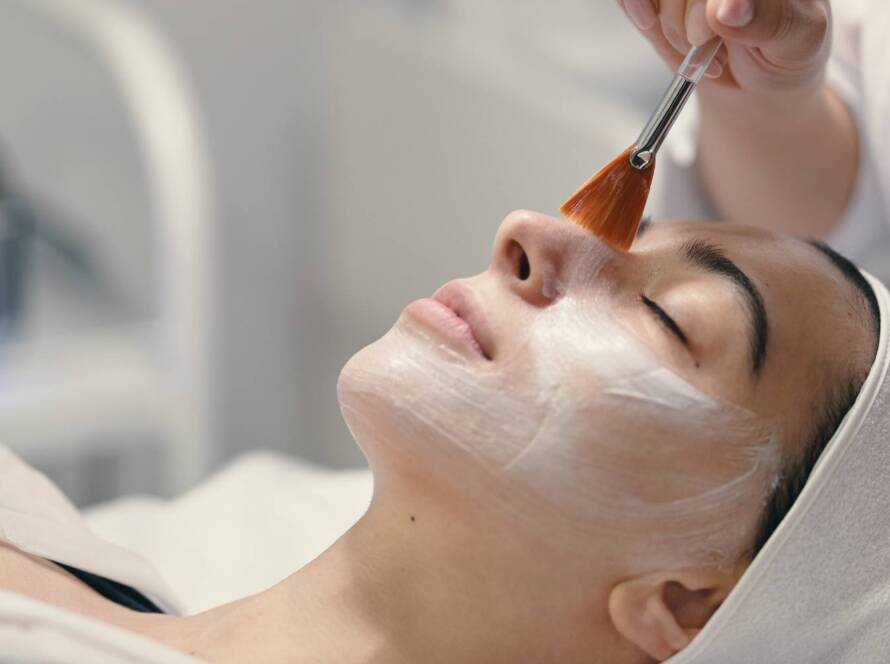
A chemical peel uses an acid solution to remove damaged surface cells on purpose. This isn’t random damage. It’s a measured, controlled injury designed to trigger healing. The strength and formula decide how deep that injury goes.
Acids like glycolic, salicylic, and trichloroacetic acid break the bonds holding dead skin cells together. Once loosened, those cells shed faster than they would on their own. This clears clogged pores and dull buildup that plain cleansing can’t touch.
Many local businesses pair this exfoliation with tools like dermaplaning or microdermabrasion for extra smoothing. But the acid does the real biological work here, reaching cells that surface tools simply can’t reach.
How Peels Penetrate the Skin’s Layers
Skin has three main layers: epidermis, dermis, and subcutaneous tissue. A peel’s depth depends on acid type, concentration, and how long it sits on the skin. Light peels affect only the outer epidermis, while medium and deep peels reach into the dermis.
Penetration depth matters because acne scars often sit below the surface. Reaching the dermis lets a peel influence structures that shape skin texture, not just tone. That’s why providers choose formula strength based on scar depth, not personal preference.
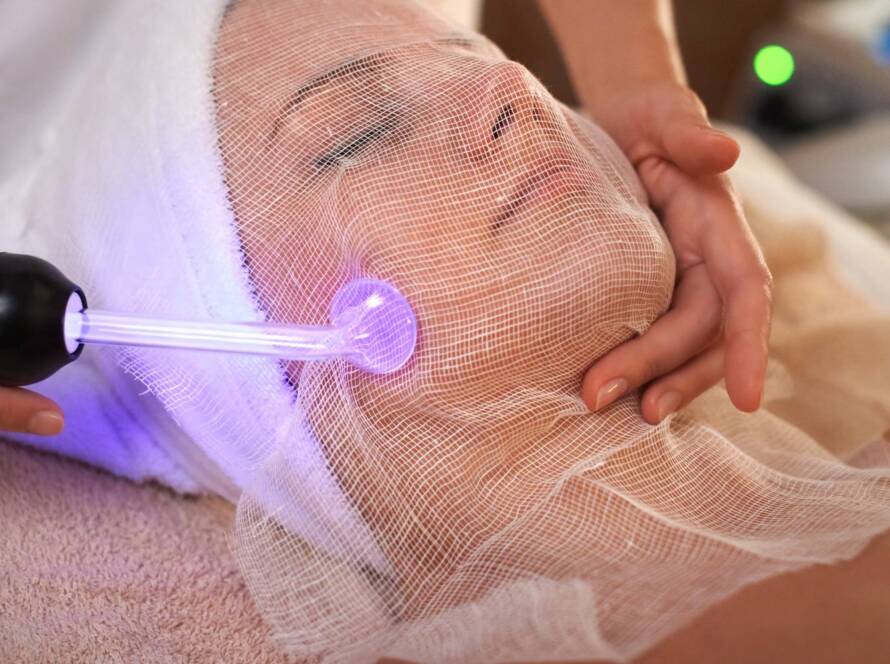
Some clinics also use what does high frequency do for skin devices alongside peels to support surface healing and calm inflammation between sessions.
Triggering Collagen and New Skin Growth
Once the peel injures targeted cells, the body kicks off a repair process. Fibroblasts activate and start producing fresh collagen. This new collagen fills in shallow depressions left by old acne lesions over several weeks.
Cellular turnover speeds up too. New, healthier cells rise to the surface faster than the normal 28-day cycle, replacing scarred or uneven tissue with smoother skin over repeated sessions.
This renewal cycle is why results build gradually. Clinics often schedule complementary services, from facials to lash lifts, around peel recovery to support overall skin health during treatment.
Chemical Peels for Acne and Acne Scars: Types, Strengths, and Best Uses
Superficial Peels: Salicylic and Glycolic Acid
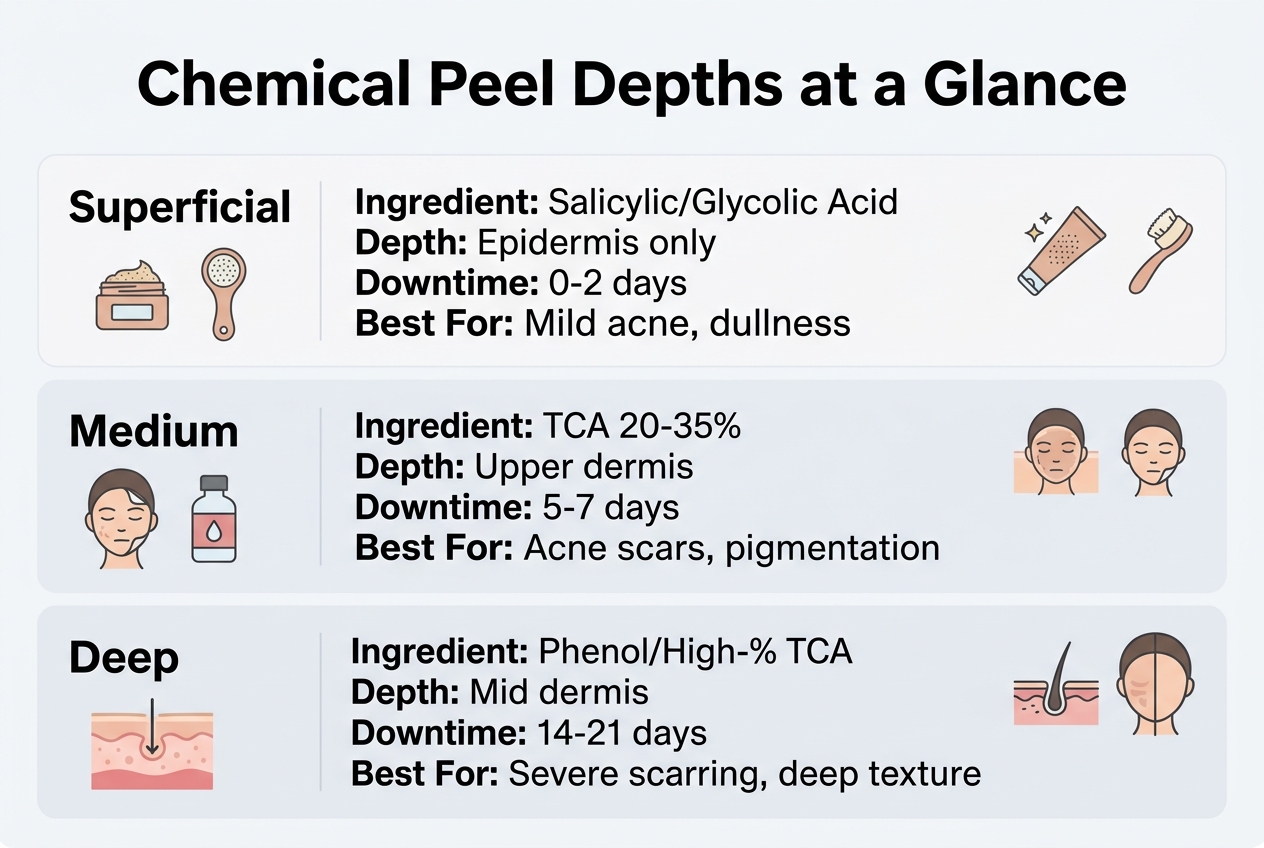
Salicylic acid is oil-soluble, so it gets into clogged pores and calms active breakouts. It suits oily, acne-prone skin best. Glycolic acid works on the surface, smoothing texture and fading shallow marks. Lactic acid is a gentler cousin, good for sensitive or reactive skin. These peels use small molecules, mild acids, and short contact times, so downtime stays minimal. Many people ask do facials help with acne alongside these peels, and the answer is usually yes, since extractions and exfoliation push toward the same goal.
Medium-Depth Peels: Jessner’s Solution and TCA
Jessner’s solution combines salicylic acid, lactic acid, and resorcinol. It reaches deeper than surface peels without the intensity of a phenol treatment. TCA (trichloroacetic acid), typically 15-35%, targets shallow boxcar and rolling scars. Both options handle moderate acne scarring and stubborn discoloration well.
Deep Peels: Phenol and Combination Formulas
Phenol peels reach the deep dermis, remodeling severe scarring in one session. Recovery runs one to two weeks, longer than any other option listed here.
| Peel Type | Depth | Best For | Typical Downtime |
|---|---|---|---|
| Salicylic Acid | Superficial | Active acne, blackheads | 0-2 days |
| Glycolic/Lactic Acid | Superficial | Dullness, mild texture issues | 0-3 days |
| Jessner’s Solution | Medium | Uneven tone, mild scarring | 3-5 days |
| TCA | Medium | Boxcar and rolling scars | 5-7 days |
| Phenol | Deep | Severe, deep scarring | 10-14 days |
Picking correctly matters more than picking the strongest option. The resource on Chemical Peels for Acne Scars from the American Society for Dermatologic Surgery goes into more detail on matching depth to scar type.
Matching Peel Depth to Your Skin Concern
Best Peels for Active Breakouts
Inflamed, active acne calls for gentler chemistry. Salicylic acid peels, typically 20-30%, cut through oil and calm surface bacteria without adding stress to skin that’s already irritated. Some clients wonder if home remedies work just as well; a quick look at does saltwater help with acne explains why professional-grade acids outperform kitchen fixes.
Mild breakouts often respond to monthly light peels paired with proper extractions to clear clogged pores. Moderate or cystic acne usually needs a stronger plan, sometimes combining a peel with facial extractions or an oxygen spray session to soothe redness afterward.
Severe, cystic breakouts aren’t ideal candidates for aggressive peeling. A dedicated provider will often recommend calming the flare first, then introducing acids gradually. Pushing depth too soon on active cysts risks spreading bacteria and making inflammation worse.
Best Peels for Post-Acne Marks and Discoloration
Once breakouts calm down, flat discoloration becomes the target. That’s a different job than treating active acne. Medium-depth peels using glycolic or TCA in the 15-25% range help fade brown or red marks by speeding up cell turnover.
Skin tone matters enormously here. Deeper skin tones can develop post-inflammatory hyperpigmentation more easily, so providers often start conservatively. Research summarized in Chemical Peels for Acne and Acne Scars in Asians – PMC – NIH shows lower concentrations and longer intervals reduce this risk in melanin-rich skin.
Combining light peels with microcurrent or LED-based facials can support even, gradual fading without triggering new dark patches.
Best Peels for Textured or Pitted Scars
Textured, pitted scarring needs deeper intervention. Stronger TCA peels, sometimes 30% or higher, or TCA CROSS techniques target icepick and boxcar scars directly. These sessions require more downtime and careful aftercare.
Many providers pair peels with microchanneling for added collagen stimulation, since texture correction usually needs a layered approach rather than one treatment type alone.
Benefits of Chemical Peel Treatment
Clearer, More Even-Toned Skin
Chemical peels offer more than acne control. They target dark spots, sun damage, and uneven pigmentation left behind by old breakouts. Many clients notice a brighter, more balanced complexion after just a few sessions. This tone improvement often boosts confidence as much as the acne clearing itself.
Improved Texture and Reduced Pore Appearance
Peeling encourages fresh skin cell turnover, which smooths rough patches and refines pore size over time. This renewal process delivers several lasting perks:
- Softer, smoother skin that feels less bumpy to the touch
- Visibly tighter-looking pores due to reduced buildup of oil and debris
- Fading of shallow acne scars and post-inflammatory marks
- A more refined canvas that pairs well with microchanneling or microcurrent treatments
- Reduced likelihood of future clogged pores and breakouts
For those weighing options, this comparison of Chemical Peels vs. Microneedling for Acne Scars: What … explains which approach suits different scar types.
Enhanced Absorption of Skincare Products
Removing dead surface cells lets serums and moisturizers sink in deeper. That means better results from your daily skincare routine. Just as the benefits of coolsculpting extend beyond one treatment area, peel therapy supports overall skin health long after the session ends.
Risks, Side Effects, and Who Should Avoid Peels
Common Temporary Side Effects
Most side effects are mild and short-lived. Redness can last a few hours to several days, depending on peel depth. Peeling, flaking, and tightness are normal as old skin sheds. Some people notice temporary sensitivity to sun or skincare products for a week or two after the session. These reactions usually just mean the treatment is working as expected.
Rare but Serious Complications
Serious problems are uncommon when a peel is matched correctly to your skin type, but they can happen. A qualified provider will screen for risk factors before treatment. For more on how the process affects skin at a cellular level, see this explanation of Chemical peel for acne scars: How does it work?
- Post-inflammatory hyperpigmentation, which shows up as dark patches that can take months to fade, especially in deeper skin tones.
- Scarring, usually from deeper peels applied too aggressively or on already-irritated skin.
- Infection, which can occur if open acne lesions are exposed to bacteria during recovery.
- Prolonged redness or swelling lasting beyond the expected healing window.
- Allergic reaction to peel ingredients, causing hives, itching, or unusual burning.
Who Should Not Get a Chemical Peel
Certain conditions make peels unsafe or unwise. Pregnant or breastfeeding clients should avoid many peel acids. Active cold sores, open wounds, or infections should heal first. Recent isotretinoin use, uncontrolled eczema, or extremely sensitive skin also call for caution. A virtual skin consultation can help determine if gentler options, like 10 benefits of microdermabrasion, are a safer starting point.
How to Prepare for Your Chemical Peel Appointment
Skincare Changes in the Weeks Before
Good prep starts two to four weeks out. Stop retinoids, exfoliating acids, and waxing near the treatment area at least seven days before your session. Sun exposure matters too, so review these summer skincare tips if your appointment falls during warmer months. Skipping tanning beds and avoiding heavy sunscreen reactions helps your skin barrier stay calm and ready.
What to Discuss During Your Consultation
Your consultation should cover your goals, skin history, and current products. Use the table below as a guide for what a thorough discussion includes.
| Topic | Why It Matters | What to Bring |
|---|---|---|
| Medical history | Flags medications that increase sensitivity | List of prescriptions |
| Acne severity | Guides peel strength selection | Recent photos |
| Past reactions | Prevents repeat irritation | Notes on prior peels |
| Patch test results | Confirms tolerance before full application | 48-hour test area |
| Lifestyle factors | Sun exposure, upcoming events | Travel or event dates |
Learn more about how peels target discoloration in How Chemical Peels for Hyperpigmentation Treat Acne Scars?. Always mention pregnancy, cold sores, or recent facials openly.
Day-Of Preparation Tips
Arrive with clean, product-free skin. Avoid caffeine and heavy exercise beforehand, since both increase sensitivity. Bring sunglasses and a hat for the ride home. A dedicated provider will confirm your patch test held up before starting the session.
What to Expect During and After the Procedure
During the Peel: Sensations and Duration
A Chemical peel session usually takes 20 to 45 minutes. The provider cleanses skin, applies the solution in layers, and watches your reaction closely. Most people feel tingling, warmth, or mild stinging. Deeper peels may cause a brief burning sensation that fades within minutes.
Recovery Timeline by Peel Depth
Downtime varies widely based on peel depth. Knowing what to expect helps you plan work, events, and skincare around your session.
| Peel Depth | Visible Peeling Starts | Full Recovery | Return to Makeup |
|---|---|---|---|
| Light (glycolic, salicylic) | 1-2 days | 3-5 days | Next day |
| Medium (TCA) | 2-3 days | 7-10 days | Day 5-7 |
| Deep (phenol) | 3-5 days | 14-21 days | Day 10-14 |
Post-Peel Care to Maximize Results
Gentle cleansing, fragrance-free moisturizer, and daily sunscreen protect fragile new skin. Avoid picking at flaking areas, since this can cause scarring or dark spots. Skip Waxing Treatments, Dermaplaning, or Microdermabrasion until skin fully heals. These aftercare basics mirror the discipline used after other treatments; the guidance found in botox aftercare resources applies here too, since gentle handling always speeds healing.
How Many Sessions Are Needed for Visible Results
Typical Treatment Plans for Active Acne
Most active acne cases need a series of peels, not just one. A common schedule is four to six sessions, spaced two to four weeks apart. This lets skin heal between treatments while still building on previous progress. Superficial peels are gentle enough for this frequent pacing.
Results build gradually. Many people notice fewer new breakouts and calmer skin tone after the third session. Peels also help with surface congestion, including what are blackheads and how to treat them, since exfoliation clears pores that trap oil and debris.
Severity matters too. Mild, occasional breakouts may respond in three sessions. Persistent, inflammatory acne often needs the full six-session course, sometimes paired with facial extractions for stubborn clogged pores.
Treatment Plans for Scar Improvement
Scar treatment usually takes longer than active acne treatment. Medium-depth peels for scarring often require six to ten sessions, spaced four to six weeks apart, to allow deeper collagen remodeling. Patience matters here, since visible texture change takes months, not weeks.
It helps to set realistic expectations early. As this Can Chemical Peels Remove Acne Scars? | Blog resource explains, peels improve texture and tone but rarely erase deep scars completely. Combining peels with microchanneling often boosts overall improvement.
Maintaining Results Long-Term
Once goals are reached, maintenance sessions keep skin clear. Many providers recommend a peel every one to three months, adjusted for skin type and season. Consistent skincare, sun protection, and occasional microdermabrasion support lasting results between visits.
Lifestyle habits matter too. Stress, diet, and hormonal shifts can trigger new breakouts, so ongoing care prevents setbacks. Think of maintenance as protecting an investment, not starting over each time.
Combining Chemical Peels With Other Acne Scar Treatments
Pairing Peels With Microneedling or Laser Therapy
Peels work best on surface pigment and texture. Deeper, pitted scars often need more support. Microneedling, sometimes called microchanneling, creates tiny channels that trigger collagen production below the skin’s surface. Many providers alternate peel sessions with microneedling appointments, spacing them a few weeks apart for balanced results.
Laser therapy adds another layer of correction. Fractional lasers target deeper scar tissue that acids can’t reach, while a peel refines tone and texture between sessions. This combination is common for clients managing both active breakouts and old scarring at once.
Providers typically sequence these treatments over three to six months. Skin needs recovery time between aggressive procedures. A dedicated provider will monitor healing before scheduling the next step, since layering treatments too quickly raises the risk of irritation or prolonged redness.
Supporting Peels With At-Home Skincare
Results last longer when home care backs up the in-office work. Topical retinoids remain the gold standard for maintaining collagen turnover between sessions. Many providers recommend starting a low-strength retinoid a few weeks after a peel, once skin has fully recalmed.
Gentle exfoliants, ceramide moisturizers, and daily sunscreen round out a supportive routine. Skipping sunscreen after a peel can undo months of progress, since new skin is especially sensitive to UV damage. Consistency matters more than product complexity.
Building a Custom Treatment Plan With a Professional
No two acne scars respond the same way to treatment. A licensed esthetician or dermatologist can assess scar depth, skin tone, and sensitivity before recommending a sequence. This is where a virtual skin consultation can help clients plan sessions before ever stepping into an office.
Some clients combine scar treatments with other aesthetic goals during the same care plan, such as med spa treatments that can get rid of a double chin, body contouring, or laser hair removal. Bundling appointments keeps skin health and overall aesthetic goals aligned under one strategy.
A well-built plan accounts for budget, downtime, and skin type. Providers often revisit the plan every few months, adjusting peel strength or adding microneedling as scars respond and skin tolerance improves.
If you’re ready to find out which chemical peel is right for your skin, the team at Refined Skin Club can help you build a personalized plan tailored to your acne and scarring concerns. As a premier day spa and skin care clinic offering advanced treatments alongside facials and laser services, they take the time to understand your skin’s unique needs before recommending a path forward. Book a consultation with Refined Skin Club today and take the next step toward clearer, smoother skin.