Your feed is full of ashwagandha promises: less stress, better sleep, and somehow, glowing skin too. It’s a compelling story. But separating real ashwagandha for skin benefits from wellness marketing takes a closer look than most articles give it. Here’s what the research and your complexion actually have to say to each other in 2026, plus which professional treatments still do the heavy lifting adaptogens can’t.
What Is Ashwagandha and Why Is It Showing Up in Skin Care
From ancient root to modern skincare ingredient
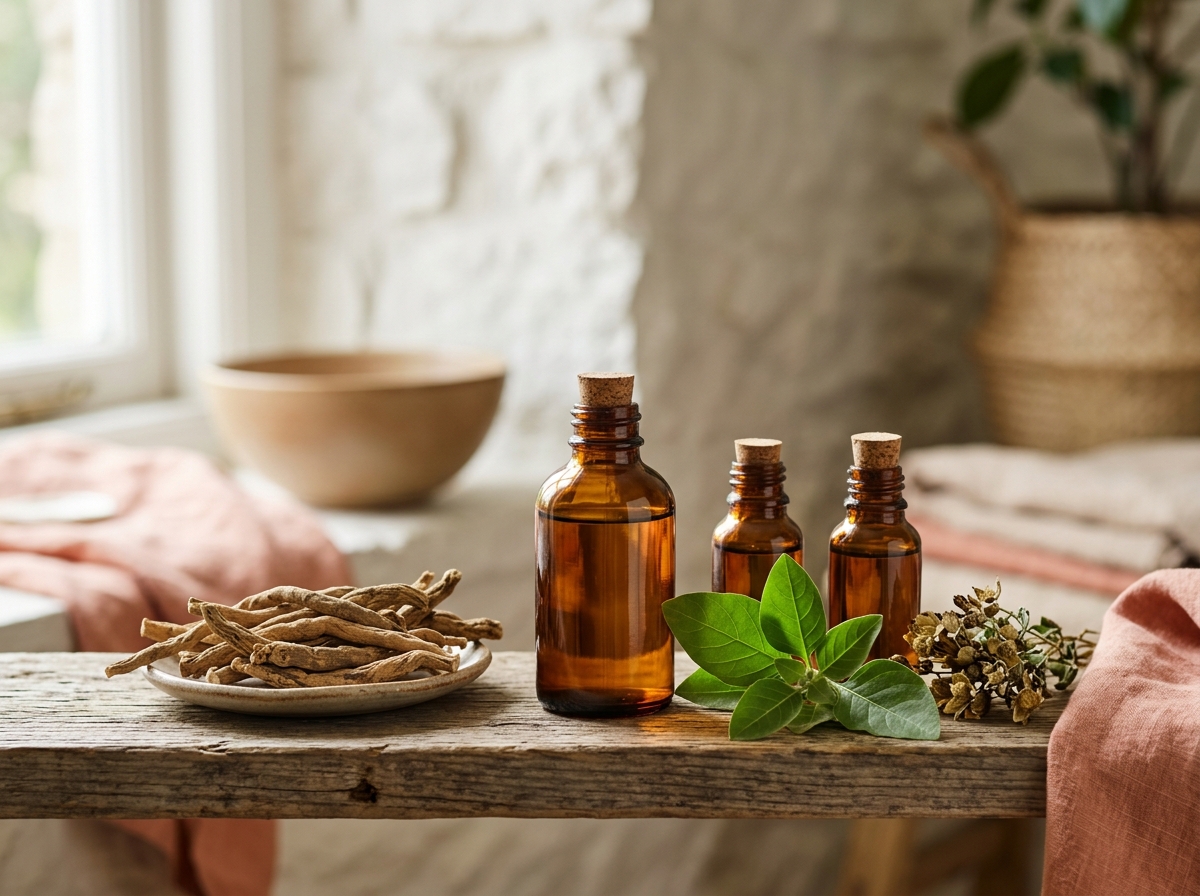
Ashwagandha has been around for thousands of years. Long before anyone thought to put it in a serum bottle. It’s an adaptogenic herb from Ayurvedic medicine, used mainly to help the body cope with stress, fatigue, and general low vitality. Practitioners brewed the root into teas and tonics, not face creams. That’s an important distinction to hold onto as you read the rest of this article.
So how did a stress herb end up on skincare shelves? Chemistry, mostly. Researchers isolated compounds called withanolides, the active steroidal molecules in the root, and found they could be extracted, stabilized, and blended into topical formulas. Brands now fold ashwagandha extract into serums, night creams, and even sheet masks, often paired with familiar actors like niacinamide or hyaluronic acid. Supplement capsules containing the same root extract sit right next to them in the wellness aisle, marketed for the exact same “glow from within” promise.
Why the sudden clinical attention
Interest picked up once actual studies started measuring something concrete. Small clinical trials have looked at skin hydration, elasticity, and markers tied to stress hormones like cortisol, since chronic stress is known to accelerate visible aging. A few of these trials reported modest improvements in skin smoothness and moisture after weeks of consistent use. Modest is the key word — not miraculous.
It’s also worth separating the two delivery methods, because both get marketed for “skin,” but they don’t work the same way. Oral ashwagandha is thought to act indirectly, calming the body’s stress response, which may in turn reduce breakouts or dullness linked to cortisol spikes. Topical ashwagandha, by contrast, sits directly on skin and is being studied for antioxidant and calming effects at the surface level. Confusing the two is common, and it’s part of why expectations around this ingredient get inflated. If you’re already troubleshooting congestion or texture, understanding what are blackheads and how to treat them will help you judge whether an adaptogen belongs in that conversation at all, or whether it’s solving a different problem entirely.
Ashwagandha for Skin Benefits: The Research-Backed Effects
What the clinical trials actually measured
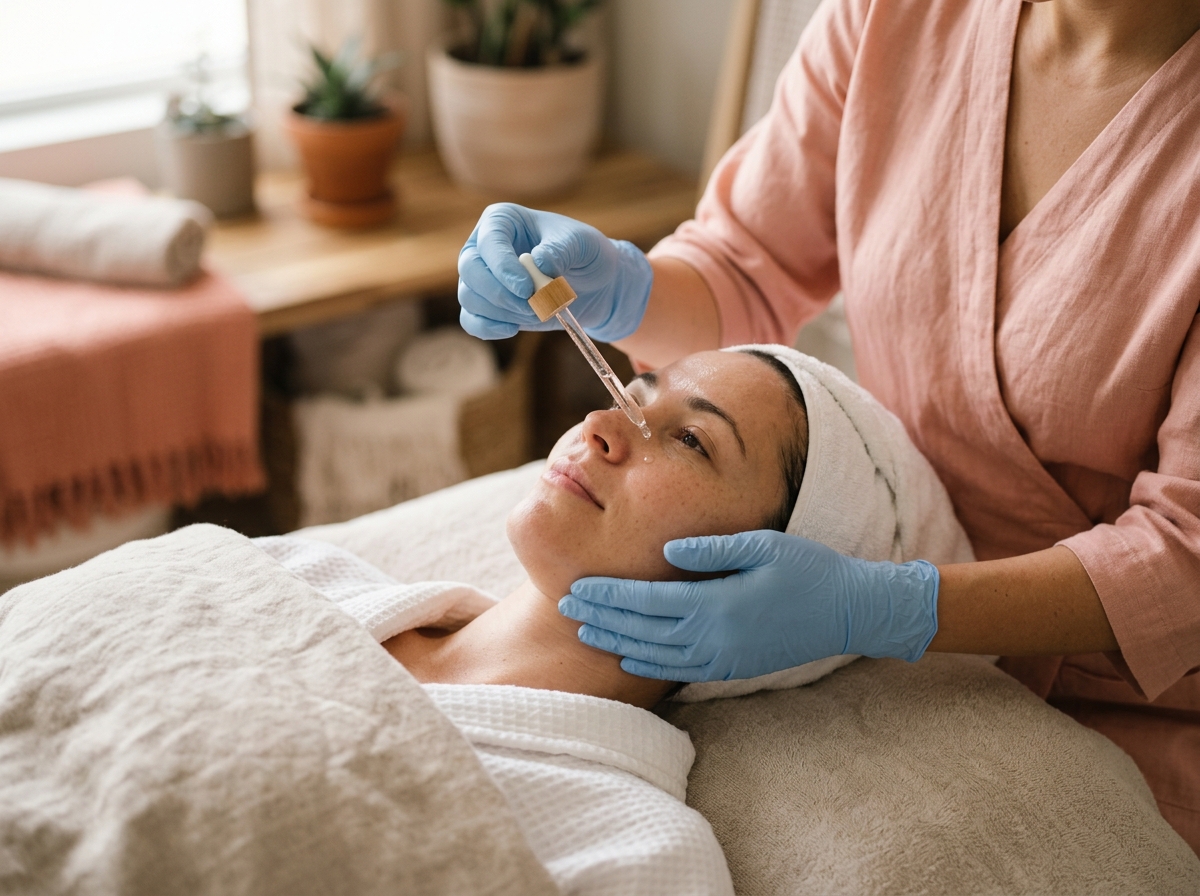
Most of the buzz around topical ashwagandha traces back to a handful of small clinical trials, and it helps to know what they actually tracked. Participants used a standardized ashwagandha extract, usually in cream or serum form, over a 60-day period. Researchers checked in on hyperpigmentation, skin elasticity, and hydration at set intervals, comparing before-and-after scores rather than relying on people’s own impressions. That matters. Self-reported glow is nice, but numbers are better.
To get those numbers, researchers leaned on two tools you’ve probably never heard of: the Cutometer and TEWL testing. A Cutometer measures skin’s ability to snap back after gentle suction, which is a decent proxy for firmness. TEWL, or transepidermal water loss, gauges how much moisture escapes through the skin barrier — lower loss generally means a stronger, better-functioning barrier. Trials using these methods reported measurable gains in both firmness and hydration retention, not just anecdotal softness.
Some of the same studies also tracked fine lines and wrinkle depth, linking improvement to ashwagandha’s antioxidant load and its apparent support of collagen activity in skin cells. The effect size was modest, not dramatic. Still, for an ingredient mostly known for stress supplements, that’s a notable finding worth sitting with.
Where the evidence is strongest vs. still emerging
The strongest data sits with hydration and elasticity — those Cutometer and TEWL results are consistent across the trials that exist, even if the sample sizes are small. Hyperpigmentation improvement has decent support too, particularly for uneven tone rather than deep, stubborn dark spots. Wrinkle reduction is the shakier claim. It’s plausible, backed by antioxidant mechanisms, but the studies measuring it are fewer and shorter than skincare marketing tends to suggest.
Then there’s the indirect angle: cortisol. Ashwagandha is best documented as an adaptogen that lowers stress-hormone levels when taken orally, and elevated cortisol is known to worsen inflammation, oil production, and breakouts. So the theory that calming cortisol could calm skin isn’t a stretch. But it’s a chain of reasoning, not a direct skin trial — worth knowing before you treat it as settled fact. If breakouts are your main concern, understanding practical summer skincare tips for managing oil and stress-related flare-ups will do more for you day-to-day than any single ingredient claim.
One thing every trial agrees on: results build slowly. Nobody saw overnight change. Improvements showed up gradually across weeks of consistent use, in line with how most active skincare ingredients behave rather than the instant-fix promises seen on packaging. If you want a comparison point, it behaves less like a spot treatment and more like the slow, cumulative gains people expect from botox for forehead wrinkles alternatives that work through gradual collagen support rather than muscle freezing. Patience is the price of entry here.
Comparing Ashwagandha’s Skin Benefits by Concern
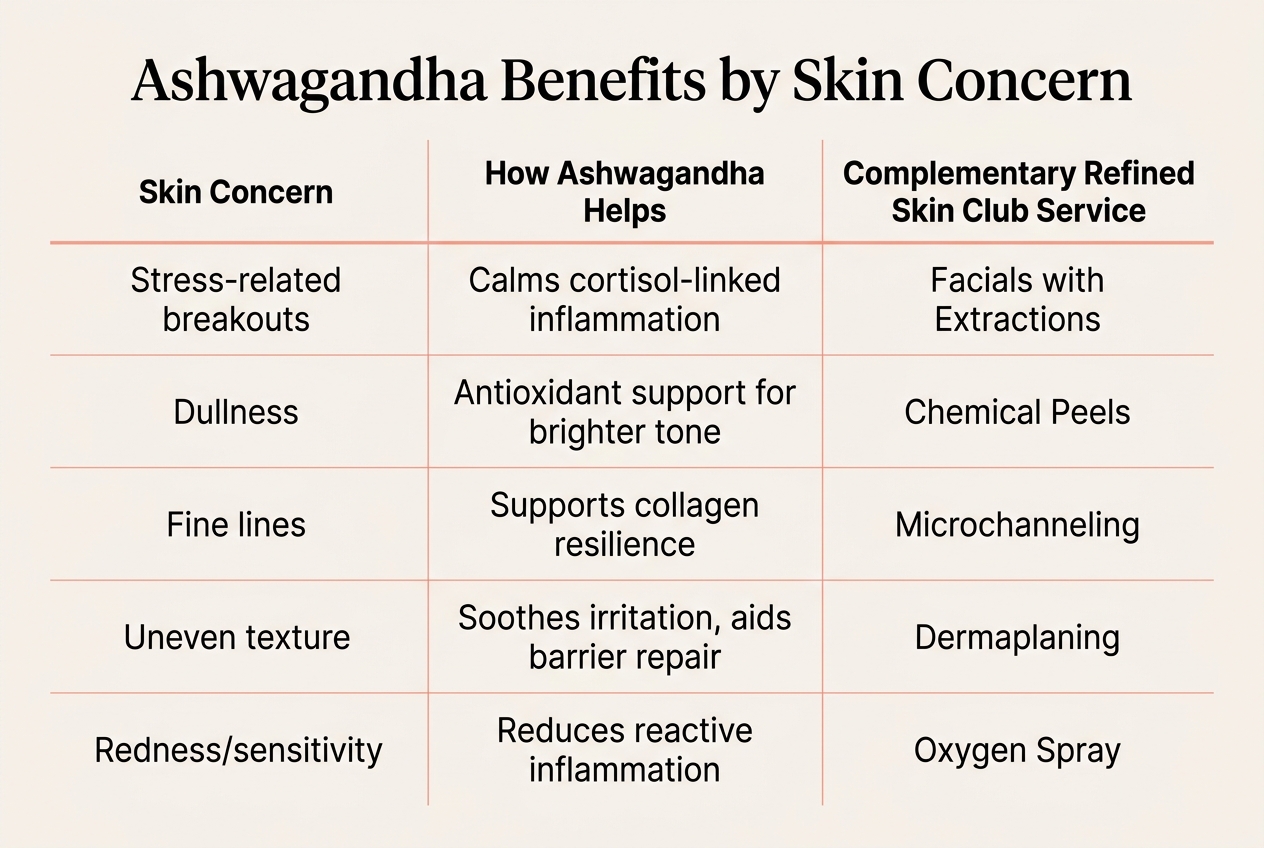
Not every skin complaint responds the same way to ashwagandha, and the strength of the evidence varies quite a bit by concern. Some effects show up in cutometer readings and lab markers, others are more anecdotal. The table below breaks down what’s realistically expected for five common concerns, based on how the compound is thought to act on skin.
| Skin Concern | How Ashwagandha May Help | Evidence Strength | Realistic Timeline |
|---|---|---|---|
| Hyperpigmentation | Antioxidant activity may lower melanin index over time | Emerging, small trials | 8-12 weeks |
| Dryness & sebum imbalance | Supports hydration, helps regulate oil production | Moderate, trial-backed | 4-8 weeks |
| Elasticity & firmness | Study groups showed improved cutometer scores | Moderate | 8-16 weeks |
| Fine lines & wrinkles | Modest support for collagen-related smoothing | Limited, early-stage | 12+ weeks |
| Acne & inflammation | Calming, anti-inflammatory action on irritated skin | Preliminary | Varies widely |
Glow and dullness sit slightly outside this table since they’re less a single symptom than a byproduct of the other four. Antioxidant and circulation-supporting properties are usually credited for that “lit from within” look people chase, though it’s hard to isolate from better hydration and less inflammation working together. Worth noting: the acne row is the one people misread most often. Calming inflamed skin is not the same as clearing a breakout, and ashwagandha is not a treatment for active acne on its own — it’s a supporting player at best. If you’re weighing herbal claims against saltwater rinses or other home remedies, it helps to look at whether does saltwater help with acne before adding another unproven step to a breakout routine. For persistent or cystic breakouts, esthetician-led extractions and peels — paired with a dermatologist referral when needed — will outperform any adaptogen, herbal or otherwise.
How to Use Ashwagandha in a Skin Care Routine
Topical application vs. dietary supplementation
There are two real ways to bring ashwagandha into your routine, and they don’t do the same job. Topically, you’ll find it in serums, creams, and sheet masks, usually listed with a standardized extract percentage so you actually know how much you’re getting. Taken orally, it works from the inside, aiming at stress hormones and inflammation rather than the skin surface directly. That distinction matters more than most product labels let on.
Before you build either into a routine, a few practical rules keep things safe and effective:
- Patch-test any new topical formula on your inner arm for 24 to 48 hours before applying it to your whole face, since plant extracts can still trigger irritation.
- Choose topical products that list a standardized withanolide concentration rather than a vague “ashwagandha extract” on the label, so you know the dose is consistent batch to batch.
- Pair antioxidant-rich serums with daily SPF, because ingredients like this work best at preventing damage, not undoing what unprotected sun exposure has already done.
- Introduce oral supplements gradually and track how your skin and stress levels respond over several weeks, not days.
- Talk to a healthcare provider before starting oral ashwagandha, especially if you’re on thyroid medication, sedatives, or have an autoimmune condition.
Here’s the blunt version: a serum won’t fix a stress-driven breakout on its own, and a supplement won’t replace sunscreen. Used together, sensibly, they’re a reasonable add-on — not a stand-in for professional care or a solid daily routine.
Where Ashwagandha Fits Alongside Professional Skin Treatments
Setting realistic expectations for at-home ingredients
An ashwagandha serum or moisturizer can absolutely earn a spot in your routine. Used consistently, it’s a reasonable tool for calming stressed-looking skin and supporting your barrier between visits to a provider. But it’s a maintenance ingredient, not a procedure. Think of it as something that keeps progress steady rather than something that creates progress on its own.
Here’s the blunt part: a bottle on your bathroom shelf works on a much slower, gentler curve than anything done in a treatment room. Chemical peels and microchanneling physically resurface skin and trigger a controlled healing response, which is why they produce visible texture and tone changes in weeks rather than months. Topical antioxidants, ashwagandha included, support that process; they don’t replicate it. If you’re comparing timelines, understanding med spa treatments that can get rid of a double chin versus what a jar of cream can do makes the gap pretty obvious — professional treatments target structure and volume; skincare mostly supports the surface.
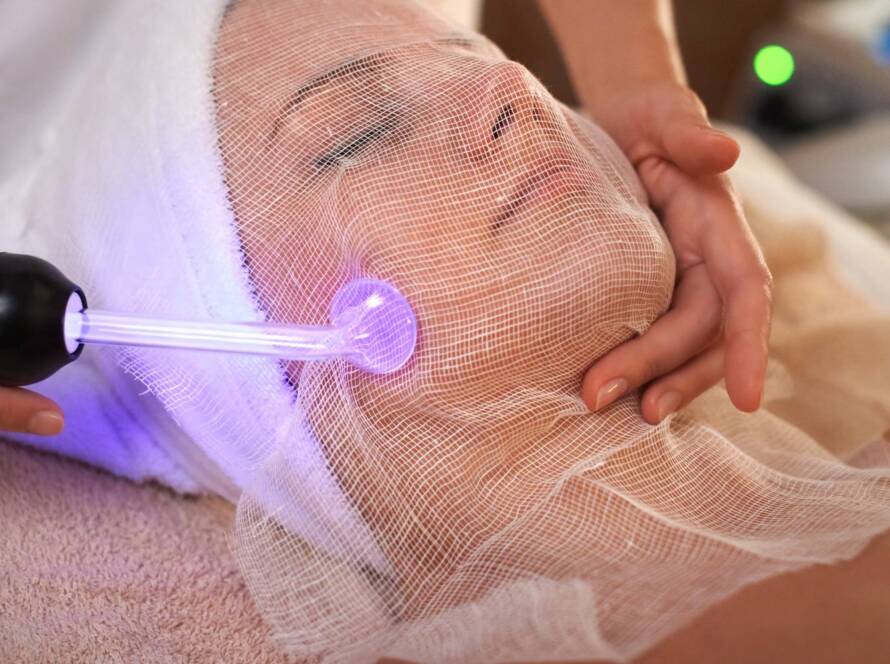
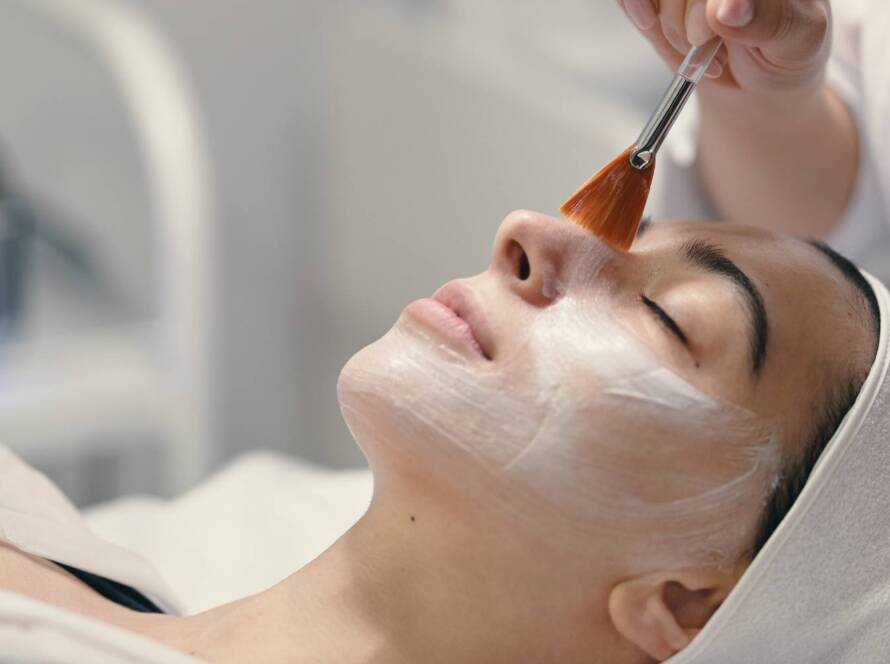
Facials and microdermabrasion play a specific supporting role here. Both remove built-up dead skin and debris, which means whatever you apply afterward — ashwagandha or otherwise — actually penetrates instead of sitting on top of congested skin. This is one reason at-home actives sometimes seem to “stop working”: the skin underneath is too clogged to absorb them well. A monthly or seasonal exfoliating service resets that. A licensed, knowledgeable esthetician can look at your specific concerns, whether it’s dullness, fine lines, or lingering breakouts, and tell you honestly whether home care is enough, whether in-clinic work is needed, or whether you genuinely need both working together.
Safety, Side Effects, and When to Be Cautious
Ashwagandha has a good reputation, but “natural” doesn’t mean “risk-free for everyone.” Topical formulas are generally well tolerated, though anyone with sensitive or reactive skin can still develop redness, itching, or breakouts from a new botanical extract, especially in a serum layered under other actives. Oral supplements come with a longer list of cautions, and that’s where most people get careless. A patch test before regular use isn’t overkill; it’s basic common sense.
Before adding ashwagandha to your routine in any form, run through a few checkpoints:
- Skip oral ashwagandha entirely if you’re pregnant or trying to conceive, since research on fetal safety is limited and the risk isn’t worth it.
- Talk to your doctor first if you take thyroid medication, immunosuppressants, or sedatives, because ashwagandha can amplify or interfere with how these drugs work.
- Treat severe or cystic acne as a medical issue, not a supplement project — a dermatologist can offer options a jar of skincare simply can’t.
- Get persistent hyperpigmentation or skin discoloration that doesn’t fade checked out, since it may point to a hormonal or medical cause worth diagnosing.
- Never treat a changing mole, an irregular lesion, or unexplained skin growth with skincare ingredients or in-spa procedures — that always needs a medical provider’s eyes on it first, not a botanical fix. Skin tag removal is a separate matter, and only appropriate for benign tags, never moles or lesions.
- Choose standardized extracts, like KSM-66, over vague “ashwagandha root powder” blends, since supplement quality and potency vary enormously between brands.
That sourcing issue matters more than people think. One capsule might contain a clinically studied concentration; another, from an unregulated brand, might barely register. If you want to see what a properly designed trial actually measured, it’s worth reading the Study of Efficacy and Safety of Ashwagandha (Withania … rather than trusting a label’s marketing claims. Layering new actives also raises your exfoliation load, so it helps to understand how often should you exfoliate your skin before stacking ashwagandha with peels or retinoids. When in doubt, a dermatologist or a knowledgeable esthetician can tell you whether your skin concern is one an adaptogen can help with — or one it never was.
Building a Complete Skin Care Routine: Ashwagandha and Professional Care Together
Ashwagandha serums and creams work best as one layer of a routine, not the whole thing. Your daily habits still matter most: a gentle cleanser, an antioxidant serum, a moisturizer, and SPF every single morning. That’s the foundation. Ashwagandha can slot into the serum step, but it’s not replacing sunscreen, and it won’t undo a skipped cleanse.
When at-home ingredients need a professional boost
Weekly or monthly, skin often needs more than a jar can give it. Exfoliation and deeper treatments rely on professional-grade tools you simply don’t have at home, and that’s where a dedicated provider earns their keep. For acne-prone skin, esthetician-led facials, extractions, and peels offer a non-prescription path to clearer skin over time — slower than a prescription, sure, but often gentler on the long run. Severe or cystic acne may still call for a dermatologist referral. For aging concerns, microchanneling, microneedling, and microcurrent build collagen gradually, working alongside topical antioxidants rather than replacing them — these aren’t injections, so results come slower but without needles. For dullness and uneven tone, chemical peels and microdermabrasion target the skin’s surface layer, with results that build across repeated sessions rather than overnight. If your goal is sharper facial definition before a special event, some clients also look into mens facial treatments, which pair grooming with the same surface-level renewal these methods provide.
Here’s a rough breakdown of how common concerns split between home care and in-office work:
| Skin Concern | At-Home Role | Professional Treatment | Typical Timeline |
|---|---|---|---|
| Acne breakouts | Gentle cleanser, spot serum | Facials, extractions, peels | 6-8 weeks for visible change |
| Fine lines | Antioxidant serum, SPF | Microchanneling, microcurrent | 4-6 sessions, gradual build |
| Dull, uneven tone | Exfoliating cleanser | Chemical peels, microdermabrasion | Series of 3-6 visits |
| Rough texture | Weekly at-home scrub | Dermaplaning, microdermabrasion | Monthly upkeep |
A personalized treatment plan, one that accounts for skin type, age, downtime, and budget, is really what decides how ashwagandha fits into the bigger picture. It’s a supporting ingredient, not a standalone strategy.
Ultimately, the choice comes down to what result you’re actually chasing and how much downtime you’re willing to trade for it. Someone weighing this should ask whether they want gradual, skin-level improvement built over a series of visits, or a faster, more dramatic change that only a medical provider can deliver. Either path is valid, but knowing the difference upfront saves both time and disappointment.